Samsung Galaxy S26 Ultra privacy display draws early praise — and problems

Monday at 9: 14 a. m. ET, early coverage of the samsung galaxy s26 ultra converged on one headline feature: Samsung’s new Privacy Display. The timing is significant because it’s described as first-of-its-kind on the phone, and first-generation features can surface real-world quirks quickly—especially once reviewers start testing viewing angles and trade-offs.
Two threads are emerging at the same time: a “stealth upgrade” narrative that says the device looks familiar while hiding meaningful refinements, and a caution flag that the Galaxy S26 Ultra’s privacy display has problems that may not have been anticipated.
Samsung Galaxy S26 Ultra review calls it a “stealth upgrade”
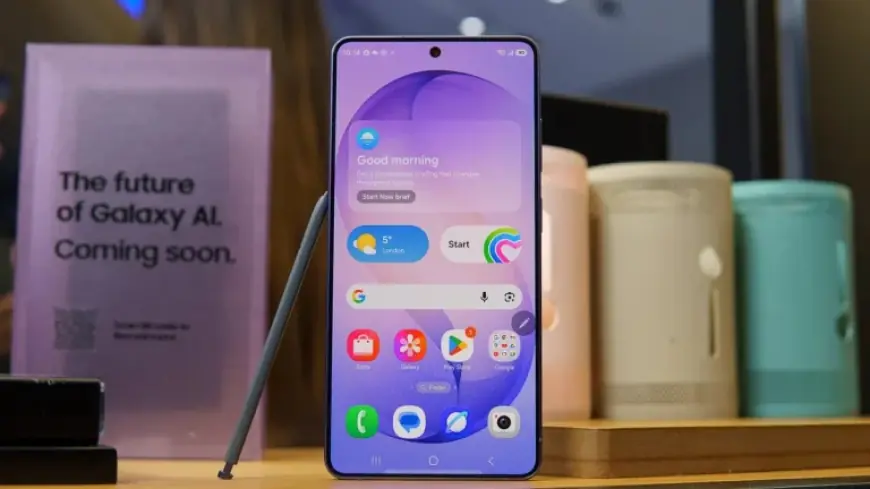
A hands-on review frames the Samsung Galaxy S26 Ultra as a phone that visually resembles the last several generations, including a similar overall design and rear camera layout. The argument is that the upgrades are there, but they’re easy to miss unless you’re looking closely—changes positioned as making the new release feel like a better deal than its predecessor, even while the device remains expensive.
Samsung is described as returning to an aluminum frame for 2026 after experimenting with titanium frames on the prior two Ultra models. The company’s stated reasoning is that aluminum makes it easier to color-match the chassis with the Corning Gorilla Armor 2 panels on the front and back. In the review unit described as black, the impact of that color matching is said to be difficult to see.
The same review notes modest physical changes: the phone is listed at 7. 9mm thick and 214 grams, compared with last year’s S25 Ultra at 8. 2mm and 218 grams. Even with a direct comparison, the reviewer says the difference is basically imperceptible.
Samsung Galaxy S26 Ultra Privacy Display feature and how it works
The standout change highlighted is the 6. 9-inch display’s new privacy mode, activated “with the touch of a button. ” While the screen’s headline specs are described as essentially unchanged from last year—2, 600 nits peak brightness, a variable 120Hz refresh rate, and a maximum resolution of 3, 120 x 1, 440—the Privacy Display is positioned as the meaningful shift for people who care about on-screen privacy.
In standard use, the feature is described as reducing what others can see when the phone is viewed from acute angles, both from side-to-side and from above or below. When enabled and the phone isn’t viewed head-on, content “sort of fades to black. ” Depending on the angle, an outline of interface elements and some bright spots may remain visible, but the wider the angle becomes, the fainter the content appears.
The mechanism is described in unusually concrete terms: the phone uses two sets of subpixels—narrow and wide—and the wide set is turned off when Privacy Display is active. One technical term to know here is subpixels: the tiny elements within each screen pixel that produce the colors and light you see on a display.
The review also describes an extra setting called Maximum Privacy Protection. In that mode, “almost everything completely go[es] gray, ” and the reviewer flags that there are trade-offs for using that stronger privacy level.
Privacy Display problems emerge as Samsung’s first-of-its-kind mode meets reality
A separate early report says the privacy display on the Galaxy S26 Ultra is the first of its kind—and that this novelty brings problems “that no one might have anticipated. ” That framing helps explain why the privacy feature is the center of attention right now: first-generation implementations often reveal unexpected behavior only after more people begin trying different angles, lighting conditions, and real-world content.
The review coverage also hints at potential compromises even when the feature is working as intended. In standard Privacy Display mode, the reviewer says there is “very little impact on image quality and brightness, ” suggesting it may be feasible to leave on most of the time. Still, the same passage adds that if you look closely, you may notice what appears to be a small drop in resolution—an early sign that privacy-by-design can come with visible side effects.
Beyond the screen, the review points to at least one small usability change: the built-in S-Pen storage slot remains, and the stylus is described as essentially unchanged from the prior year. Yet the phone’s corners are said to be more rounded than ever, creating a “right and wrong way” to insert the S-Pen so it visually aligns with the phone’s corner shape, even though it will stay put regardless.
For now, the key question for buyers is whether the samsung galaxy s26 ultra Privacy Display’s benefits outweigh the reported problems and any day-to-day trade-offs in clarity or appearance when the feature is enabled.
The next confirmed milestone will be additional hands-on testing and follow-up impressions later today at 5: 00 p. m. ET, as more reviewers focus on the Privacy Display’s real-world behavior and the specific issues being flagged. If those problems prove consistent across devices, attention is likely to shift to whether Samsung can address any of the drawbacks through software settings tied to Privacy Display modes.