Israel Iran Attack Intensifies as Tehran Oil Depots Burn and Region Braces

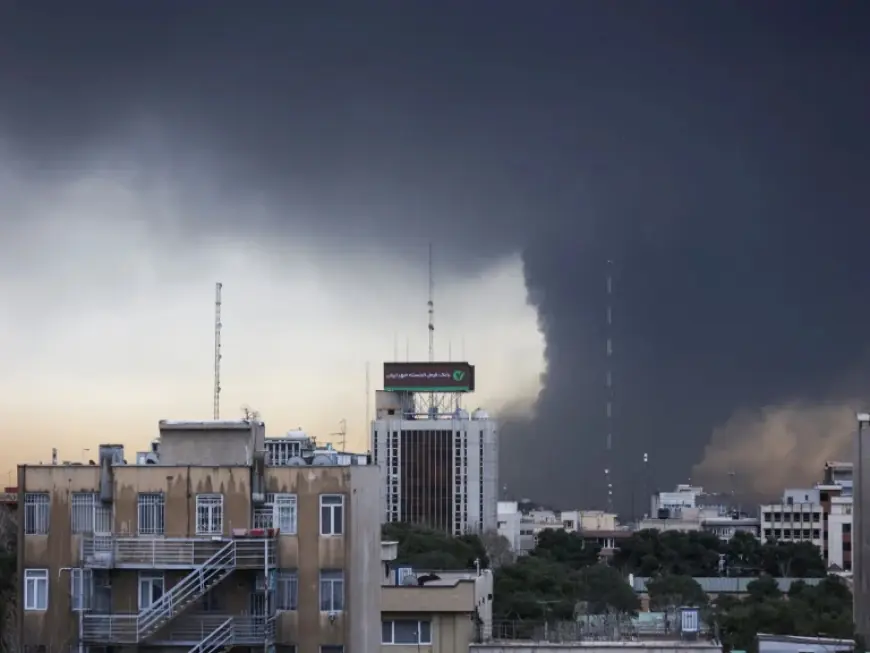
Sunday at 10: 12 a. m. ET — Flames and thick smoke rose over Tehran after airstrikes hit multiple oil depots while Bahrain’s desalination plant was also struck, marking a new wave in the Israel Iran Attack that followed earlier US-Israeli operations.
Right now this escalation is the direct follow-up to initial US-Israeli strikes on Feb. 28 and the killing of Iran’s Supreme Leader, events that have spurred retaliatory strikes and widened the fighting across the region.
Tehran oil depots and Bahrain facility hit
Witnesses in Tehran captured massive fires after what authorities described as strikes on fuel storage sites; Iran’s National Iranian Oil Company confirmed damage at depots in the capital. Videos showed flames and smoke engulfing surrounding neighborhoods, and witnesses said the scene transformed the night into a blaze of light.
State and regional reports also say a desalination plant in Bahrain was struck. Neighboring governments, including Kuwait and Saudi Arabia, reported additional attacks in the region as the strikes spread beyond Iran’s borders.
Israel Iran Attack: Military statements and targeted facilities
The Israeli military said it struck “several fuel storage complexes” in Tehran and later announced additional waves of attacks targeting facilities linked to Iran’s Revolutionary Guards and security forces. In a separate statement the Israeli military said it targeted the Aerospace Headquarters of the Revolutionary Guard and 50 ammunition storage shelters.
The Israeli army also carried out an attack in southern Lebanon’s Nabatieh governorate that killed six people in Doueir, destroying buildings that the National News Agency said housed a family and a car repair shop; civil defence teams and Red Cross units were recovering bodies and transporting them to local morgues.
U. S., regional responses and possible ground options
President Donald Trump said the war would only end when Iran’s leaders “cry uncle” or when Iran’s military was no longer functional, and he said Iran’s next leader would not “last long” without US approval. The president also discussed the risk of Kurdish groups being drawn into any ground operation.
US officials have warned civilians in Iran to stay home, with US Central Command urging people to seek shelter and saying Iranian forces were launching drones and ballistic missiles from densely populated areas. The US embassy in Saudi Arabia and the US consulate in the United Arab Emirates were reported to have come under drone attacks on Tuesday.
Meanwhile, US planners and other officials have considered options beyond air operations. Leave for personnel was canceled, training exercises were postponed, and some troops were being retrained—steps that the context says signal planning for potential expansion of operations. Sending troops into Iran was described as being considered by the US, with an invasion estimated by analysts to require roughly half a million troops, while special forces operations have been discussed in the last 24–48 hours as an alternative.
Iraq’s foreign minister warned at an Arab League meeting that disruption in the Strait of Hormuz could trigger crises in energy supplies and mass displacement, stressing the wider consequences of the widening conflict.
More details expected 2: 00 p. m. ET. If a White House order for a ground incursion is issued, planners have indicated special forces operations have been discussed as a possible immediate option.