Juan Soto MVP push could reshape Mets lineup and postseason hopes

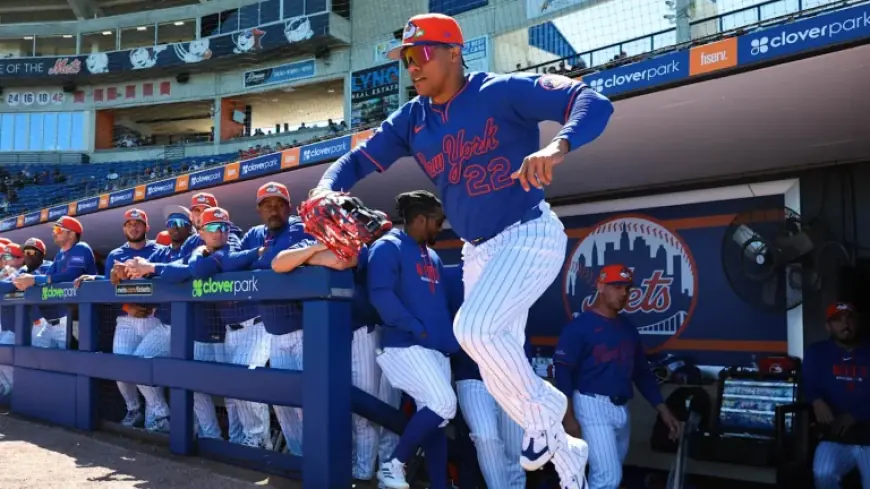
New York Mets fans and a reshaped roster are riding on juan soto delivering an MVP-caliber season, not just big totals at the plate but enough all-around value to keep him in the field and in the National League’s top award debate. As of 11: 00 a. m. ET Sunday, three separate storylines converged around Juan Soto: MVP expectations, pressure points in his profile, and how the Mets’ new-look lineup could change how opponents pitch him.
New York Mets expectations rise with Juan Soto in the early MVP mix
The Mets’ immediate stakes are straightforward: they need their superstar to anchor a bounce-back year after missing the playoffs in 2025, a season described as ending with a “terrible collapse in the second half. ” That disappointment triggered “a lot of changes” to the roster over the winter, raising the importance of top-end production from their centerpiece.
Projections cited in recent coverage place Juan Soto in the early NL MVP conversation. One set of projections for the upcoming season forecast a line of . 272/. 411/. 528 with 38 home runs, 102 RBI, and 23 stolen bases, alongside an OPS “well over the. 900 mark” and a projected WAR of 6. 1. For a team trying to reset expectations after 2025, that kind of season changes not only how many games the Mets can win, but how they can structure the lineup and how much margin they have when new additions are still settling in.
Still, those same projections also heighten scrutiny: anything short of that level can feel like underperformance when the club’s season direction is tied so tightly to one player’s outcomes.
Juan Soto’s defense and baserunning are now central to his MVP case
One of the clearest hurdles outlined for Juan Soto’s MVP candidacy is defense. In one assessment of what the Mets “need” from him to compete for the award, he is described as having “never really been a good defender. ” The last time he posted an above-average Defensive Runs Saved figure was 2021, and over the four seasons since he has accumulated -14 in that metric.
That defensive profile also intersects with the business and roster implications of his arrival in New York. After signing a record-breaking deal in free agency, critics argued it could become an overpay if defensive limitations push him toward becoming a designated hitter “sooner rather than later. ” The analysis warns that “a few more seasons of poor fielding contributions could force the Mets’ hand, ” framing defense as more than a side note—it could shape how the team uses him.
Another metric, Outs Above Average, is cited as highlighting a specific weakness: range. In 2025, his -12 OAA placed him in the 1st percentile of qualified players. The bar set in the same coverage is not elite defense, but improvement to roughly league average, which is described as a “big lift” to his MVP candidacy.
At the same time, Juan Soto’s baserunning has already moved in a direction that supports an MVP argument. He stole a career-high 38 bases in 2025 and said it was intentional, describing a year-to-year push to be better “around the bases and better around the outfield. ” That combination—better baserunning and at least some defensive progress—would help narrow the gap against a rival MVP profile built on pitching as well as hitting.
Shohei Ohtani, Pete Alonso’s absence, and the new Mets lineup behind Soto
On the awards front, the National League’s standard is described as unusually high because of Shohei Ohtani, who is portrayed as not slowing down for “a few more years. ” One argument in recent coverage is that if any Mets player has the “pedigree” to dethrone him, it’s Juan Soto, even as the same discussion notes Soto has finished as a top-five MVP candidate four times in his eight-year career without winning.
Yet, the Mets’ day-to-day competitive environment is also changing around him. Juan Soto acknowledged that pitchers will approach him differently without Pete Alonso in the lineup, calling Alonso “great for the team” and “a great leader, ” while also stressing that the club has to “move on. ” The practical baseball issue is protection: coverage notes that neither Bo Bichette nor Jorge Polanco presents the same power threat Alonso did, even though Bichette drove in 94 runs last season, a detail offered as a reason pitchers might still hesitate to pitch around Soto in key spots.
There is also a tactical tension described around Juan Soto’s offensive identity. His on-base percentage is framed as “his thing, ” while raising the question of whether he would need to trade some patience for more aggression and power to strengthen an MVP case—especially when matched against a competitor with a pitching résumé. In the same thread, a milestone-style framing of his consistency is highlighted: he is positioned to reach a sixth season with at least 25 homers and 115 walks, a combination tied in that discussion to historically rare company.
For now, the Mets’ MVP dream and their season ambitions hinge on the same reality: if juan soto pairs elite production with enough improvement in the parts of his game that have drawn criticism—most notably defense—he elevates not only his candidacy but the team’s ceiling in a season defined by renewed expectations.
If the Mets’ roster changes and lineup order hold into meaningful games, Juan Soto’s first extended stretch without Alonso behind him is expected to clarify how pitchers will attack him and whether the club’s new protection can keep his MVP-level projections on track.