Jacob Duffy Returns, Shifting New Zealand’s Bowling Plan for India Final

New Zealand will open the final with an extra pace option, changing how they try to counter India’s power hitters in the early overs. Sunday at 9: 49 a. m. ET New Zealand brought pacer Jacob Duffy into the playing eleven in place of Luke McConchie after Mitchell Santner won the toss and elected to bowl.
Jacob Duffy’s inclusion puts immediate pressure on New Zealand’s fielding plan
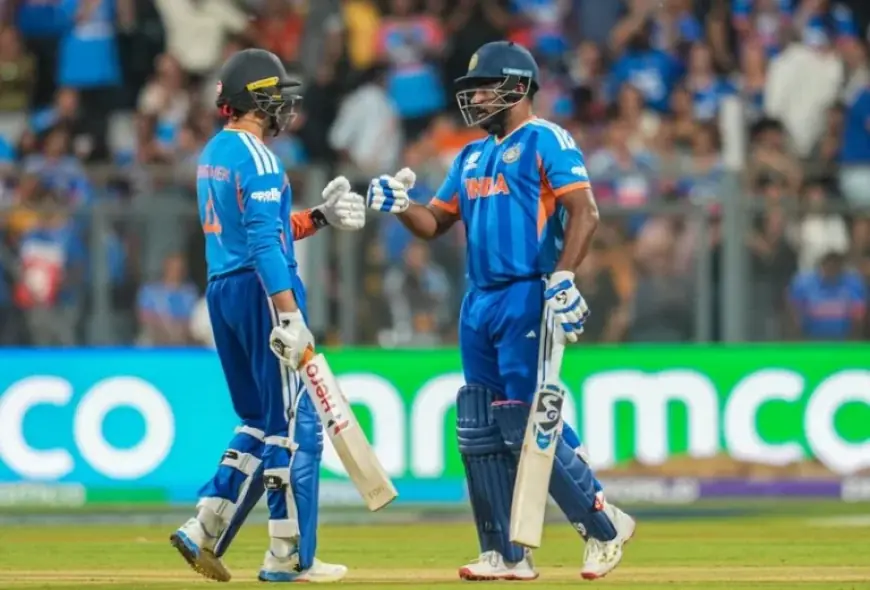
Jacob Duffy faced the Indian onslaught early: Abhishek Sharma smashed three consecutive boundaries off Duffy and followed with a six, an onslaught that helped India surge in the powerplay. India reached 92 without loss at the end of the sixth over, and Abhishek Sharma completed a fifty off 18 balls, forcing New Zealand to adjust lengths and placements around Duffy’s pace and angles.
Abhishek Sharma and Sanju Samson’s opening barrage forced the personnel change
Sanju Samson and Abhishek Sharma combined for a blistering start that included 21 runs off Matt Henry in the fifth over and a fifty-run opening partnership that left New Zealand scrambling. Samson dispatched Lockie Ferguson for a six and multiple boundaries, while Matt Henry’s expensive fifth over and the rapid partnership prompted New Zealand’s decision to persist with seam options, including Duffy, in hopes of breaking the stand.
Santner’s toss decision led to Duffy replacing Luke McConchie and both teams’ XIs
Mitchell Santner won the toss and elected to bowl, and New Zealand’s final eleven listed Jacob Duffy in place of Luke McConchie. India retained the same eleven from their semifinal: Abhishek Sharma, Sanju Samson (w), Ishan Kishan, Suryakumar Yadav (c), Tilak Varma, Hardik Pandya, Shivam Dube, Axar Patel, Varun Chakaravarthy, Arshdeep Singh, and Jasprit Bumrah. New Zealand’s lineup included Tim Seifert (w), Finn Allen, Rachin Ravindra, Glenn Phillips, Mark Chapman, Daryl Mitchell, James Neesham, Mitchell Santner (c), Matt Henry, Lockie Ferguson, and Jacob Duffy.
Still, New Zealand’s choice to bring Duffy in for an off-spinning all-rounder changes matchups: India attacked seam bowling successfully early, and Duffy’s pace will be measured against the left-right combinations of Abhishek Sharma and Sanju Samson.
That said, the match narrative shows two concrete threads. First, Abhishek Sharma’s rapid fifty and the 50-run opening stand with Sanju Samson have set a scoring platform that forces New Zealand to seek early wickets. Second, by replacing Luke McConchie with Jacob Duffy, Santner signaled a willingness to rely on pace rather than extra spin in the powerplay and middle overs.
For now, New Zealand’s tactic is clear: use Jacob Duffy and the seam trio to disrupt partnerships before India can accelerate further. If New Zealand can secure at least one early wicket within the powerplay, they will have a better chance of containing India’s run rate through the middle overs; if the openers continue at the current scoring rate, India will reach a commanding total by the 10-over mark.
More details expected Sunday night at the Narendra Modi Stadium, when the final’s remaining sessions will determine whether Jacob Duffy’s return contains India’s momentum or whether Abhishek Sharma and Sanju Samson carry their aggressive form through to a match-defining total. If Duffy and New Zealand take an early wicket in the powerplay, the match balance can shift within a single over.