Michelangelo’s Forgotten Basilica Bust in Italy Re-attributed After Centuries

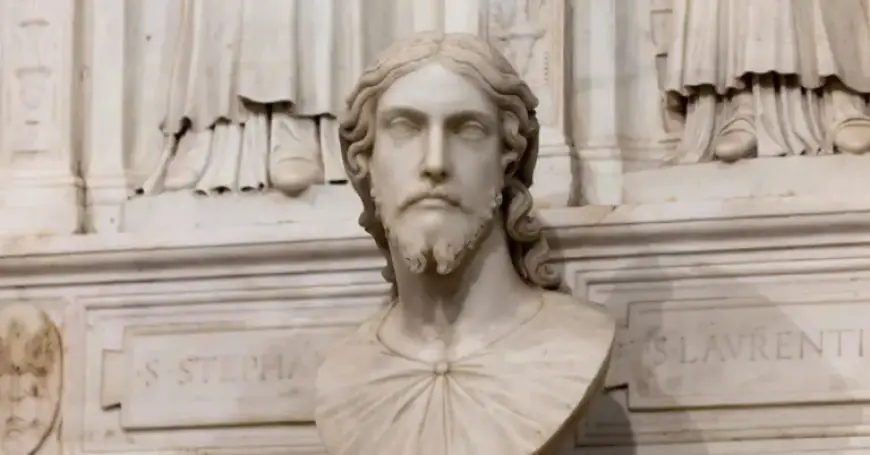
A newly rediscovered marble bust in Rome has been re-attributed to Michelangelo after nearly two centuries of obscurity. This significant finding emerged from extensive archival research conducted by Italian researcher Valentina Salerno.
Michelangelo’s Forgotten Basilica Bust Re-attributed
The bust, which depicts Christ the Saviour, has been housed in the Basilica of Sant’Agnese fuori le mura, located on the ancient Via Nomentana. The Catholic religious order of Lateran Canons Regular has safeguarded this artwork for centuries. Originally attributed to Michelangelo until the early 19th century, its connection to the renowned Renaissance master was lost until recently.
Research Findings
Valentina Salerno, despite lacking formal art historical training, successfully linked the bust back to Michelangelo. Her research relied on public archival documents, including notarial records and posthumous inventories. Salerno’s findings challenge the longstanding belief that Michelangelo systematically destroyed his works in his later years.
- Salerno emphasized that her investigation was thorough, approaching the subject as an investigator.
- Her findings suggest that many of Michelangelo’s works were carefully preserved and transferred rather than destroyed.
- Documents indicate the use of a locked room, with multiple keys, to secure valuable materials following the artist’s death.
Significance of the Discovery
This bust and similar artworks are believed to have been discreetly moved to religious institutions rather than entering the art market. The Sant’Agnese bust, now prominently displayed on an altar in a side chapel, is equipped with an alarm system for its protection. This research aims to initiate a broader effort to establish the authenticity of other overlooked works attributed to Michelangelo.
Franco Bergamin from the Order of Lateran Canons Regular remarked on the joyful surprise of uncovering the bust’s true origins. The revelation of the sculpture’s true attribution underscores not only Salerno’s investigative diligence but also highlights the importance of archival research in art history.