Finn Allen forces India to rethink bowling plans ahead of T20 final

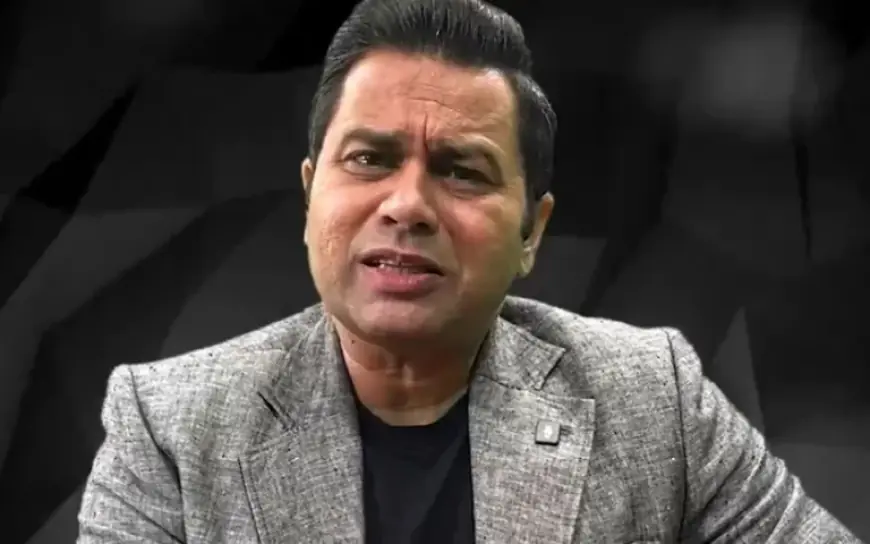
India’s bowlers head into Sunday’s T20 World Cup final needing a more precise plan for one batter: finn allen. As of 2: 30 p. m. ET on Saturday, former India batter Aakash Chopra has publicly urged India to lean into spin options and straighter, tighter lines to blunt New Zealand’s opening threat at the Narendra Modi Stadium in Ahmedabad.
Aakash Chopra’s India blueprint centers on Axar Patel and inside-edge chances
The most immediate change Chopra is pushing is tactical: he wants India to use spin early, with Axar Patel singled out as a potential matchup to reduce Finn Allen’s impact at the top. Chopra said Finn Allen has “been troubled a little by off-spin, ” describing a pattern where the batter goes deep in the crease on seeing spin and then relies heavily on wristy shots.
Chopra’s reasoning is that incoming deliveries can bring lbw or bowled into play if the batter is set deep, even if India do not field a traditional off-spinner. He framed Axar Patel as a bowler who can angle the ball in “with the arm, ” creating a line that can hit pads or stumps if Finn Allen commits too early and too deep.
Chopra also floated a second pressure point for India in the opening overs: the inside edge. He said captain Suryakumar Yadav could look to quicks Arshdeep Singh and Hardik Pandya for early breakthroughs where an inside edge could “go and hit the stumps, ” a dismissal route he suggested may be available if Finn Allen attacks from ball one.
Chopra pointed to a recent example from before the tournament: Axar Patel dismissed Finn Allen in the fifth and final T20I of a series played ahead of the World Cup. In that same innings, Finn Allen still scored 80 off 38 balls in Thiruvananthapuram, an outcome that underlines the risk for India: even a plan that works once may not stop damage if execution slips.
Finn Allen’s form shifts the early-overs priorities for India’s attack
Chopra’s comments effectively push India toward a simpler priority: take away what Finn Allen wants first, rather than waiting to react. In separate remarks, Chopra praised Finn Allen and Tim Seifert as the tournament’s most explosive and consistent opening duo, warning that their aggressive starts can create immediate scoreboard pressure.
That framing changes what India must defend in the first powerplay: not just runs, but control. Chopra advised bowlers to limit Finn Allen’s “width” outside off-stump and keep deliveries “within the stumps” to contain his stroke range. He also called out Varun Chakaravarthy specifically, recommending slightly slower pace with tighter lines to apply pressure.
The consequence for India is that small execution errors could become instantly costly. If Finn Allen is allowed room outside off-stump, Chopra’s view is that the opener’s range of strokes becomes harder to manage. If India miss their lengths at the stumps, they risk letting New Zealand’s openers dictate matchups and push India away from their preferred bowling sequences.
For New Zealand, the implication is equally clear: an early surge from Finn Allen and Tim Seifert can force India to abandon selective matchups and turn to defensive fields and conservative plans earlier than they want. Chopra’s description of the duo as both “explosive” and “consistent” positions them as central to New Zealand’s attempt to seize the final from the start.
Eden Gardens hundred put Finn Allen at the center of the Ahmedabad final
The tactical conversation is happening because Finn Allen arrives in Ahmedabad as the batter Chopra called the “danger man. ” New Zealand reached the final after Finn Allen scored an unbeaten hundred off just 33 balls against South Africa in the semifinal at Eden Gardens, a performance Chopra characterized as single-handedly guiding New Zealand into the championship match.
The final is scheduled for Sunday, 8 March, at the Narendra Modi Stadium in Ahmedabad. India enter with recent T20I success against New Zealand, while Chopra also referenced history favoring New Zealand in past T20 World Cups. Those competing narratives, though, still circle back to a single immediate pressure point: whether India can keep Finn Allen from taking the game away in the first phase.
For now, the clearest signal is that India’s plan is being publicly debated in terms of matchups—Axar Patel’s angle, Arshdeep Singh and Hardik Pandya’s new-ball threat, and Varun Chakaravarthy’s control—rather than broad strategy. If that plan holds in execution, India can aim to trade early containment for late-innings control; if it fails, New Zealand’s openers can set the tone before the middle overs even arrive.
The next decisive moment comes Sunday in Ahmedabad when India’s first few overs to finn allen reveal whether spin and straighter lines can reduce his scoring options. If Finn Allen survives India’s initial squeeze, New Zealand’s top order is positioned to turn the final into a chase of matchups from the front.