Time Change 2026: Yes, Daylight Saving Time Has Already Happened — Here Is Everything You Need to Know

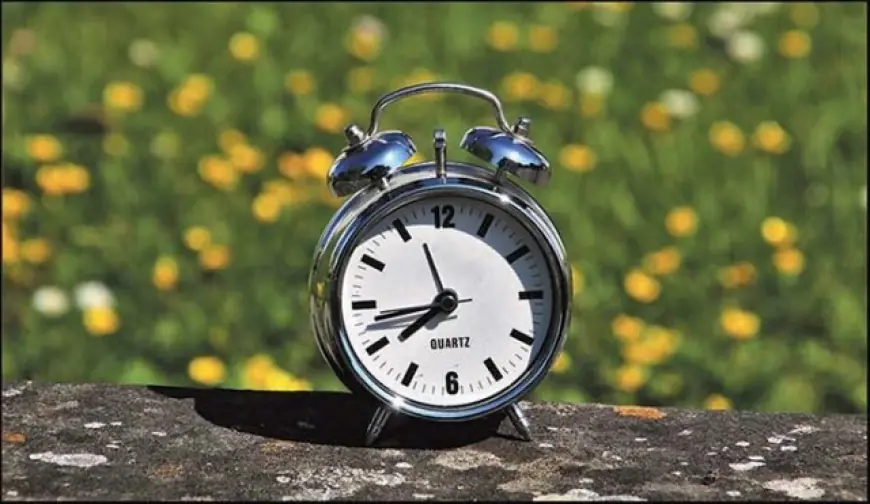
Yes, the time change has already happened. Daylight saving time 2026 officially began today, Sunday, March 8. If you lost an hour of sleep last night and your clock reads later than expected, that is exactly why. Here is the full breakdown.
Did Daylight Savings Happen? Yes — at 2 a.m. ET Today
Daylight saving time 2026 started on Sunday, March 8, at 2 a.m. local time. At that exact moment, clocks sprang forward to 3 a.m., and most Americans lost one full hour of sleep overnight.
When local standard time reached 2:00 a.m. on Sunday, March 8, 2026, clocks were turned forward one hour to 3:00 a.m. local daylight time instead.
Your smartphone and most digital devices updated automatically. Manual clocks — microwaves, car dashboards, wall clocks — still need to be set ahead by one hour if you have not done so already.
Did We Lose or Gain an Hour in the Spring 2026 Time Change?
We lost an hour. The clocks spring forward by one hour, meaning sunrise and sunset now occur one hour later than they did yesterday.
On Saturday, March 7, sunrise in Boston was at 6:09 a.m. and sunset at 5:41 p.m. On Sunday, March 8, after the time change, the sun rises at 7:08 a.m. and sets at 6:42 p.m.
Mornings are temporarily darker, but evenings gain a full extra hour of sunlight — a welcome trade-off for most heading into spring.
When Does Daylight Saving Time End in 2026?
Daylight saving time ends on November 1, 2026, at 2:00 a.m., when clocks fall back one hour. Sunrise and sunset will then be about one hour earlier than the day before, with more light returning to the mornings.
Daylight saving time will be in effect for 238 days in 2026, according to the National Institute of Standards and Technology.
Which States Did NOT Spring Forward Today?
Most states, the District of Columbia, and the Navajo Nation observe daylight saving time. Arizona — apart from the Navajo Nation — and Hawaii do not change their clocks, nor do the U.S. territories of Puerto Rico, Guam, American Samoa, and the U.S. Virgin Islands.
If you live in those areas, the time change 2026 had no effect on your clock or routine.
Health Warnings for the DST Spring Forward
Darker mornings and more evening light knock your body clock out of whack, and daylight saving time can cause sleep trouble for weeks or longer. Fatal car crashes temporarily spike in the first few days after the spring time change, with researchers attributing the risk to sleep deprivation — the danger being highest in the morning hours.
The American Heart Association points to studies suggesting an uptick in heart attacks on the Monday after daylight saving time begins, and in strokes for two days afterward.
Sleep experts recommend shifting your bedtime 15 to 20 minutes earlier for several nights, getting morning sunshine, and avoiding evening screen time to help your body adjust faster.
Will the Time Change Ever Be Permanent?
Every year there is talk about ending the time change. President Trump urged Congress to eliminate the biannual shifts, and the Senate unanimously approved a measure in 2022 to make daylight saving time permanent — but it did not advance.
Most recently, H.R. 7378, the Daylight Act of 2026, has proposed modifying clocks by only half an hour as a compromise. As the debate continues, the annual practice of changing the clocks will continue for the foreseeable future.
In Europe, daylight saving time — known as summer time — begins later, on the last Sunday in March, which in 2026 falls on March 29. This creates a temporary three-week window where North America and much of Europe are out of their usual time zone alignment.