Steve Wozniak Reflects on Apple’s 50 Years and the iPhone’s Roots

Apple’s 50-year milestone is drawing fresh attention to how the company went from early hobbyist-era hardware to products that reshaped daily life, with steve wozniak describing the company’s origin story alongside new accounts of the behind-the-scenes work that helped lead to the iPhone.
As of 9: 20 a. m. ET Sunday, Apple’s arc is being retold through the meeting of Steve Wozniak and Steve Jobs near Cupertino, California, and through later design experiments—from multi-touch demos to internal efforts that first aimed at a tablet before culminating in the 2007 debut of the iPhone.
Steve Wozniak and Steve Jobs: From a sidewalk near Cupertino to Apple II
Steve Wozniak traced the story back to 1971, when he met Steve Jobs on a sidewalk near Cupertino, California, describing Jobs as a “charismatic, rebellious high-schooler. ” Wozniak recalled that, at the time, neither could have predicted what would follow. “And who was to know there was gonna be a company in the future?” Wozniak said.
By 1975, Wozniak built an early computer that he described as “little more than a circuit board, ” and Jobs proposed selling it. Wozniak characterized their partnership in simple terms: “Steve Jobs wanted a company, and did it. And I was his resource!” he said, laughing.
The two sold 150 units of Wozniak’s first computer, followed by six million of his second—identified as the Apple II. Wozniak called the Apple II “revolutionary, ” saying, “It was so far above any of the other computers coming out!” He added that they weren’t trying to predict the long-term future; they were trying to move ahead in the moment: “For today, we’re taking a step forward ahead of others. ”
Tim Cook, John Sculley, and the return of Steve Jobs
The company’s path was not linear. After a power struggle with CEO John Sculley, Jobs left Apple for 11 years, and the company “started sliding into irrelevance. ” Apple CEO Tim Cook described the period bluntly: “It was bleak, to be honest, ” Cook said. He added that Apple had “very little cash” and had “lost our way. ”
When Jobs returned in 1997, he hired Cook as head of operations. Cook said he saw something exceptional in Jobs’ leadership: “He is a once-in-a-thousand-years kind of person. ” Jobs’ team then executed a sweeping overhaul that former head of hardware Jon Rubinstein summarized as a restructuring that set the company “on the path for where it is today. ”
Rubinstein also described the intensity inside Apple at the time, saying Jobs “could be absolutely brutal” while pushing teams to attempt the “impossible”—and then deliver. Alongside that drive, Jobs and chief designer Jony Ive met daily to focus on product design details, helping spark what Rubinstein described as a period of major success.
That run included the translucent iMac becoming the bestselling computer in history, the iTunes Store becoming the first successful online music store and disrupting the music industry, and the iPod becoming the first Apple product to sell in the hundreds of millions. Paola Antonelli, a design curator at New York’s Metropolitan Museum of Modern Art, said Apple’s footprint in design culture is visible in the museum’s holdings: “There are many, many Apple products in the MoMA collection, dozens of them. ”
FingerWorks, Project Purple, and the behind-the-scenes path to iPhone
Accounts of the iPhone’s development emphasize that it did not emerge fully formed, even though its 2007 unveiling would become a defining moment for Apple. One account described early Apple work that began not with a phone, but with a tablet, alongside a broader pattern of internal experimentation across technologies and demos.
A key thread involved exploration of touch-based interaction. At Apple, interdisciplinary teams were described as constantly “poking around” on fledgling ideas, with sensors VP Myra Haggerty saying, “There’s hundreds of little startups that are just poking around, doing stuff. ” In early 2003, designer Duncan Kerr began holding Tuesday meetings with interface designers and input engineers to explore interaction models beyond the long-established mouse-and-click routine.
Kerr’s group experimented with technologies including camera-driven systems, spatial audio, haptics—described as vibrating feedback—and 3D screens. Kerr and colleagues Bas Ording and Imran Chaudhri sought a real-world multi-touch display for further testing, using a flat black trackpad known as the iGesture NumPad made by FingerWorks, a Delaware company. The technology could detect multiple finger touches at once and interpret gestures drawn on the surface, including a twisting motion used for an “Open” action.
In late 2003, Apple commissioned FingerWorks to build a larger multi-touch pad—12 x 9. 5 inches—to better approximate a screen. Kerr’s team assembled a test rig inside Apple’s design studio at Infinite Loop 2, using an LCD projector mounted on a tripod to shine an image down onto the trackpad, with a sheet of white paper taped over the surface to make the projected image bright and clear. The group developed interactions such as sliding a finger to move an icon and spreading two fingers to enlarge a map or photo.
Another account tied the company’s multi-touch push to a tense meeting involving high-ranking figures from Apple and Microsoft, including Bill Gates, during a period when Microsoft was working intensively on tablet concepts with a stylus. The debate centered on how people would work with computers in the future: a stylus for notes and precision on one side, and a finger-first interface on the other. The account said Jobs argued that if a user had to pull out a pen, “you have already failed at interface design, ” and emphasized that people don’t want “another thing they can lose. ”
In that telling, Apple later bought FingerWorks and continued experimenting with multi-touch displays capable of recognizing multiple fingers at once, including pinch-to-zoom and smooth scrolling. It also described internal prototypes initially focused on a tablet under an internal name, Project Purple, before Apple shifted emphasis toward putting multi-touch into a device “everyone had in their pocket. ”
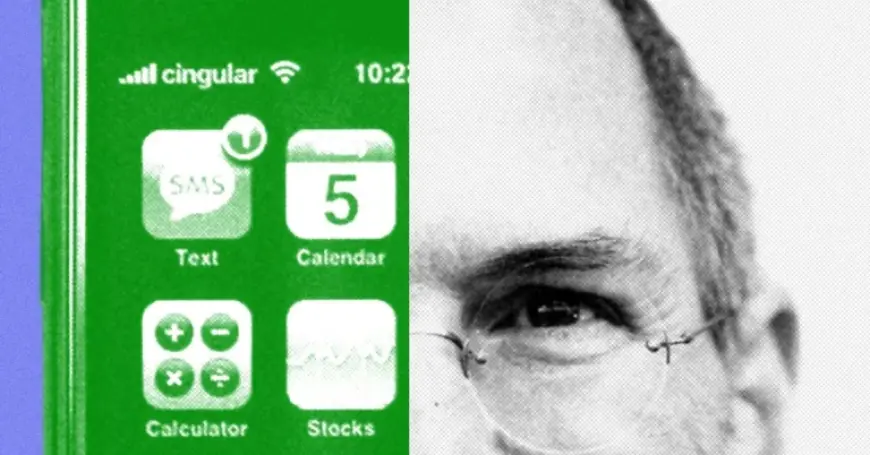
When the iPhone was introduced in 2007, Jobs announced what he described as three products in one: an iPod, a phone, and an internet communicator. As he demonstrated at the time, he used a finger to scroll—highlighting direct touch interaction with on-screen data.
The iPhone’s broader effect was later described in everyday terms: it became a camera, a TV, a newspaper, and a game console, while also giving rise to services including Uber, Airbnb, DoorDash, Venmo, and Tinder. The same shift also fueled the rise of social media and brought concerns about screen time, mental health, and isolation.
The next confirmed marker in this anniversary cycle is the latest published update timestamp tied to Apple’s 50-year coverage, listed as 9: 20 a. m. ET Sunday.