Ryanair Cardboard Box Tip Promoted as Bigger Free Bags Spur Uncertainty

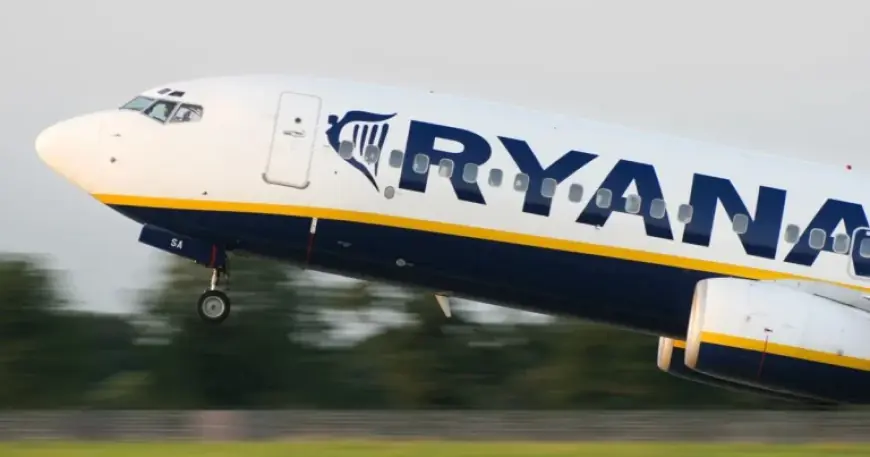
Saturday at 9: 15 a. m. ET — Ryanair has expanded its free under-seat personal bag allowance by roughly 20%, and a packing specialist is urging travelers to try the ryanair cardboard box trick to avoid costly gate failures. What remains unsettled is how evolving EU rules and airport checks will shape enforcement across routes.
Ryanair’s 40 x 30 x 20 cm Limit and Tom Schott’s Rationale
Ryanair expanded its “personal bag” allowance in line with new EU regulations, with a change introduced last summer and phased in from mid‑2025. From September 2025, travelers on a basic fare can bring an under‑seat bag up to 40 cm x 30 cm x 20 cm at no extra cost, provided it weighs under 10 kg and fits beneath the seat in front. With the updated size standard now active, the airline continues to treat anything larger—such as a typical 55 x 40 x 20 cm case—as a paid cabin bag product.
Packing specialist Tom Schott of Schott Packaging warns that the bigger dimension can tempt passengers to overstuff, which risks a bulge that draws attention at the gate. His recommendation centers on structure: insert a lightweight, snug-fitting cardboard box to create a rigid frame so soft bags hold their shape and use every corner without exceeding the 40 x 30 x 20 cm boundary. He further advises a small, sturdy box in the center—cushioned by clothes—to protect chargers, adapters, and toiletries from crush or leaks.
Schott frames the ryanair cardboard box approach as part of a broader system: pre‑plan by laying out items within a 40 cm x 30 cm outline before packing, then sort gear into sealable bags and modules. The goal is a compliant, efficiently organized under‑seat bag that meets the single‑item limit while keeping valuables intact.
Draft EU Baggage Rules and easyJet’s Under‑Seat Allowance in 2026
EU baggage proposals that would entrench a right to carry specific cabin items remain in draft form and are unconfirmed as of 9: 15 a. m. ET. While those proposals move through the legislative process, Ryanair’s personal‑item dimensions sit at the 40 x 30 x 20 cm threshold, with one free under‑seat bag confirmed for standard fares as of early 2026. For overhead lockers, non‑priority customers have no guarantee of space, and late payment for larger cabin bags at the gate remains more expensive than buying in advance.
easyJet has converged on a similar under‑seat model. In 2026, its free allowance typically runs to around 45 x 36 x 20 cm, stowed beneath the seat in front, with no advertised weight limit on many routes if passengers can lift the bag and fit it in the sizer. Larger cabin cases are available as a paid extra—often bundled with extra‑legroom or “up front” seats—or added separately. On busy departures, travelers without that entitlement risk being limited to the single under‑seat item.
The Ryanair Cardboard Box Tip and the Triggers to Watch
While the cardboard insert is confirmed as a non‑official packing strategy—Schott’s, not Ryanair’s policy—the enforcement environment still carries risks. Initial reports indicate a family was charged around £400 (GBP) at the gate after their bags failed to meet Ryanair’s rules, underscoring that misjudging dimensions can prove expensive. Meanwhile, some airports have updated bag sizers and added red stickers to reflect the 40 x 30 x 20 cm standard, yet consistency of checks can vary by departure and staffing patterns, which remain unconfirmed as of 9: 15 a. m. ET.
For now, the most concrete way to reduce uncertainty is to focus on dimensions and rigidity. A bag that presents clean, straight lines is less likely to snag on a sizer’s edge, especially at the 40 cm height and 30 cm width constraints. Travelers who treat the 20 cm depth as a hard cap—and build a crush‑proof zone for fragile items—align most directly with the updated allowance. Still, the reality at the gate can shift quickly, particularly when overhead locker space is constrained or an aircraft swap tightens boarding timelines.
Watch these specific triggers for clarity on what changes next:
- EU legislative updates on cabin baggage rights moving from draft to confirmed policy.
- Ryanair and airport sizer updates that explicitly show the 40 x 30 x 20 cm measure.
- Any airline notices that adjust free allowances or paid add‑ons, including 10 kg cabin bag options and priority‑style products.
Yet, travelers do retain one confirmed constant across both carriers detailed here: one free under‑seat bag, with dimensions clearly published—40 x 30 x 20 cm for Ryanair and around 45 x 36 x 20 cm for easyJet in 2026. The remaining uncertainty lies not in the numbers themselves but in the on‑the‑day application when flights are full and staff must make rapid sizer calls.
No formal EU ruling date is confirmed as of 9: 15 a. m. ET. The next firm milestone on file is the September 2025 threshold when Ryanair’s 40 x 30 x 20 cm under‑seat dimensions were stated to apply, with the policy phased in from mid‑2025 and in place by early 2026. If the EU proposals are enacted, airlines are expected to publish updated terms and enforcement guidance thereafter.