Antonelli takes second as Russell wins Australian GP in Mercedes 1-2

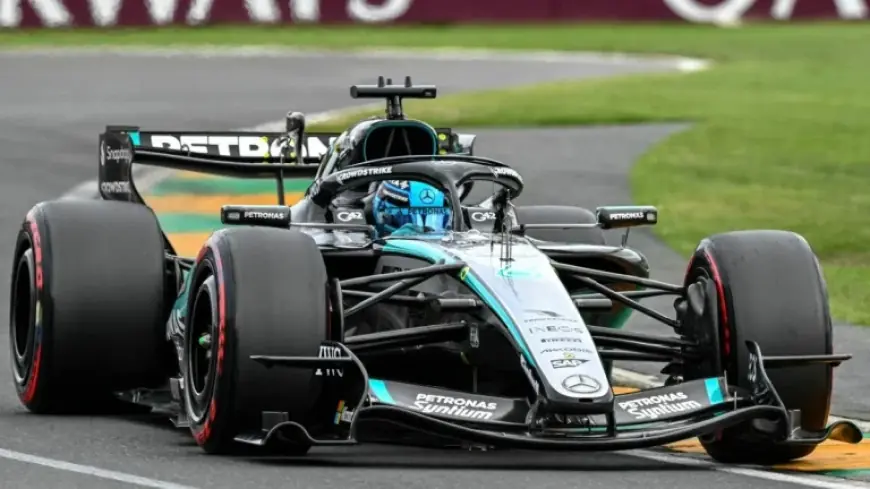
George Russell won the season-opening 2026 Australian Grand Prix as Mercedes finished 1-2 with antonelli in second, ahead of Ferrari’s Charles Leclerc and Lewis Hamilton. As of Saturday at 11: 30 a. m. ET, the result set an early benchmark for the new technical era, with energy management driving on-track battles and reshuffling the order.
George Russell leads Mercedes 1-2 as antonelli recovers in Melbourne
Russell secured what was described as the sixth win of his career as Mercedes’ early advantage translated into a dominant race outcome. antonelli finished 2. 974 seconds back after a difficult start caused by a battery issue that was not fully charged, leaving him bogged down off the line before mounting a comeback.
Even with that setback, antonelli climbed back through the field in the Mercedes W17, which was characterized as the strongest car in the group. The opening race of the 2026 season was also framed as the beginning of a “new era” for Formula 1 under fresh regulations that increased action and introduced more uncertainty in relative performance.
Ferrari emerged as Mercedes’ closest challenger in Australia, with Leclerc finishing third, 15. 519 seconds behind Russell, and Hamilton taking fourth, 16. 144 seconds back. The top four classified ahead of McLaren and Red Bull drivers Lando Norris and Max Verstappen, who finished fifth and sixth, respectively.
Charles Leclerc and Lewis Hamilton put Ferrari on the podium
Leclerc’s third-place finish and Hamilton’s fourth were presented as confirmation that Ferrari’s overall performance level in Australia was stronger than McLaren and Red Bull. Early in the race, Ferrari’s launch performance stood out: Leclerc, starting fourth, surged to the lead at Turn 1, while Hamilton moved up to third.
From there, the race showcased the variability expected under the new rule set. Cars were described as attacking, overtaking, and counter-overtaking, with the flow of the fight shaped by energy management. In one highlighted sequence, Leclerc kept Russell behind, watched him pass on a straight, then attacked again and repassed a few corners later.
Still, Mercedes’ advantage over a full run was described as clear. The team’s combination of overall power and tire management was pointed to as a decisive strength, even as Ferrari’s ability to pressure the leaders offered a positive sign for its fans.
Virtual Safety Car pit timing helps Mercedes control the race
A key moment came on Lap 13, when a Virtual Safety Car period influenced strategy. Both Mercedes cars pitted, switched to the hard tire, and then ran to the finish. Ferrari’s pit stop came around mid-race, a more conservative approach that was portrayed as prioritizing a secure podium rather than mirroring Mercedes immediately.
Behind the front six, the finishing order included Oliver Bearman in seventh, with rookie Arvid Lindblad eighth for Racing Bulls and Gabriel Bortoleto ninth for Audi. Pierre Gasly scored a point for Alpine in 10th, followed by Esteban Ocon 11th for Haas and Alex Albon 12th for Williams.
Further back, Liam Lawson finished 13th for Racing Bulls. Franco Colapinto placed 14th for Alpine, with Carlos Sainz 15th for Williams and Sergio Perez 16th for Cadillac. The race also underlined that reliability remained a theme: Isack Hadjar retired with a technical problem for Red Bull, as did Valtteri Bottas for Cadillac, while Aston Martin used the race to run experiments with Fernando Alonso.
Next on the calendar is China, with the next Formula 1 race scheduled for next week, as the 2026 season continues immediately after the Australian opener.