Oliver Bearman qualifies just behind Ocon as Haas faces 2026 workload questions

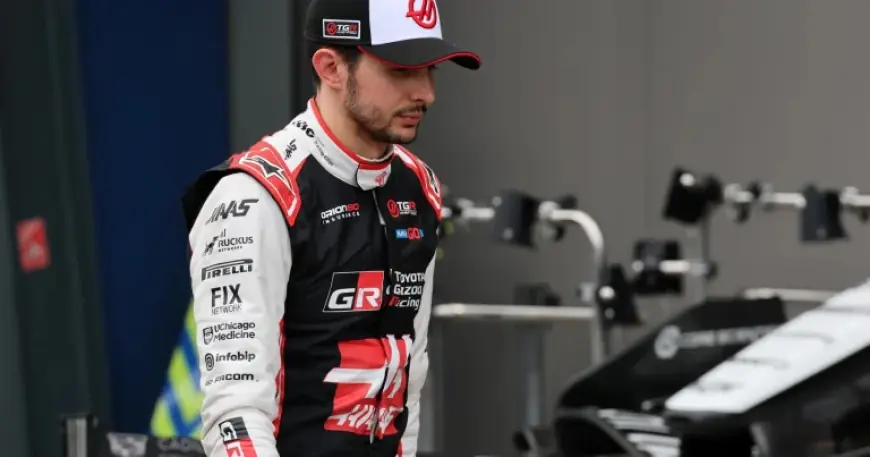
Saturday at 9: 30 a. m. ET in Melbourne, oliver bearman finished one place behind Haas team-mate Esteban Ocon in qualifying for the Australian Grand Prix, with Ocon set to start 13th on the grid. What remains unresolved is whether Ocon’s late-session instability came from degradation or a breakage, and how quickly Haas can pinpoint the cause before the race.
Esteban Ocon and Oliver Bearman’s Melbourne qualifying result is confirmed
Ocon will line up 13th at Albert Park, with oliver bearman directly behind him in 14th. Ocon described leaving qualifying feeling his head “is still about to explode, ” tying that feeling to the demands now placed on drivers under the 2026 ruleset.
Ocon said the new energy demands were highlighted for the first time during Australian Grand Prix qualifying. He also framed the situation as limiting what drivers can do naturally in the car, saying drivers “have to do things which are very artificial to try and make the rules work. ”
Beyond workload, Ocon drew a line between car feel and power unit management. He said the cars are “more comfortable to drive” and “a nicer ride, ” but added that “engine-wise, it is a bit tricky. ” As a specific example, Ocon said that if a driver goes too fast on the throttle at the exit of Turn 6, “you lose two or three tenths in the lap, ” which he said “is not how it should be. ”
Albert Park and the 2026 energy-harvesting demands driving driver criticism
Ocon said Albert Park will be one of the worst circuits for energy harvesting because of long straights and a lack of heavy braking zones. He linked that track profile to the workload drivers are experiencing, describing his head as “exploding” as he tried to meet the requirements while still extracting lap time.
Reaction to the energy-harvesting requirements has been near-universal in condemnation from the field, as described in Ocon’s comments. He also noted the competitive impact, saying even champions McLaren were “on the back foot, ” despite being powered by what he called a “class-leading Mercedes HPP. ”
Still, the precise balance between drivability and compliance remains contested within Ocon’s account. He said the cars slide more and feel nicer to drive, but he also said drivers are less free because of the steps required to “make the rules work. ” Those two realities—improved comfort but increased procedural workload—are both present in the confirmed comments, and they set up a key question teams will keep confronting as 2026 running continues.
Haas engineers are still investigating Ocon’s late instability after qualifying
Ocon said he felt Haas missed an opportunity for a potential Q3 berth after a mistake on his final run. He added that engineers told him he “lost rear load on the last run, ” which he said he felt most in the last sector on his best lap, but that the effect carried through the whole lap on the final run.
He quantified the swing in performance in his remarks, saying he was “seven-tenths slower than where I should be, ” and argued there may have been “more to play for, ” including “potentially a Q3 spot, ” if the expected improvement from run to run had materialized.
Yet the underlying cause of the late-session behavior is unconfirmed as of 9: 30 a. m. ET. Ocon said the car had “instability into every corner, ” and emphasized that it “wasn’t the case when we started qualifying. ” He said the team does not know yet whether “something degraded or something broke. ”
The next clear trigger that can resolve that uncertainty is Haas’ confirmed internal review of what changed between the start of qualifying and the final run, focusing on the reported loss of rear load and whether any component degraded or failed. If Haas confirms a breakage, any response is expected to depend on what part is implicated and whether it can be addressed before the race.