F1 Highlights Today Show Mercedes Back on Top After Australia Opener

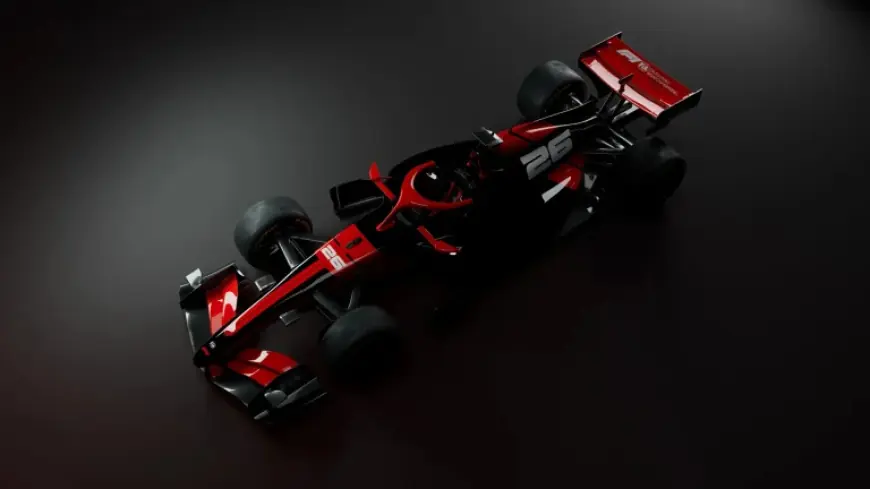
George Russell led Mercedes to a 1-2 finish in the Australian season opener, a result that underlined Mercedes’s early advantage and how the 2026 rule changes are already shaping races. Sunday at 9: 14 a. m. ET — these f1 highlights today show the impact of new Recharge and Boost systems on race strategy and team fortunes.
F1 Highlights Today: Mercedes, Russell and the New Recharge Strategy
Mercedes produced a dominant qualifying and then converted that pace into a season-opening 1-2, with Russell at the front; that dominance has been tied directly to how teams manage the new 2026 power units. The 2026 rules shift roughly half the car’s power to electrical systems and half to internal combustion, and the power units will use Advanced Sustainable Fuels.
Recharge is the regulation that lets teams harvest energy in braking, on part throttle, when lifting off the throttle and during “super clipping” at the end of a straight. Most Recharge actions will be automated by the car’s ECU; the single Recharge mode a driver can directly control is lift-off regeneration, which disables Active Aero when used, while super clipping can top up the battery without closing Active Aero.
Boost is the driver-controlled deployment that lets a racer trigger a change in power-unit settings — returning to maximum power or to a team-configured profile — and that energy can be used all at once or spread across the lap. Teams are already testing when to harvest and when to deploy, and those choices helped shape Mercedes’s opening success.
Ferrari Missteps, McLaren Slow Start and Key Australian Winners
Australia delivered clear winners and losers. Ferrari briefly led early when Charles Leclerc took the lead in a “crazy start, ” but Ferrari’s decision not to pit during the first virtual safety car period was judged the wrong call and left the team to settle for a 3-4 finish in the race order.
One car was wrecked before it even reached the grid, a lone early incident that had a painful effect for the home crowd. McLaren emerged as a team that may have started slowly; commentary noted McLaren did not look like a proper threat over the Australia weekend, while Mercedes appeared to have the stronger package.
Max Verstappen produced a notable recovery, moving from 20th to sixth in the race, a driver-specific drive that stood out amid wider team stories about reliability and adaptation to the new power-units and energy management demands.
Team-by-Team Notes: Mercedes, Red Bull, McLaren and Driver Figures
Mercedes’s car is listed as the W17 with engine Mercedes and principal Toto Wolff; George Russell (No. 63) is recorded with 5 career wins and 7 poles, and his best season finish listed as fourth. Russell’s performance in Australia reinforced expectations that Mercedes can exploit a car that is performing “exactly as prescribed. “
McLaren’s MCL40 runs a Mercedes engine with Andrea Stella as principal; Lando Norris (No. 1) is listed with 11 wins, 16 poles and 1 title, while Oscar Piastri (No. 81) has 9 wins and 6 poles. Observers noted McLaren’s season start looked modest relative to last year’s title-winning campaign.
Red Bull operates an RB22 with a Ford partnership and Laurent Mekies as principal; Max Verstappen (No. 3) carries 71 wins, 48 poles and 4 titles on his record. Red Bull’s new powertrain debut raised questions early in the weekend but was described as proving those initial engine fears unfounded, with particular strength in energy recovery and deployment.
Also notable in team lists: newcomers and returning manufacturers figure in the 2026 power-unit landscape, with Red Bull Powertrains in partnership with Ford, General Motors planned from 2029, Audi and returning supplier Honda named among the industry players adapting to the new rules.
For readers tracking race facts: Mercedes’s 1-2, Ferrari’s 3-4 finish, Verstappen’s 20th-to-sixth surge and the single car wrecked before the grid are the headline outcomes that emerged from the opening weekend.
With no single next event time confirmed in the materials available, clarity on how teams will refine their hybrid strategies is expected after the next race weekend; timing for that follow-up was not confirmed as of 9: 14 a. m. ET.