Paul Skenes’ World Baseball Classic call shifts pitcher participation calculus

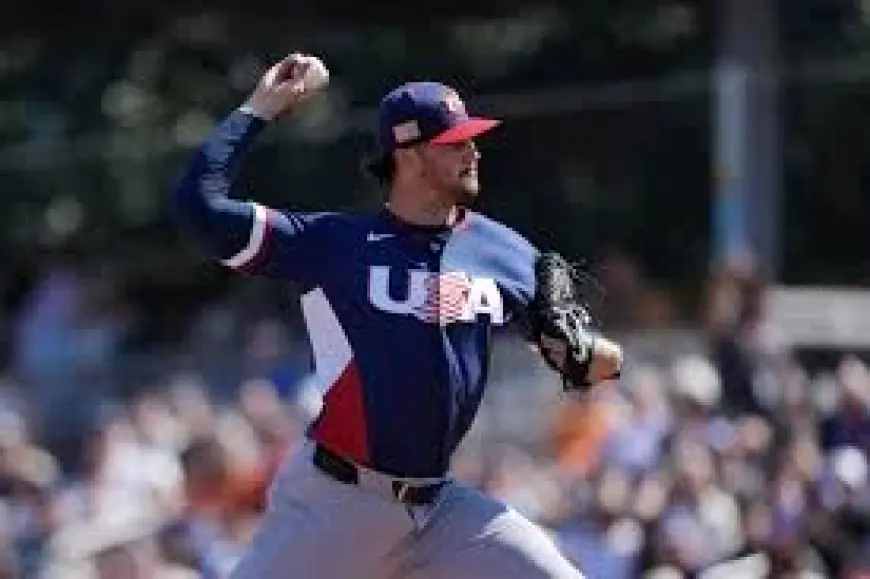
Elite pitchers planning their spring workloads face a different set of choices now that paul skenes and other top arms are openly welcoming World Baseball Classic participation. Friday at 9: 14 a. m. ET, discussion around the next WBC centered on how Team USA’s pitching pool is filling out with high-end names—despite years of caution tied to the tournament’s timing and intensity.
Team USA’s pitching depth changes as Paul Skenes and Tarik Skubal commit
The most immediate consequence is practical: Team USA can build a rotation and bullpen around higher-end pitching than in many past cycles, because elite starters are no longer treating the World Baseball Classic as an automatic “no. ” The participation of reigning Cy Young winners Paul Skenes and Tarik Skubal is described as the spark that “kickstarted a run” of top U. S. pitchers lining up for the tournament.
That shift extends beyond starters. Red Sox reliever Garrett Whitlock “jumped at the chance” to pitch for Team USA, joining a bullpen that includes elite closers Mason Miller and David Bednar. The effect is a roster-shaping one: when high-leverage relievers treat WBC innings as a priority opportunity, the back end of a national-team staff starts to look less like a spring exhibition and more like a postseason-caliber group.
Not every pitcher is making the same choice. Garrett Crochet declined with regrets, citing a desire to remain with his wife and newborn daughter throughout spring training. Still, the overall trendline in the current cycle points toward greater buy-in rather than avoidance.
Alex Cora points to injury risk anywhere, not just the World Baseball Classic
A secondary consequence is the changing argument teams and pitchers use to justify participation. The longtime fear was that the tournament’s ramp-up could create preventable injury risk for pitchers, and the cautionary tale most associated with that concern is Daisuke Matsuzaka.
Matsuzaka became the first star of the WBC in 2006 and again was recognized as tournament MVP while leading Japan to a second straight WBC title in 2009. But that same 2009 season, a seemingly rushed buildup caught up with him when he returned to the Red Sox for spring training. After an 18-3 campaign with a 2. 90 ERA over 167⅔ innings in 2008, shoulder fatigue left him with drastically diminished stuff in 2009. He finished 4-6 with a 5. 76 ERA, was limited to 59⅓ innings, and missed three months.
For years after, many top pitchers and their teams viewed the tournament as a risk not worth taking. Yet Red Sox manager Alex Cora framed the modern debate differently, arguing that pitching “in just about any form” carries risk—whether it’s a WBC game or a routine spring buildup. Cora pointed to a separate example: Twins ace Pablo López, who had been scheduled to pitch for Venezuela, blew out his elbow and required Tommy John surgery amid a normal spring training ramp-up.
“It doesn’t matter if you’re throwing in Puerto Rico, Miami, Houston, ” Cora said, referencing different WBC venues. His point was that injuries can be pinned on the tournament in the public narrative, even if the underlying risk exists whenever pitchers are competing and building intensity.
Yoshinobu Yamamoto and a modern ramp-up reshape how pitchers view the WBC
The event driving the shift is a renewed willingness—sparked by the still-vivid memory of the 2023 WBC—to treat the tournament as a true best-on-best stage, including for pitching. Japan continued its tradition of fielding its best pitchers with Yoshinobu Yamamoto, even after what was described as a staggering workload in last year’s postseason.
Other countries are following suit. The Dominican Republic is set to feature a rotation including 2025 NL Cy Young runner-up Cristopher Sánchez, 2022 NL Cy Young winner Sandy Alcantara, and Red Sox starter Brayan Bello. For Venezuela, Ranger Suárez—who signed a five-year, $130 million deal with the Red Sox in January—took the ball in its WBC opener.
Just as importantly, the training timeline around the tournament is described as different than it used to be. Where spring training once served as the primary on-ramp toward regular-season velocity, changes in offseason training methods mean pitchers are often approaching, or even scraping, peak velocity before spring training or early in camp. That alters the risk calculation: WBC workloads may no longer represent the same kind of abrupt jump for pitchers who are already near top-end effort earlier in the calendar.
For now, the consequence is a more competitive-looking pitching landscape for the WBC, especially for Team USA, anchored by the presence of paul skenes and other high-profile arms willing to commit. The next inflection point will come as national teams finalize pitching plans and as more pitchers make explicit yes-or-no decisions; if that momentum holds, Team USA’s staff composition will keep trending toward the top tier as rosters take shape.