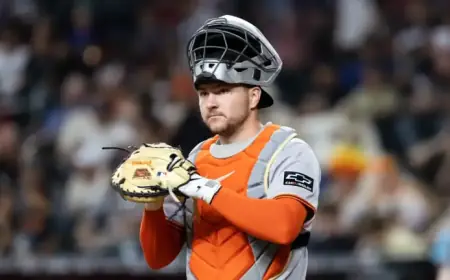
Toto Wolff Faces Questions as Mercedes’ 2026 Advantage Shows in Australia

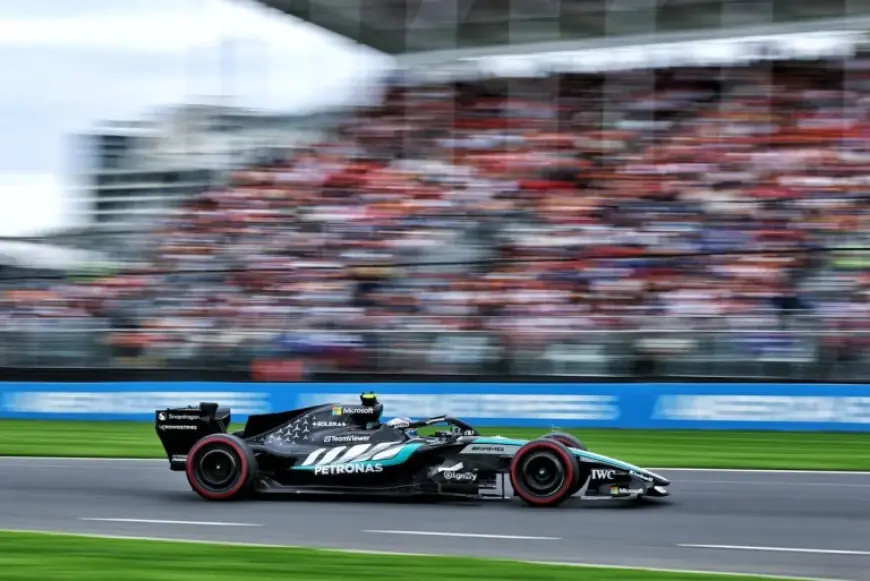
Mercedes’ W17 dominated qualifying at the Australian Grand Prix, with George Russell taking pole by 0. 785 seconds over the nearest non-Mercedes, Isack Hadjar, a gap that crystallizes a deployment and chassis advantage that will shape the early 2026 campaign. Sunday at 11: 22 a. m. ET — the scale of that edge and how teams respond, including commentary directed at leadership, matter for race setup and strategy, and for toto wolff as discussions around energy management intensify.
Toto Wolff and Mercedes’ energy-management edge
Russell highlighted both power and chassis as contributors, saying, “We’ve got a really great engine beneath us, ” and “However, we’ve also got a really amazing car beneath us and that probably hasn’t been highlighted enough in the press these past few weeks. ” Data from the lap shows the advantage manifests most obviously in deployment on the back straight, where Mercedes reaches a higher peak speed and sustains it later through the run out of Turn 8.
Back-straight deployment gaps and lap-split details featuring George Russell
At a point at the exit of Turn 8 the four fastest cars were at similar speeds: Russell and Charles Leclerc at 290 km/h, Isack Hadjar at 289 km/h and Oscar Piastri at 291 km/h. From that same point, Russell held a gap over the others: Leclerc 0. 225 seconds down, Piastri 0. 252 seconds down and Hadjar 0. 332 seconds down. As the cars traversed the back straight the speed traces diverged; Mercedes reached a higher peak and began to level off later, producing additional time gains into Turn 9.
Between that Turn 8 reference and the arrival at Turn 9, Leclerc lost another 0. 234 seconds, Hadjar 0. 222 seconds and Piastri 0. 449 seconds. By the time the cars reached Turn 11 — roughly 25 seconds after the point on Turn 8 where speeds matched — Leclerc had lost 0. 650 seconds, Hadjar 0. 722 seconds and Piastri 0. 628 seconds. That window accounts for approximately 32% of the laptime while representing 80% of Leclerc’s time loss, 92% of Hadjar’s loss and 73% of Piastri’s loss, a concentration that underlines Mercedes’ run-out strength.
Oscar Piastri’s pre-race crash and McLaren’s battery concerns
Pre-race drama altered the grid when Oscar Piastri crashed on the reconnaissance lap while downshifting over the kerb at Turn 4, seriously damaging his car and ending his hopes of racing in front of the home crowd. Piastri described an unexpected surge from the battery — which now provides half of the car’s overall power — saying he had “100kw more power than I’ve had the whole weekend at the point that I shifted, ” and that when he shifted it went into wheelspin.
That incident made this the first Australian Grand Prix without an Australian entrant since 2001. It also removed a rival that, in qualifying performance, had shown it could be within the same speed brackets on key sectors but vulnerable in deployment and energy-management windows.
On race day Mercedes converted qualifying strength into victory, with George Russell claiming the win and a Mercedes 1-2 result completed by Kimi Antonelli. Ferrari briefly took the lead at the start when Charles Leclerc moved into first from fourth on the grid, and Lewis Hamilton ran third after starting seventh, but Mercedes’ ability to manage deployment and tyres over long stints kept the Ferraris from closing the gap.
Ferrari attempted a strategy gamble after Isack Hadjar retired with an engine failure, choosing not to stop during a virtual safety car while others pitted. That choice surrendered about 10 seconds of pure race time in hope of chasing the Mercedes pair on fresher tyres, but Mercedes’ tyre management and run-out speed erased the expected benefit.
Still, questions about why Mercedes enjoys this deployment and energy management superiority persist. McLaren noted heavy lifting and coasting in their lap: Oscar Piastri said, “we were lifting and coasting three times a lap” and that in some corners they had “effectively 450 horsepower less, ” underlining how different teams are interpreting and extracting usable energy under the 2026 power rules.
A post-mortem of Piastri’s crash and a wider technical review by teams are expected after the race; no specific time has been announced in ET for those debriefs.