Journée Internationale Des Droits Des Femmes puts today’s focus on rights—and the risks taken to secure them

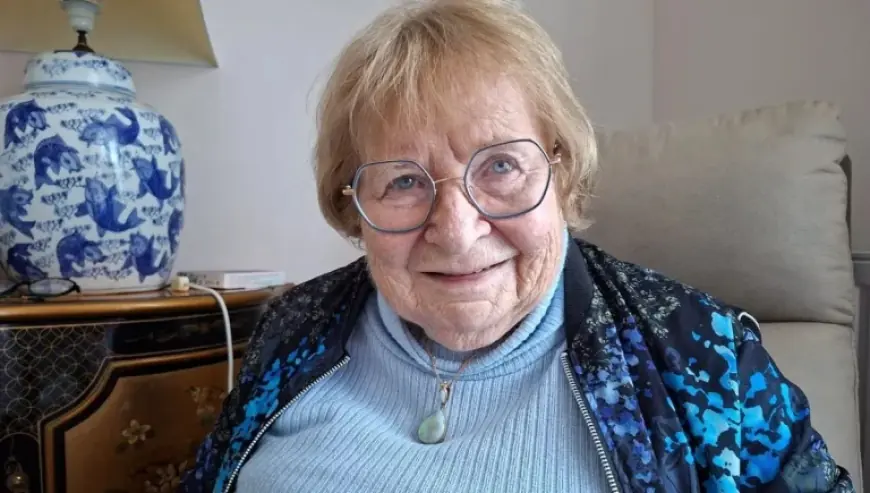
For women’s-rights advocates marking journée internationale des droits des femmes, the day is being shaped less by ceremony than by a renewed spotlight on what it took—personally and legally—to secure choices that were once punishable. Sunday at 10: 00 a. m. ET, two stories set the tone: Pierrette Grisard’s account of clandestine support for abortions in 1960s France and an official statement from Princess Charlène of Monaco.
Saint-Nazaire’s Pierrette Grisard recounts the stakes behind clandestine support
In Saint-Nazaire, Pierrette Grisard, 88, is being highlighted as a figure whose life reflects the concrete risks that once accompanied women’s reproductive decisions. Grisard, an engineer by training, described how her activism began through the Planning familial in the 1960s—years when abortion was illegal and contraception was described as nearly nonexistent.
Grisard, who received visitors in her small two-room apartment in a Domytis senior residence in Saint-Nazaire, recalled building a life around both family and activism. Born in Angers into a bourgeois milieu she described as “rather left, ” she pointed to a formative family dynamic: her father refused to allow her mother, a secretary, to return to work, a wound she framed as a “revenge of the daughter. ”
She also described navigating barriers in education and professional life, saying she pursued mathematics and passed the entrance exam for the only engineering school open to women at the time—an experience she said effectively made her a “fighter. ” Her account ties personal ambition to a broader fight for women’s rights, and places that fight inside domestic details: children, a marriage, and the gradual entry into a network of solidarity.
Planning familial in Angers becomes the hinge point in her story
The immediate consequence of Grisard’s recollections is a clearer, more granular picture of how women’s access to abortion was handled when the law offered no protection. In Angers, where she lived with her husband and children in the 1960s, Grisard said she and her husband turned to the Planning familial after the birth of her second son in 1964, when she did not want to have a third child right away. “When the third arrives, it will be chosen, ” she said.
From there, she described how the organization opened a world of “female solidarity” and revolt—starting with the basic difficulty of obtaining contraception. In her telling, even diaphragms had to be imported from England, and simply finding a method involved substantial obstacles.
When she later returned to Angers with her family, Grisard said she launched a Planning familial branch in the city. She described “dozens of women” coming seeking abortions, and a split between those who could be helped to travel to England and those who could not. At a certain point, she said, they decided to act with young medical interns because, as she put it, a woman who does not want to continue a pregnancy is ready to risk her life.
Grisard’s account includes the practical steps taken to carry out that decision, including obtaining the necessary equipment. She said she, her husband, and their two children traveled to England on vacation and returned with what she described as all the required materials concealed in a camper van. She described fear—believing they were being listened to—while also insisting there was “no question” of stopping.
Princess Charlène of Monaco’s official statement reframes equality as a right
While Grisard’s story centers on the past, a second message on journée internationale des droits des femmes is aimed at the present: a declaration issued by the Prince’s Palace in Monaco on Sunday tied the day to a direct call for equality, voiced by Princess Charlène of Monaco.
In the official statement, Princess Charlène said that women’s power does not need to be created, but liberated, adding that equality “is not a favor” but “a right” that should be exercised fully, everywhere, and for all. The framing is consequential in its own way: it positions equality as an obligation rather than a gesture, and it places the emphasis on implementation rather than intention.
The statement was presented as a departure from her usual discretion, and the reaction described in the context was rapid—online supporters praised the modern tone of the message. It also included a forward-looking wish: that every little girl can dream without barriers and act without fear.
The context also referenced her personal background, noting that before becoming Princess, Charlène Wittstock grew up in Benoni near Johannesburg in South Africa, and that she won South African swimming championships in 1996 at age 18. That athletic discipline was described as something she now brings to humanitarian commitments.
The next measurable shift will come from whether these commemorations translate into sustained political and social action, something Grisard herself flagged by warning against complacency. If her view holds, the near-term test is not symbolic messaging but concrete choices—such as how boys and girls are educated, whether pay equality advances, and whether existing rights are protected depending on who comes to power.