Iran’s Threat to Burn Ships Disrupts Persian Gulf Oil Supply

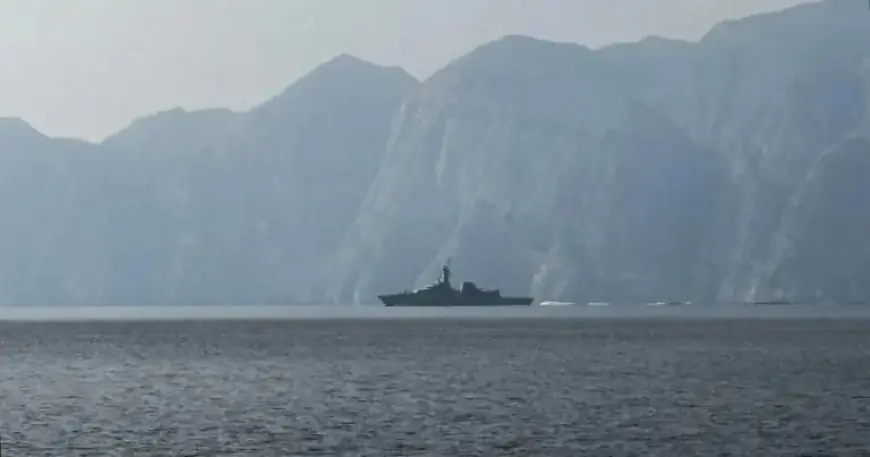
Recent threats from Iran’s Islamic Revolutionary Guard Corps (IRGC) to target ships in the Strait of Hormuz have raised significant alarms among global leaders. This waterway is crucial as it serves as the primary maritime route for oil transportation out of the Persian Gulf.
Importance of the Strait of Hormuz
The Strait of Hormuz is a vital 100-mile long corridor, connecting the Persian Gulf to the Arabian Sea. At its narrowest point, the strait measures only 21 miles across. Two two-mile-wide shipping lanes enable vessels to navigate in opposite directions, flanked by a median of the same width.
On any given day, the strait sees approximately 80 tankers, transporting between 16 to 18 million barrels of oil. This accounts for nearly a third of global maritime oil transport and around 20% of the world’s crude oil supply. Additionally, the strait is a key transit route for container traffic, linking Asian consumer goods to European markets.
Current Shipping Traffic Crisis
Following Iran’s threats, maritime traffic through the strait has drastically diminished. Experts note that tanker traffic has plummeted by about 90%. Noam Raydan, a maritime risk specialist, has reported that many oil tankers are currently hesitating to traverse this critical maritime corridor.
- The UK Maritime Trade Operations reported only two cargo vessels passed through the strait in a recent 24-hour period.
- This is significantly below the historical average of 138 vessels daily.
In response to the escalating situation, Kuwait has announced a reduction in oil production, joining other Gulf nations in temporarily curtailing operations. Major shipping companies, including Maersk and Hapag-Lloyd, have paused new cargo bookings to several regional ports.
Impact on Oil Prices
The combined effect of these disruptions has contributed to rising gas prices. Currently, the average price of regular gas in the U.S. stands at $3.41 per gallon, a 43-cent increase from the previous week. Prices in California have surged even higher, nearing $6 in some areas.
Shipping costs have also escalated dramatically. Leasing rates for tankers have jumped from $100,000 to as much as $700,000 per day. These rising expenses are filtering through to energy markets, leading to projections of increased ticket prices due to higher jet fuel costs.
In trading, the price of Brent crude oil has surged to $92.69 per barrel, reflecting a 27% rise in just a week. Despite this, some analysts believe that the market’s reaction has been muted, citing a significant reserve of oil available for short-term needs.
Long-Term Consequences and Future Predictions
Experts warn that the situation could worsen if the conflict persists. Qatari Energy Minister Saad Al-Kaabi has suggested oil prices could escalate to $150 per barrel depending on the war’s duration. Such price increases would have ripple effects on global GDP and consumer goods availability.
U.S. Government Response
In light of the crisis, the U.S. government is taking steps to ensure the safety of commercial vessels. President Trump has proposed providing insurance for maritime traffic and U.S. Navy escorts. Recently, the U.S. International Development Finance Corp. announced a plan to cover losses of up to $20 billion for affected vessels.
Nonetheless, skepticism remains among ship owners regarding the effectiveness of these measures. Concerns linger over whether adequate naval resources exist to protect all vessels, especially as military commitments remain high.
As tensions escalate in the region, the international community watches closely, recognizing the potential for far-reaching impacts that Iran’s threats pose on global oil supply and prices.