Ferrari advantage at race starts could decide Australian GP opener after rule change

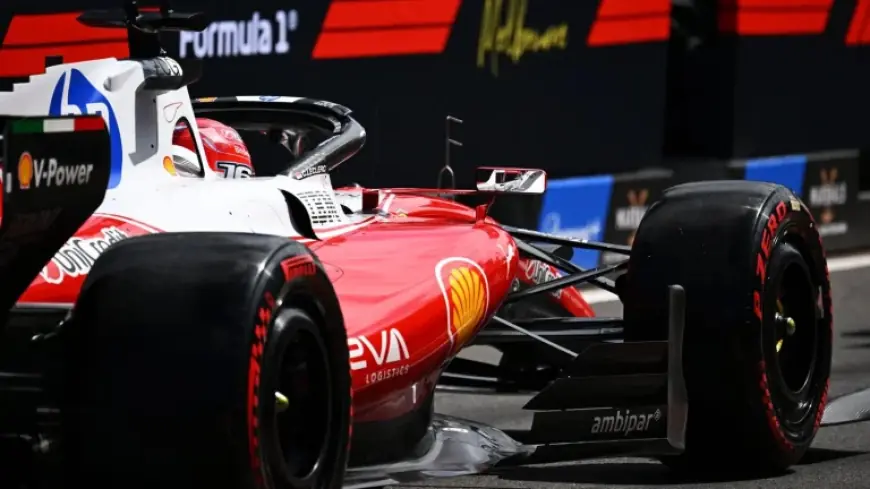
Some teams will gain a clearer pathway off the line, raising what is at stake in the opening laps for drivers and pit crews. 4: 00 a. m. ET — the FIA’s five-second pre-start and the 2026 technical reset are now in effect for the Australian Grand Prix, and ferrari practice getaways in Bahrain point to a possible edge for Charles Leclerc.
FIA’s five-second pre-start forces a new launch ritual at the Australian Grand Prix
The immediate consequence is procedural: the FIA will insert a five-second pre-start at the end of the formation lap, with all grid panels flashing blue for five seconds before the standard five-red-lights sequence begins. That change is intended to let drivers rev longer to spin turbos before the lights go out; the new sequence was trialed in Bahrain and will be replicated from Australia onwards, per the FIA confirmation embedded in the 2026 rules explanation.
Ferrari’s Bahrain getaways and smaller turbo design make starts more decisive for Charles Leclerc
The secondary consequence affects who benefits practically: Ferrari noticeably aced practice starts during Bahrain testing, and Charles Leclerc has signaled the team can more easily reach the “optimal window for the start. ” Leclerc qualified fourth in the session referenced in Melbourne, and the Ferrari cars in testing featured a smaller turbo that takes less time to spin up, a trait that helps have full power available off the line when the gantry lights go off.
Mercedes’ front-row lock gives George Russell and Kimi Antonelli theoretical control of the early laps
Mercedes dominated qualifying to lock out the grid’s front row with George Russell and Kimi Antonelli, a positioning that in theory puts them in control at the start of the 58-lap race. Yet the new start procedure and the turbo-dependent power delivery mean that track position into Turn One could shift rapidly: Leclerc shares row two with Isack Hadjar, and earlier starts in Bahrain showed the field can vary dramatically when some cars struggle to reach the required rev and turbo window.
Still, teams will also be watching pit stops and other early-race operations: the combination of a high-rev requirement before launch and turbo lag characteristics without the former MGU-H changes both the launch and the immediate run into turn one, where observers noted the potential for “five abreast into Turn One” if several drivers hit their optimal windows simultaneously.
The next confirmed milestone is the Australian Grand Prix on March 6-8, with the 58-lap race scheduled from 4: 00 a. m. ET on Sunday. If drivers consistently hit the optimal pre-start rev window, the starts should show less variability through the field and fewer chaotic five-abreast moments into Turn One by the end of the opening lap.