Drivers Call Formula One Cars ‘Worst’ After Troubled Australian GP Qualifying

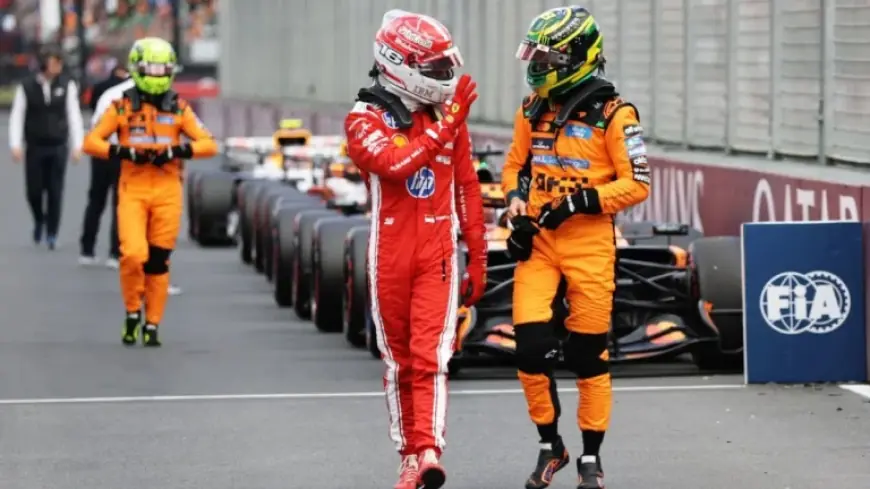
Teams and drivers are losing pace and race rhythm under the new rules that force heavy battery management, Saturday at 3: 00 p. m. ET after qualifying for the first race of the season, leaving champions and challengers alike struggling in the opening Formula One session. Lando Norris, Max Verstappen and Lewis Hamilton all voiced sharp criticism.
Lando Norris: loss of driving rhythm and race craft on full display
Lando Norris said the new cars have turned “from the best cars ever made in Formula 1… to probably the worst, ” and that drivers now must decelerate and lift constantly to manage battery charge across a lap. Norris qualified sixth in Melbourne and described a weekend hampered by reliability issues and too few laps, saying missing five laps leaves a driver “on the back foot. ”
Formula One energy rules magnify Mercedes’ advantage after Verstappen crash, Russell says
George Russell took pole and led a Mercedes one-two with team-mate Kimi Antonelli, finishing 0. 785 seconds ahead of the first non‑Mercedes qualifier, Isack Hadjar. Russell called the result a “perfect storm, ” noting Max Verstappen crashed without setting a time — a crash Verstappen attributed to the rear axle locking up when he hit the pedal. That failure, tied to the complex energy-regeneration systems, left Mercedes markedly quicker in a session many drivers found confusing to exploit.
Max Verstappen and Lewis Hamilton join Norris in condemning the new cars
Max Verstappen said he was “not having fun at all” driving the new machinery and described feeling “no emotion” in the cockpit; he spun when the car’s rear locked under braking into Turn One and was left powerless and well down the order, later finishing 20th in qualifying. Lewis Hamilton said the new engine and chassis rules were “completely against” Formula One’s principles, criticizing the lift-and-coast driving that now defines many laps and reduces sustained full-throttle racing.
Drivers complained the hybrid systems’ 50-50 split between combustion and electrical power forces unfamiliar techniques: decelerating more before corners, lifting through corners, using gears drivers would rather avoid, and relying on precise battery-management to avoid being caught out. For some teams, lack of mileage has meant the engine cannot “learn” what it needs and drivers struggle to find the rhythm that previously came with practice laps.
Red Bull is investigating the cause of Verstappen’s braking lock-up while the driver was later cleared by the medical team after X-rays on his hands. The investigation is the immediate technical response to a failure that many drivers blamed on the new hybrid energy systems rather than aerodynamic design alone.
Still, teams with better early understanding of the hybrid behaviour have gained a clear edge in qualifying, amplifying the on-track consequences of a rules overhaul that prompted defenders and detractors to speak out immediately after the session.
More details expected Saturday at 6: 00 p. m. ET.