Iran Navy Frigate Seen Burning at Konarak After Joint U.S. and Israeli Strikes

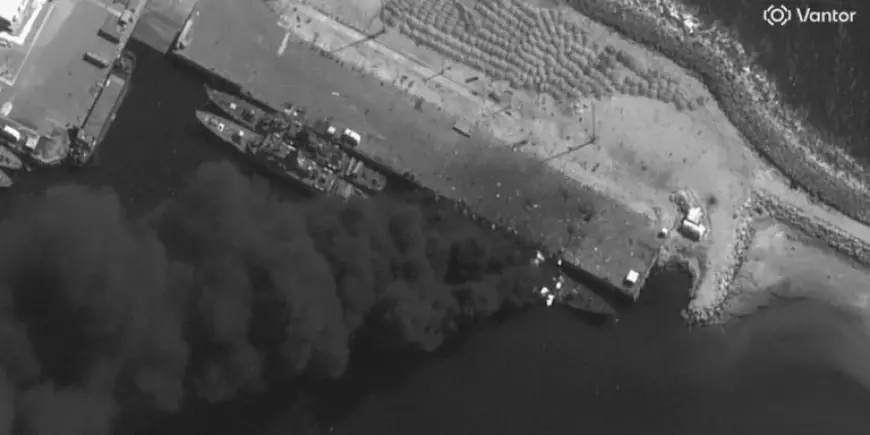
New satellite imagery shows a frigate ablaze at the Konarak naval base following coordinated U. S. and Israeli strikes, an early sign of damage to Iranian maritime forces. The images and subsequent regional exchanges have focused attention on the capabilities and posture of the iran navy amid a broader campaign labeled Operation Epic Fury.
Iran Navy Frigate at Konarak
Imagery collected and analyzed by a U. S. spatial intelligence firm captures a large billow of smoke rising from a frigate moored at the Konarak naval base in southern Iran. A close-up view in the imagery shows two other frigates sitting nearby that appear intact, while drone launch activity is visible at two airbases adjacent to the pier. The visuals provide a rare on-the-ground view of immediate, pierside damage.
War analysts at the Institute for the Study of War noted there were unconfirmed reports of strikes on named naval assets, including the IRGC Navy frigate Jamaran, and possible strikes on the Imam Ali naval base in Chabahar, Sistan and Balochistan Province. Satellite collection showing the burning vessel and nearby launch activity is consistent with those unverified accounts, though the condition of the other ships in the images appears unchanged.
What makes this notable is the direct visual evidence of coastal damage to iran navy infrastructure while other units at the same berth remain seemingly unscathed, underscoring a selective impact on maritime assets rather than blanket destruction.
Operation Epic Fury and U. S. Weapons
The strikes were announced as part of Operation Epic Fury, the name given in a presidential video message that also framed the campaign’s goals in stark terms. The U. S. campaign used a mixed arsenal that included Tomahawk cruise missiles, High Mobility Artillery Rocket Systems, drones, and undisclosed standoff weapons designed for long-range penetration beyond enemy air defenses. The choice of those systems reflects an emphasis on striking targets from outside heavily defended zones.
Iran responded with retaliatory missile and drone strikes aimed at U. S. military bases throughout the region, with attacks directed at installations in Bahrain, Qatar, the United Arab Emirates, Kuwait, Jordan, and Saudi Arabia. Those reprisals in turn triggered active use of air defense systems in multiple countries; defensive batteries employed included the MIM-104 Patriot and Terminal High Altitude Area Defense (THAAD) systems to intercept incoming threats.
The sequence is a clear cause-and-effect chain: the joint U. S. -Israeli strikes produced visible damage at Konarak and prompted Iran to launch missile and drone barrages at regional U. S. positions and at Israel, which themselves evoked defensive missile engagements. The use of long-range standoff munitions by U. S. forces appears aimed at reducing exposure to Iranian air defenses while still striking coastal and other fixed installations.
The president framed the operation as an effort to degrade Iran’s military capacity and to prevent nuclear development, emphasizing the campaign’s strategic purpose in a public message that urged internal change in Iran. Analysts point out that Saturday’s action represents the second major U. S. strike campaign in under a year; in June 2025, U. S. forces conducted strikes on Iranian nuclear facilities, and the recent operation follows a visible buildup of U. S. forces in the region in the weeks beforehand.
The images from Konarak, combined with accounts of weapon types used and the scope of Iran’s retaliatory strikes, suggest a narrower but impactful phase of the conflict focused on maritime and regional military infrastructure. The timing matters because the strikes form part of a pattern of repeated, high-intensity U. S. actions and Iranian counterstrikes within a span of months, raising questions about escalation and the resiliency of naval and coastal defenses.
Analysts and officials will likely continue to examine additional satellite collection and operational reporting to determine the full extent of damage to iran navy assets and to track subsequent moves by both sides in the unfolding regional confrontation.