War Powers Resolution Vote Nears as Senators Clash Over Iran Strikes

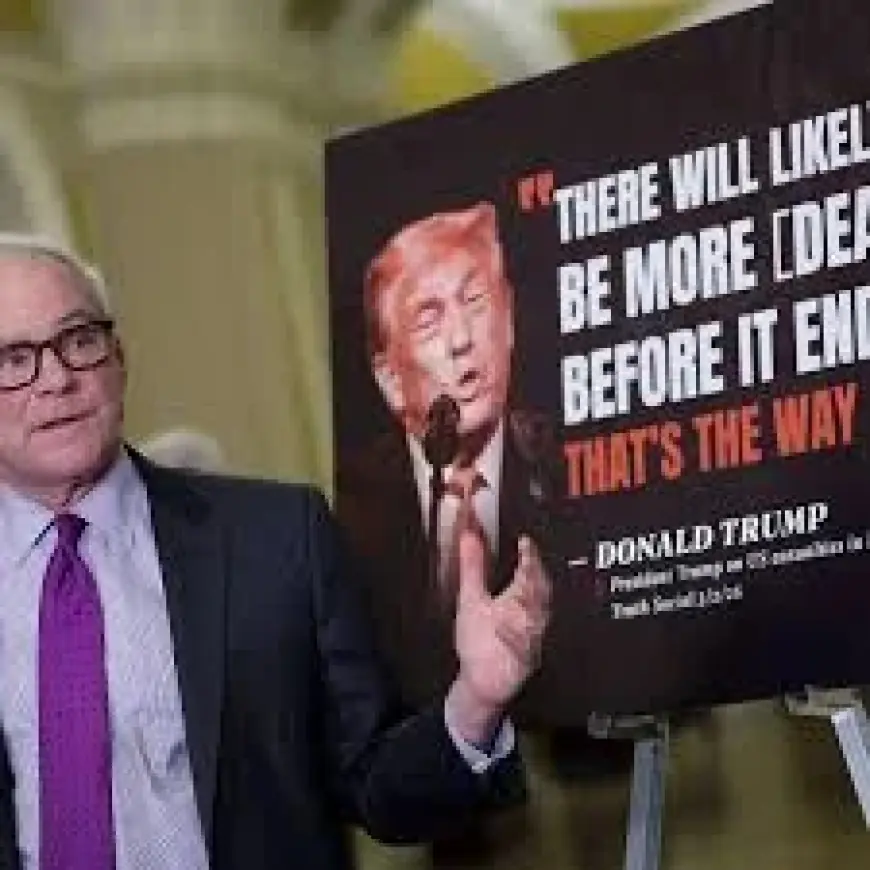
Senators on Capitol Hill are preparing for Congress’ first vote on a widening Middle East conflict, and a war powers resolution pushed by Sen. Tim Kaine is at the center of the dispute. The measure, intended to restrain President Donald Trump’s military attack on Iran, has prompted sharp divisions among party leaders as lawmakers receive classified briefings this week.
Tim Kaine and the War Powers Resolution
Sen. Tim Kaine, D-Va., is leading an effort to advance a swift vote on a war powers resolution that would force congressional judgment into decisions about U. S. strikes on Iran. The vote is being positioned as Congress’ first test on the conflict, which has rapidly spread across the Middle East and lacks a clear U. S. exit strategy.
The push for the resolution has drawn public lines between Senate leaders. Senate Minority Leader Chuck Schumer and Sen. Patty Murray, D-Wash., have been visible at the Capitol, while Senate Majority Leader John Thune, R-S. D., and GOP whip John Barrasso, R-Wyo., have also engaged with reporters and colleagues about the next steps. House Minority Leader Hakeem Jeffries, D-N. Y., has similarly been present in the broader congressional conversation.
The resolution’s supporters say an immediate vote is necessary to check executive military action; its opponents warn that constraining the president could complicate U. S. policy as the conflict evolves. What makes this notable is that the outcome of a single, early congressional vote could set a precedent for how much authority Congress reasserts over future military engagements.
Briefings with Marco Rubio and Pete Hegseth
Lawmakers received intelligence briefings this week as the Senate debated its path. A session on Monday, March 2, 2026, included a briefing for top lawmakers with Secretary of State Marco Rubio. Defense Secretary Pete Hegseth appeared at a secure briefing room in the Capitol’s basement on Tuesday, March 3, 2026, underscoring the heightened attention in both chambers.
The timing of those briefings has coincided with public statements and visible movement toward a vote. The convergence of classified briefings and a push for an expedited vote has increased pressure on senators to decide whether they will constrain the president’s authority through the war powers resolution. The immediate cause—the rapid spread of the conflict—has produced the effect of compressed deliberations and a compact legislative calendar for a consequential decision.
Officials in both parties have framed the issue as a constitutional and strategic test. Supporters of the resolution emphasize congressional responsibility to authorize or limit the use of force; skeptics point to the fluid battlefield situation and potential diplomatic consequences of a binding congressional restriction.
As debate intensifies, lawmakers are weighing the political and practical consequences of the vote. The resolution’s backers are pushing for a quick Senate floor vote; opponents are using procedural levers and public messaging to slow or reshape the measure. The first congressional vote on this conflict will reveal whether Congress moves to reclaim authority over war-making decisions or cedes that edge to the executive branch amid unfolding events.
With the conflict showing no clear path to an American withdrawal and with leaders from both parties convening briefings earlier this week, the Senate’s impending action will be watched as a bellwether of how Congress expects to exercise its constitutional role in authorizing military force.