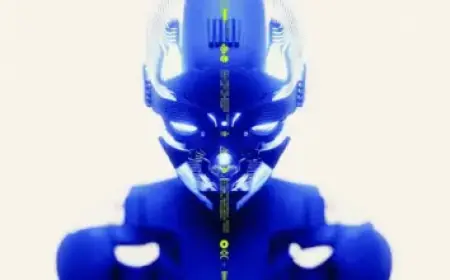
Google Doodle Marks Women’s Day 2026 by Honoring Women in STEM


Google released a Doodle for women’s day 2026 that spotlights women-led discoveries and inventions in science, technology, engineering and mathematics. The artwork aims to underscore enduring legacies and inspire the next generation at a moment when visual outreach can shape public conversation.
Google Doodle for Women’s Day 2026 Honors STEM Pioneers
The Doodle celebrates an array of women in STEM — from stargazers to ocean navigators — framing their contributions as foundational to the modern world. The Doodle’s messaging says these legacies have paved the way for future women and girls who dare to be curious, and the choice of subject matter connects memorialization with outreach: highlighting historical innovators to motivate contemporary learners.
Google’s ongoing Doodle program enlarges that reach. Hundreds of Doodles are launched around the world every year, and the platform’s global footprint means a single themed Doodle can meet diverse audiences across multiple regions on the same day. That scale is one reason the Doodle for women’s day 2026 carries practical weight beyond a single image; by foregrounding STEM pioneers it channels attention toward careers and role models that students and early-career professionals can emulate.
There is also an explicit pathway from exposure to profession embedded in the program. Winners of the Doodle for Google student contest have gone on to become professional artists, showing a measurable progression from participation to career development within the Doodle ecosystem.
Doodle History, Doodlers and Momo the Cat
The Doodle for women’s day 2026 joins a long-running series that began as an informal note in 1998, released before Google was officially incorporated when founders Larry and Sergey used a simple out-of-office marker. The team’s creative arm—the artists officially called Doodlers—evolved the practice: the first animated Doodle premiered on Halloween 2000, and the first same-day Doodle was created in 2009 to mark the discovery of water on the moon.
What makes this notable is the program’s demonstrated agility: the time it takes from sketch to launch can range from a few hours to several years, allowing Doodlers to respond to breaking scientific milestones as well as to commemorate historical figures. The program’s internal culture also generates recurring characters and motifs; the most frequently recurring Doodle character is Momo the Cat, named after a team pet, a small detail that reflects the studio’s informal origin even as the project reaches millions.
The Doodle’s combination of art and education is deliberate. By pairing accessible artwork with short narratives of contribution, the release for women’s day 2026 leverages both scale and storytelling: the immediate effect is heightened visibility for women in STEM, and the longer-term effect is a reinforced pipeline linking creative recognition to professional opportunity.
As a visual commemoration released on a day dedicated to women’s achievements, the Doodle functions as both tribute and recruitment tool. Its history of rapid response, the conversion of contest entrants into working artists, and the program’s recurring presence in many markets together explain why a single image can carry outsized influence on public attention and cultural memory.