Russell Drives ‘Go Kart’ Mercedes to Dominant F1 Australian GP Pole

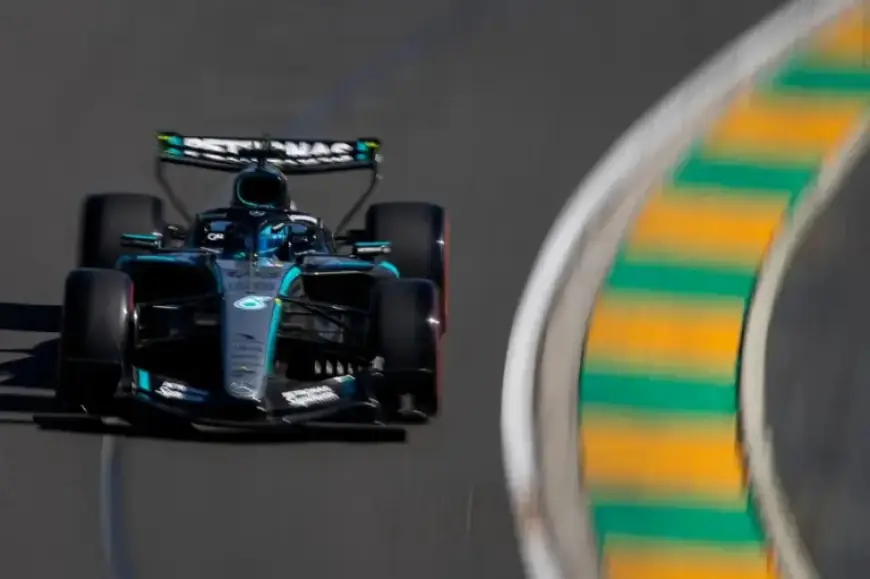
George Russell showcased a remarkable performance during the Australian Grand Prix qualifying session, securing pole position with an exceptional lap time of 1:18.518. This achievement highlighted the impressive capabilities of the Mercedes team and marked a significant moment in the ongoing F1 season.
Key Highlights of the Qualifying Session
The session took place in challenging conditions, with a windy atmosphere impacting the drivers’ performances. Despite this, Russell managed to dominate, revealing the hidden potential of Mercedes’ new technical package.
- Top Performance: George Russell topped the timesheets, impressively distancing himself from the competition by 0.785 seconds.
- Lewis Hamilton: Hamilton finished in second place, posting a time of 1:19.303.
- Charles Leclerc: The Ferrari driver secured fourth position, facing a significant gap to the front, clocking in at 1:19.638.
Mercedes’ Strategy and Adaptation
Russell’s qualifying performance demonstrated Mercedes’ adeptness at energy management. The new regulations have shifted how teams optimize their car’s speed and efficiency, making it critical to effectively manage energy output, particularly in circuits like Albert Park.
His strategic approach differed from other drivers, emphasizing progressive energy harvesting without sacrificing lap speed. Russell notably maintained a lower gear during critical sectors, allowing for better energy management compared to his rivals.
Insights from the Qualifying Session
As the drivers entered the final stages of qualifying, various strategies unfolded. Russell’s technique focused on maximizing energy deployment through key corners:
- Turn 1: Russell engaged in a lift-and-coast strategy, conserving energy while maintaining speed.
- Turn 6: Despite earlier braking, he carried significantly more speed into the corner, establishing an early advantage.
- Sector Performance: Russell demonstrated superior handling, particularly through turns that demanded precise energy management.
Future Implications for the Season
This qualifying performance sets a high bar for upcoming races. Russell expressed confidence in the car’s new regulations and their impact on driving experience, suggesting they represent a step forward in competitive performance. Teams are now tasked with deciphering how to best leverage their power units to bridge the gap to Mercedes.
The implications for competitors are significant. As noted by McLaren’s team principal, Andrea Stella, understanding how to exploit the performance of these engines effectively will be crucial for teams looking to contend with Mercedes’ advantage.
As the F1 season progresses, this qualifying session at Albert Park will likely serve as a pivotal moment in assessing the effectiveness of the new regulations and the strategic approaches adopted by various teams.