Michael Porter Jr. trade leaves Nuggets searching for a Jokić–Cam Johnson connection

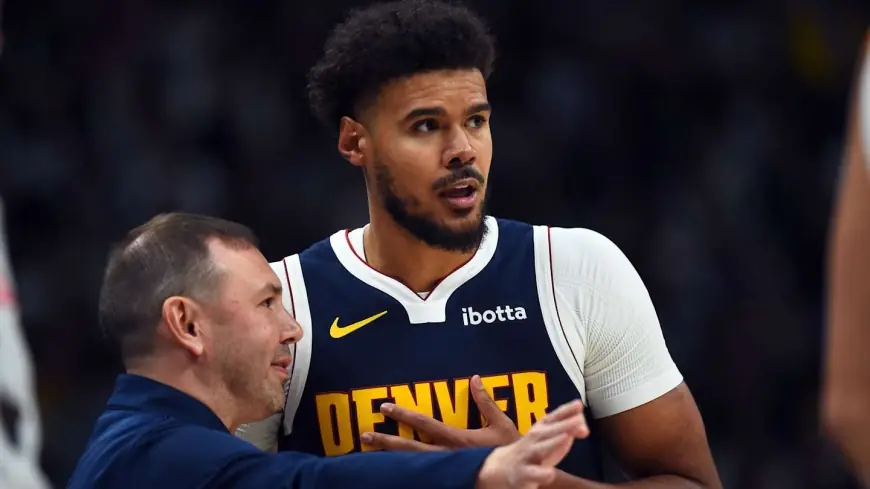
The Nuggets’ decision to trade michael porter jr. for Cam Johnson has not produced the scoring lift Denver hoped for, and the issue is sharpening as the playoffs approach. Johnson’s 0-for-6 outing against Minnesota — zero points in 23 minutes — and poor results out of Nikola Jokić handoffs have raised alarm about fit and shot quality.
Jokić handoffs yielding weak returns
The most glaring statistical sign is the Jokić–Johnson handoff production: the combination is generating just 0. 84 points per handoff, the lowest mark on the team. When Johnson shoots immediately off a Jokić handoff, he posts a 26. 6% effective field goal percentage from that action; by contrast, michael porter jr. shot 58. 8% out of those actions last season. Those totals include every outcome of a handoff — Jokić getting the ball back, a kick to a teammate, or Johnson taking the shot himself.
Why Michael Porter Jr. ’ s exit matters to the Jokić connection
The roster move that brought Johnson to Denver involved sending Michael Porter Jr. and a first-round pick in 2032 to Brooklyn. The trade was also driven by salary math: michael porter jr. is making $17 million more than Johnson in each of the next two years, and the team would have had no chance to get under the luxury tax threshold if it kept Porter. Denver also used the cap space from the move to add other pieces around Jokić.
Shot splits, clutch misses and defensive questions
Johnson’s raw shooting numbers on the season complicate the narrative: he is at 40. 6% from three while taking a career-low 4. 5 attempts per game. The split data show a strange divergence: when Jokić passes to Johnson, his three-point percentage is 35. 7%; when anyone else finds him, it jumps to 43. 4%. That gap undercuts the idea that Jokić’s feeds are automatically creating better shots for this particular teammate.
Beyond efficiency, Denver’s late-game needs are not being met. Johnson is 1-for-8 in the final five minutes of tight games, and a wide-open three that would have put Denver ahead in the Oklahoma City game went unconverted before the Nuggets lost in overtime. Defensively, critics have pointed to slower rotations and opponents attacking Johnson; a critique on that front called out that teams pick on him with quick guards the way they do other perimeter defenders on the roster.
Voices in the room and the injury backdrop
Cam Johnson acknowledged the slump after the Minnesota game: “It's on me and I'm the one that got myself in it, so I got to be the one to get myself out of it, ” he said. Commentators have questioned whether Johnson can replicate the two-way impact Michael Porter Jr. offered; one prominent analyst said Johnson was never expected to be a major defensive upgrade over michael porter jr. and added that his defense has been worse than it was in Phoenix and Brooklyn.
Injuries are part of the context: Johnson missed the Nuggets' most recent game against the Jazz with a hurt ankle, and Aaron Gordon and Peyton Watson are both out with hamstring injuries. Those absences reduce rotation options and increase the burden on whoever is expected to replace Porter’s two-way minutes.
The Nuggets now head into the stretch run with questions about fit, shot quality and defense that need answers before the playoffs. The team’s immediate tasks are to find more reliable finishes out of Jokić handoffs, shore up rotations while hamstrings and ankles recover, and convert the open looks that have come in crunch time.