Why Did Rory Withdraw From Arnold Palmer? Rory McIlroy Leaves Bay Hill With Back Spasms


Rory McIlroy withdrew from the Arnold Palmer Invitational on Saturday, March 7, after back spasms flared before his third round at Bay Hill. The issue began with what he described as a twinge during a morning gym session, then worsened on the range, forcing a late decision roughly half an hour before he was due to tee off. For anyone searching why did Rory withdraw, that is the direct answer: McIlroy did not leave because of poor form or a rules issue. He pulled out because his back locked up enough to make continuing a risk at the worst possible moment in the schedule.
That timing is the real story. McIlroy was not out of the tournament. He stood at four under and still had a chance to make the weekend meaningful before the injury intervened. More importantly, the withdrawal lands just days before The Players Championship and only weeks before the Masters, which means every decision now is being filtered through bigger objectives than one stop at Bay Hill. In modern elite golf, the calendar often decides how aggressive a player can be with a physical problem. McIlroy’s choice suggests protection, not panic.
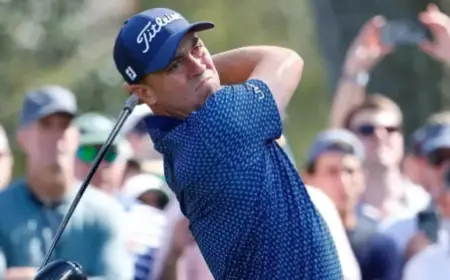
Rory McIlroy At Bay Hill
The Arnold Palmer Invitational had started to look like one of those weeks when McIlroy could quietly work himself into contention. He was not dominating the leaderboard, but he had played well enough to stay relevant and had the kind of scoring power that can turn a weekend quickly. That matters because Bay Hill is rarely a place where players bluff their way around. It exposes loose driving, punishes thin iron control and asks for patience when greens firm up.
McIlroy had done enough to keep his name in the tournament conversation, which is why the withdrawal felt jarring. This was not a player trudging toward an inevitable exit. It was one of the biggest names in golf stepping away while still in the event because the calculation had changed from competitive upside to physical risk. That distinction matters. A mid-tournament withdrawal by a player in contention always sends a stronger signal than one made after an opening-round collapse.
Arnold Palmer Timing Matters
The Arnold Palmer Invitational sits in one of the most sensitive stretches of the season. Players are sharpening form, testing equipment, managing travel and trying to arrive at the sport’s biggest weeks healthy enough to peak. That makes even a minor injury more consequential in March than it might appear in isolation. A sore back in the fall can be managed. A bad back one week before Sawgrass and one month before Augusta becomes a strategic problem.
McIlroy’s history explains why any back issue gets attention. He has dealt with similar discomfort before, and once a golfer of his speed and rotational violence feels instability in that area, there is little value in pretending it will simply loosen on its own. The modern swing places enormous strain on the lower back and rib-cage region. McIlroy’s power is one of his greatest assets, but it also means that any interruption to his movement pattern can compromise both performance and durability very quickly.
That is why the late withdrawal likely reflects caution as much as pain. There is a difference between being able to swing and being able to swing without creating a worse problem. At this stage of the season, those are not the same thing.
What Rory Said Next
The encouraging part for McIlroy is that the early expectation remains focused on recovery rather than a long layoff. He left Bay Hill to get treatment and is still aiming to defend his title at The Players Championship next week, with a fuller fitness update expected before play begins there. That does not guarantee he will be fully comfortable, but it does suggest the camp around him does not view this as an immediate season-changing injury.
Still, golfers often live in the gray area between healthy and playable. McIlroy may be well enough to compete and still not be operating at his highest level. That matters at Sawgrass, where precision tends to outweigh brute force, and it matters even more with the Masters approaching, where any hint of physical restriction can show up under pressure over four days.
What This Means For Rory
The next few days will determine whether this was a sharp but temporary setback or the start of a more complicated run-up to the spring majors. One scenario is the cleanest one: treatment settles the spasms, McIlroy arrives at Sawgrass early, and the withdrawal looks smart in hindsight. Another is less dramatic but more common, where he plays through lingering tightness and spends the next two weeks balancing preparation with protection. The worst-case scenario is not simply missing one event. It is altering swing speed, practice volume or confidence at exactly the point in the season when margins get smallest.
For now, the clearest takeaway is also the simplest. Rory McIlroy withdrew from the Arnold Palmer Invitational because of back spasms that became unmanageable before round three. The immediate consequence is disappointment at Bay Hill. The larger question is whether the decision preserves his chances where the stakes are even higher. In March, one withdrawal is never only about the event being left behind. It is about what a player is trying to save for next.