Time Magazine Cover Forces Reassessment of U.S. Military Messaging After Eight Countries Named

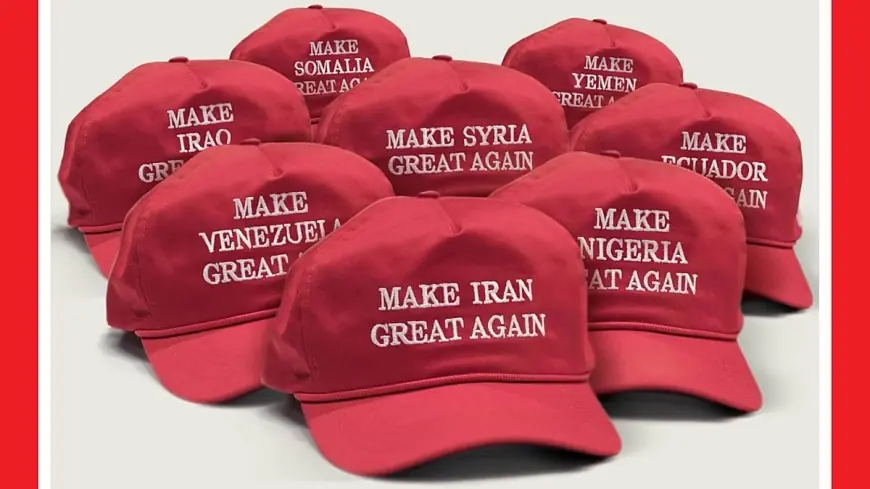
The image on the new time magazine cover swaps a familiar slogan for the names of eight countries, and that visual decision is already reshaping the conversation about foreign policy messaging. By naming Somalia, Iraq, Venezuela, Iran, Syria, Nigeria, Yemen and Ecuador where a slogan once sat, the cover points to questions about military action, public narratives and political accountability — and it makes those questions harder to ignore.
Time Magazine Cover shifts the debate: immediate political and media consequences
Here’s the part that matters: the cover is not just an editorial provocation; it reframes who is brought into the story. Rather than an abstract political slogan, the visual foregrounds specific countries and the reality of military action tied to them. That reframing creates pressure on political communicators, pundits and voters to respond in concrete terms rather than campaign rhetoric.
What’s easy to miss is how a single visual swap — slogan for country names — turns a branding debate into a tally of theaters where force has been used. The shift pushes commentary away from catchphrases and toward tangible questions about operations and consequences.
- The visual names eight countries explicitly: Somalia, Iraq, Venezuela, Iran, Syria, Nigeria, Yemen and Ecuador.
- The imagery is presented as pointing to a former president’s involvement in military operations across those nations.
- Coverage and discussion emphasize that, despite past campaign promises to end wars, military actions were initiated in these eight places.
- Descriptions of those operations include a range of action types: airstrikes, naval attacks and special forces missions.
- The cover has been characterized by some observers as "brutal" and has generated widespread online attention.
Event details and what the visual change conveys
The time magazine cover explicitly replaces a traditional political slogan with country names, creating a visual argument: that the rhetoric of a campaign and the record of military action are in tension. By naming Somalia, Iraq, Venezuela, Iran, Syria, Nigeria, Yemen and Ecuador, the design signals focus on those theaters of action rather than on a slogan-driven identity.
Discussion around the cover connects that visual claim to the assertion that military moves occurred in those eight countries — actions described broadly as ranging from airstrikes and naval attacks to special forces missions. The juxtaposition is being read as a critique of supporters who embraced the slogan but did not confront the impact of operations in those nations.
Online reaction has amplified the point: many commentators have used the cover to question narratives that justify intervention while questioning whether sufficient care was shown to the people and migrants from those countries. The image has been called stark and has spread widely in online conversation, increasing pressure on political debate over foreign policy choices.
If you’re wondering why this keeps coming up, the cover converts an abstract promise into named places — and that makes follow-up demands more concrete. The real question now is whether political actors will shift messaging or respond with substantive clarifications about policy and past actions.
- Implications: Messaging that once relied on slogans may now face scrutiny tied to specific operations and locations.
- Who feels the impact first: political communicators and campaign strategists who must reconcile rhetoric with named theaters of action.
- Signals to watch for that would confirm a shift: explicit statements addressing the named countries, policy clarifications, or changes in how future covers or political ads reference foreign policy.
The coverage and commentary around the image are still unfolding; details and downstream effects may evolve as political actors and media respond. image_url is null