
























Three Rivers Michigan Reels After Tornoto Damage As Recovery Moves Into Saturday

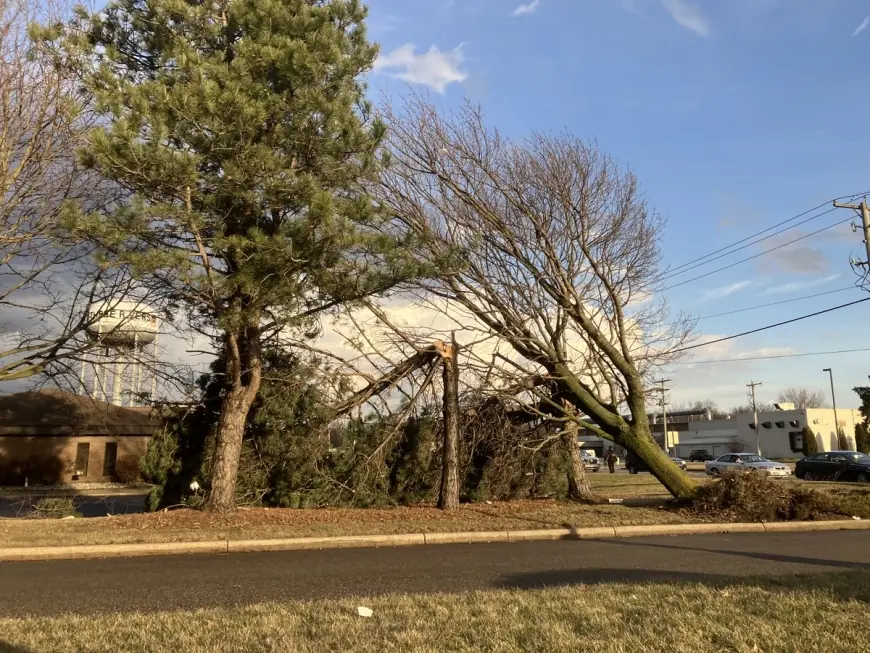
Three Rivers, Michigan, spent Friday night and early Saturday shifting from shock to cleanup after a powerful storm tore through the city, damaging commercial buildings, ripping part of the roof from a Menards, knocking down trees and power lines, and leaving neighborhoods strewn with debris. Officials had not announced any deaths in Three Rivers itself as of Saturday morning ET, but the wider southwest Michigan outbreak killed at least four people across southern Michigan, including one in Cass County and three near Union City, turning a late-winter severe weather threat into a deadly regional disaster.
Three Rivers Damage Path
The clearest hit in Three Rivers came along the commercial corridor, where video and ground reports showed major roof damage at the Menards store as the storm crossed the city Friday afternoon. In nearby neighborhoods, residents on Douglas and Grant avenues were left dealing with uprooted trees, snapped branches, damaged homes and tangled power lines. A tornado warning was issued for northwestern St. Joseph County at 3:52 p.m. ET Friday, and storm surveys were planned for portions of St. Joseph and Cass counties, including Three Rivers, to determine exactly what touched down and how strong it was.
That distinction matters. Three Rivers residents clearly saw tornado-like destruction, but the official EF rating and final storm track were still pending Saturday morning ET. Until survey teams finish their work, the city is operating in the narrow space between what residents witnessed and what meteorologists can formally confirm. For emergency managers, that gap affects damage mapping, insurance documentation and any later case for broader disaster assistance.
Michigan Response Widens
The damage in Three Rivers is part of a broader southwest Michigan emergency, not an isolated city event. Michigan activated its State Emergency Operations Center at 6 p.m. ET Friday after significant wind damage and possible tornadoes were reported across Branch, Cass and St. Joseph counties. By early Saturday, officials were still saying local responders had largely managed immediate needs on the ground, but the state had moved into support mode in case resource requests expanded. That is the point where a disaster stops being only about first response and starts becoming a test of how quickly local governments can shift into restoration, debris removal and longer-term recovery.
The regional toll explains the urgency. Authorities said three people were killed near Union City in Branch County and another person died in Cass County, where several others were injured and multiple large structures were heavily damaged or destroyed. Regional reports placed the strongest storm activity along the M-60 corridor between roughly 3:45 p.m. ET and 4:45 p.m. ET Friday, linking Three Rivers to the same fast-moving supercell that turned a local warning into a multi-county disaster.
Three Rivers Services Hold
For residents in Three Rivers, the immediate question is less about meteorology than about whether essential services can keep functioning while cleanup begins. Power outages remained widespread into Saturday morning. Early counts showed more than 4,000 Indiana Michigan Power customers and about 1,375 Midwest Energy & Communications customers still without service across the broader impacted area, with the heaviest outages concentrated in southwest Michigan. That means the next phase of recovery will be shaped as much by utility repair schedules as by chainsaw crews and insurance adjusters.
There was one important stabilizer. Three Rivers Health said its hospital campus and several clinics sustained wind damage, but the hospital and emergency department remained open, with no reported injuries to staff or patients. A Red Cross shelter was also opened at Riverside Church on East Michigan Avenue for displaced residents. Those two facts change the character of the crisis: when a hospital stays online and a shelter opens quickly, officials can focus resources on damaged homes, blocked roads and utility restoration instead of emergency relocation of medical care.
What Michigan Watches Next
The storms that hit Three Rivers formed in an atmosphere primed for trouble, with warm, moisture-rich air colliding with cooler air near the Great Lakes, a setup that can generate damaging tornadoes even in a state better known for winter weather than severe spring outbreaks. Michigan averages about 15 tornadoes a year, which helps explain why the damage in places like Three Rivers feels so jarring when it arrives in a dense retail strip and established neighborhoods rather than open farmland.
What happens next will be decided by a handful of concrete triggers over the next day or two. The first is the National Weather Service survey: an official tornado rating would sharpen the public record and help define the city’s recovery map. The second is power restoration; if outages drag into another night, the damage shifts from visual to economic as businesses lose hours and households lose heat, light and routine. The third is structural assessment, especially at major commercial sites and older homes, where exterior damage can give way to deeper safety problems once inspections begin. The fourth is weather itself. If the pattern settles, Three Rivers can move quickly from response to cleanup. If fresh storms interrupt the process, even a well-organized recovery can slow down fast.