






















Brian Mcginnis Missing: Marine Veteran Removed, Arrested After Disrupting Senate Hearing

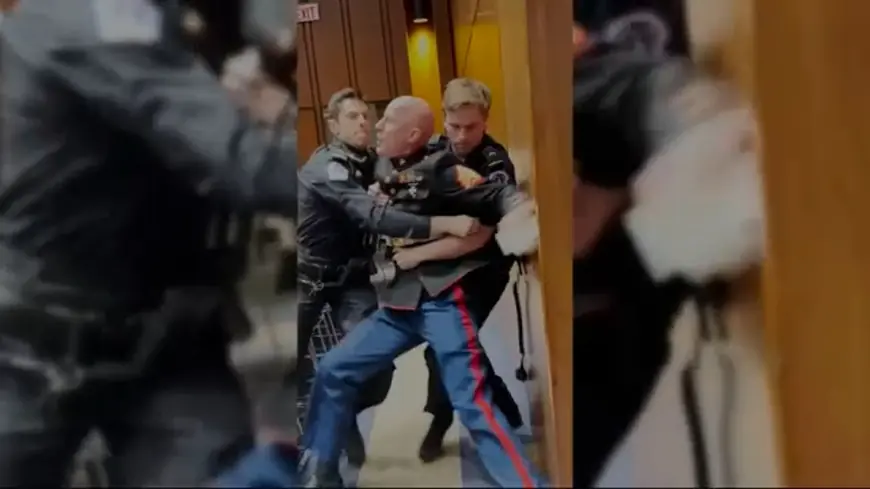
An outburst by brian mcginnis missing the expected decorum at a Senate Armed Services Committee session ended in a forcible removal and arrest, officials say, a confrontation that left multiple officers and the protester treated for injuries. The episode matters now because it drew a sitting senator into a physical effort to eject the demonstrator and prompted charges and administrative action that could have legal and professional consequences.
Brian McGinnis Missing at Senate Armed Services Hearing
The incident unfolded on March 4, 2026, when Brian C. McGinnis, a Marine Corps veteran, stood and interrupted the committee to protest U. S. policy in the Middle East, shouting objections tied to the risk of escalation with Iran and U. S. support for Israel. Video from inside the hearing shows Capitol Police moving quickly to restrain him after he refused to stop speaking. Officers then attempted to escort him out, and McGinnis clung to a doorway as they pulled him toward the exit.
Capitol Police stated that McGinnis "got his own arm stuck in a door to resist our officers and force his way back into the hearing room, " and that officers sustained injuries in the encounter. Three U. S. Capitol Police officers and McGinnis were treated for injuries at the scene.
Senator Tim Sheehy and Capitol Police Response
Video of the removal shows Montana Sen. Tim Sheehy, a Republican member of the Armed Services Committee and former Navy SEAL, leaving his seat and physically assisting officers during the struggle. The footage captures Sheehy grabbing McGinnis as officers worked to free the arm from the door frame and carry the man out of the hearing room. Sheehy later described his actions as an effort to assist law enforcement and de-escalate the situation.
The visual record confirms that security personnel were already engaged when the senator intervened, a fact that has fueled discussion about whether a member of Congress should enter a physical removal once trained Capitol Police are handling a disruption. What makes this notable is that the involvement of an elected official turned a routine enforcement of chamber rules into a wider point of contention over proper roles and procedures inside congressional hearings.
Charges, Professional Consequences and Public Details
Capitol Police arrested McGinnis and charged him with three counts of assaulting a police officer, three counts of resisting arrest, and unlawful demonstration. The city of Raleigh confirmed that McGinnis is a senior firefighter with the municipal fire department and that he has been placed on administrative leave pending the outcome of the matter.
McGinnis is also identified as a Green Party candidate for the U. S. Senate in North Carolina. Footage and a morning video posted from an account under his name show him in Washington, D. C., saying he intended to speak out against senators about the prospect of U. S. involvement in conflict abroad.
The cause-and-effect is straightforward: McGinnis's decision to interrupt the hearing and physically resist removal led directly to the engagement by Capitol Police, the senator's physical intervention, his arrest on multiple counts, medical treatment for those involved, and administrative leave from his firefighting duties. Those actions have produced immediate legal exposure and prompted questions about conduct by both spectators and elected officials during formal proceedings.
Officials have framed the removal as enforcement of chamber rules that bar disruptive behavior. The arrest followed standard procedures for ejecting an individual who refuses to comply with directions from security personnel during a congressional hearing. Debate that has followed centers not on whether the removal was permitted but on the propriety of a senator inserting himself into the physical removal when law enforcement was present and engaged.
Coverage and documentation of the episode include multiple interior chamber videos showing the sequence of events, and a Capitol Police statement outlining the agency's account of McGinnis’s resistance. The public record for now details charges, the date of the hearing, the number of injured officers treated, the administrative leave action by Raleigh, and statements from the senator asserting his intention to de-escalate.
As the legal process proceeds, interested parties are likely to watch both the criminal case tied to the counts filed and any administrative reviews related to the firefighter’s employment and the senator’s conduct during the incident. Meanwhile, the phrase brian mcginnis missing has entered public reference as people seek more information about the confrontation and its aftermath.