Seahawks cash conundrum and Jsn fifth-year options dilemma

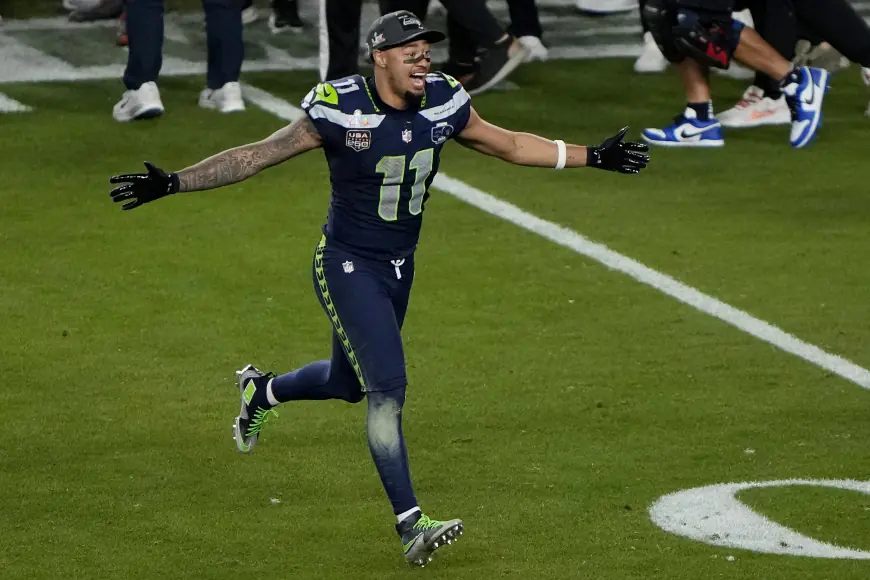
The Seahawks' offseason decision on jsn and Devon Witherspoon now centers on timing: exercising fifth-year options would lock in guaranteed 2027 pay but create immediate 2026 cash obligations that complicate meeting new minimum spending requirements. The team also faces a near-term roster calendar with a key tagging deadline for another star running back by March 11 (ET).
Jsn fifth-year option dilemma
Jaxon Smith-Njigba is on track to have his fifth-year option considered this offseason. The option would add a year to his rookie contract at a $23. 852M cap hit, a figure described as a bargain relative to the top of the wide receiver market. The pair of young standouts—Smith-Njigba and Witherspoon—have combined for five Pro Bowl nods in six NFL seasons, which strengthens the case for exercising their options.
On the field, Smith-Njigba posted back-to-back 1, 000-yard seasons, following a 1, 138-yard campaign with a 1, 793-yard season the next year. He also recorded 17 playoff receptions for 199 yards and two touchdowns across three postseason wins. Smith-Njigba has said he is not pressing the team on an extension and expects a future deal, noting he believes he deserves top pay at his position.
The cash and funding rule
Exercising fifth-year options would trigger the league's funding rule for fully guaranteed salaries in future league years. For Witherspoon and Smith-Njigba, exercising both options would require the Seahawks to deposit approximately $45. 013M of fully guaranteed 2027 base salary into escrow. That deposit effectively prepays 2027 salary but does not count toward the 2026 minimum spending calculations, creating additional 2026 cash outlays beyond normal payroll timing.
Because the escrowed amounts are earmarked for 2027, they increase cash obligations in 2026 without helping the team meet the 2026 minimum spending thresholds. That timing mismatch is the core of the club's cash conundrum: a decision that looks prudent from a roster and cap perspective can create an awkward cash-flow picture under the current spending rules.
Extensions as a timing tool
One path described in planning discussions is to extend Witherspoon and Smith-Njigba now. Contract extensions can be heavily front-loaded with signing bonuses, and those upfront cash payments would likely move the team toward, if not past, the 2026 minimum spend requirement. That approach addresses the immediate escrow hit by converting some obligations into signing-bonus cash flow that counts for the current year.
Conversely, exercising the fifth-year options while delaying extensions would require the team to deposit the guaranteed 2027 salaries into escrow and still face larger 2026 cash expenditures without the benefit of bonus-driven spend credit. Teams must weigh roster certainty against short-term cash optics when choosing whether to act now or wait.
Roster calendar and deadline pressures
The Seahawks also must manage other roster moves on the same calendar. The team did not use the franchise tag on Super Bowl MVP running back Kenneth Walker III ahead of the league deadline, leaving his future subject to free agency dynamics and the March 11 (ET) window when tagging decisions matter for other players. That timing compresses choices: locking in guaranteed money for two young stars affects flexibility to pursue or retain other contributors.
Decision timelines are concrete: the club must determine option exercises and next-step negotiations in the coming weeks. If the team extends the two young defensive and receiving standouts with significant signing bonuses, the immediate cash load will rise but will better align with the 2026 minimum spending calculations. If it exercises options without extensions, the escrow deposit will increase 2026 cash obligations while leaving extension leverage and structure for later.
Key takeaways
- Exercising both fifth-year options triggers about $45. 013M in escrowed 2027 salary.
- JSN's option carries a $23. 852M cap hit for the fifth year.
- Extensions with signing bonuses are the primary tool to meet 2026 cash-spend thresholds now.