
























Hyeseong Kim Ties It as Japan Vs Korea Standoff Reaches 5-5 in World Baseball Classic

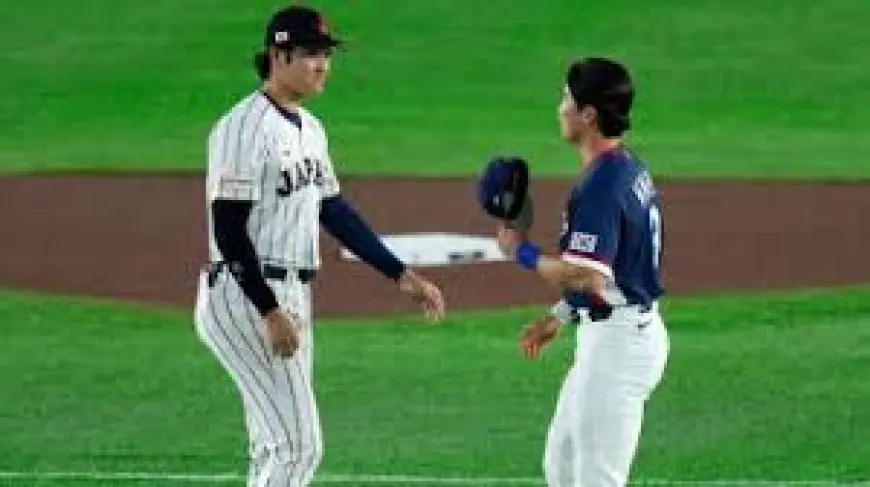
Hyeseong Kim hit a home run in the fourth inning to tie the score 5-5, leaving the high-profile World Baseball Classic clash between Japan and Korea deadlocked early. The swing matters because Japan had just surged with three homers in the third inning, turning an early Korea lead into a brief advantage before the game even reached the midpoint of the fourth.
Japan Vs Korea: Third-inning surge fuels Japan's 5-3 lead
Japan exploded in the bottom of the third, collecting three homers that pushed the team ahead 5-3. Shohei Ohtani produced one of the long balls that evening, ripping a hanger into the right-field seats to knot the score at 3-3 earlier in the inning; Seiya Suzuki followed with his second homer of the night, belting a breaking pitch into left for another run; and Masataka Yoshida finished the outburst with a homer to right that was called Japan's third of the frame. Kazuma Okamoto then flew out to right to end the rally, capping a sequence that altered the scoreboard in a single inning.
The offensive burst left clear statistical markers: Ohtani was 4-for-5 with two homers, three runs and six RBIs overall in the game at the point of the tie; Suzuki was 3-for-6 with two homers; and Yoshida was 3-for-5 with a homer, a double and two RBIs. Those numbers underscore how concentrated Japan's power display was in that third inning and how quickly momentum shifted on a few pitches.
Hiromi Itoh appearance and Korea's reply flip the momentum
Japan's pitching change in the fourth—Hiromi Itoh replacing Yusei Kikuchi—produced an immediate result when Itoh plunked Ju Won Kim, putting a runner aboard and setting up Korea's chance to respond. Itoh then recorded a strikeout of Dong Won Park in the top of the fourth, but the damage had been set in motion: Hyeseong Kim answered with a home run that evened the game at 5-5 in the same inning.
Earlier in the third, Korea had shown signs of life as well. Hyun Min Ahn had singled to left, creating a two-on situation that contributed to Korea's opportunity to build a lead before Japan's third-inning barrage. Bo Gyeong Moon also factored into the early scoring sequence, and at one point he chopped out to short as Sosuke Genda flipped to second for a force that ended a Korean threat in the third.
Young Pyo Ko’s breaking pitches prompted Seiya Suzuki’s second homer, and Ko was later replaced by Byeong Hyeon Jo on the mound—an in-game decision that shifted matchups and preceded Japan’s additional scoring. Those mid-inning pitching changes directly influenced how runners advanced and how both benches adjusted strategy.
What makes this notable is how rapidly control of the game traded hands: an early Korea advantage gave way to a concentrated, three-homer inning from Japan, and a swift response in the fourth erased that lead entirely. The interplay of power hitting—three homers in one inning—and timely pitching moves has produced a run-and-response pattern that leaves the matchup wide open.
As play continued in the fourth, the scoreboard stood at 5-5, leaving both clubs with opportunities to seize momentum in the later innings. With starting and relief decisions already in motion and multiple hitters producing multi-hit nights, the contest between Japan and Korea remains a live test of bullpen depth and situational hitting in the World Baseball Classic.