






















How a Shorter Course and Rising Stars Could Reorder Strade Bianche 2026

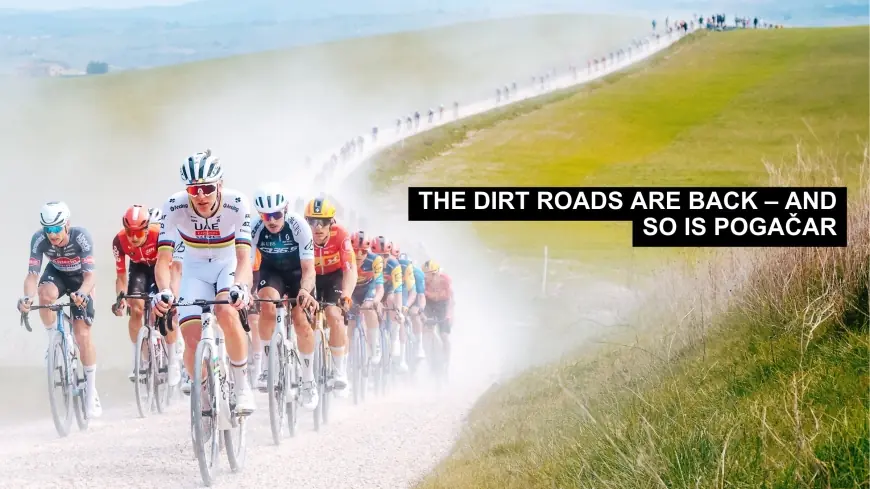
Race tweaks and an upgraded startlist mean strade bianche 2026 matters less as a replay and more as a potential turning point for early-season form. Organizers have shortened the routes and cut sterrato length, which is meant to loosen the race dynamics; that shift hands advantage away from pure procession-style domination and toward aggressive moves from challengers such as Tom Pidcock and Paul Seixas. Broadcasts will carry both men’s and women’s races live.
How the route changes and contenders rewrite the favorites' calculus
Shortening the overall distances and reducing gravel density is explicitly intended to promote "more open, explosive racing. " The practical consequence: riders who thrive in punchy, tactical finales gain an edge over those who rely on long solo efforts on extended sterrato. Here's the part that matters for contenders and teams: a narrower sterrato corridor reduces the time gaps that a dominant rider can create alone, inviting more aggressive, team-driven tactics and mid-race repositioning.
Tom Pidcock arrives with form signals that suggest renewed ambition—he's entering the race for the fifth time and is a former winner and last year’s runner-up to Tadej Pogačar. Young riders are also moving up the pecking order: Paul Seixas is singled out as a rapidly emerging talent, and there’s talk that Isaac del Toro could disrupt the established hierarchy. For the women’s race, established names will start — including multiple past winners and world champions — ensuring the reduced-distance experiment applies across both races.
What's easy to miss is that a shorter, less-gravel course does not eliminate the importance of sterrato entirely; rather, it compresses where and how decisive moves can be made, which increases the value of positioning and timing.
Strade Bianche 2026: startlist notes, course figures and broadcast basics
The race package for the weekend includes both men’s and women’s events broadcast live, with highlights also made available. Organizers trimmed the distances this year—one published note places the men’s length at 203 km and cuts the sterrato by about 18 km—measures aimed at opening the race up and reducing the risk of a one-rider procession to Siena.
- Field shape: The men’s startlist mixes proven winners with high-ceiling youngsters; the women’s field combines multiple former winners and reigning champions.
- Key matchups: Pidcock, a former champion and recent runner-up, is explicitly targeting the race; Pogačar returns to kick off his season and is the rider every rival will mark.
- Broadcast: Both races will be available live, and highlights packages will follow (check local listings for timing).
The real question now is how teams will adapt tactics to a route that rewards attack timing and teamwork more than long, solo sterrato escapes.
Three quick signals that would confirm a genuine shift in how Strade Bianche plays out this year:
- If decisive moves come inside the final sectors rather than on long gravel stretches, that shows the shorter sterrato worked as intended.
- If a young rider like Paul Seixas or Isaac del Toro contributes to a podium or wins, it signals the start of a generational push.
- If the race finishes with a small-group sprint or late attack rather than a solo arrival, teams have successfully adapted to the new layout.
- Pidcock is riding his fifth Strade Bianche and is targeting another top result after finishing second last year.
- Three of the last four editions have been won by the same marquee rider, a pattern the organizer changes aim to disrupt.
- Both men’s and women’s races will be broadcast live, with highlights available afterwards.
Writer’s aside: The bigger signal here is not just who crosses the line first, but which teams structure their rosters and tactics around shorter, more explosive sectors—those choices will shape spring classics beyond this weekend.