
























Maggie Gyllenhaal’s The Bride Movie Draws Fire as ‘Failed Experiment’

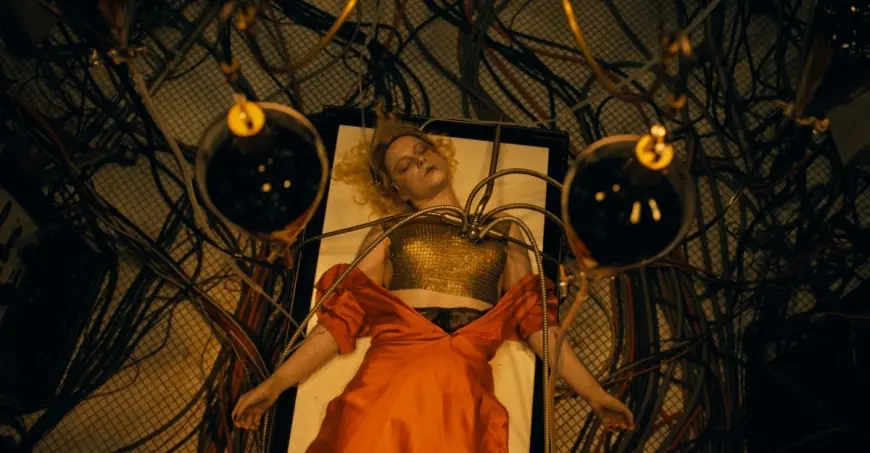
Maggie Gyllenhaal’s new Frankenstein reworking has drawn sharp criticism, with a prominent review calling the bride movie a “failed experiment” for its tangled tone and frequent goofiness. The film matters now because it is Gyllenhaal’s follow-up to her acclaimed directorial debut and stars a high-profile cast that reshapes a classic horror tale.
The Bride Movie’s jarring genre mash-up
The bride movie is described as an incomprehensible genre mash-up that repeatedly shifts registers: the review lists everything from Fred Astaire-style musicals to throwback gangster pictures, girl-power revolution, meta-textual references and buckets of gore. The criticism centers on the film’s inability to thread its big ideas into a coherent through line, with the review noting that Gyllenhaal appears to remember to deliver social commentary only in the film’s final moments.
How Gyllenhaal reassembled Frankenstein’s players
Jessie Buckley plays Ida, a gangster’s girl in 1930s Chicago who eats a slimy oyster and becomes possessed by Mary Shelley. Buckley’s Ida is murdered by her cohorts, then exhumed and reanimated by Frankenstein’s monster, played by Christian Bale, and a mad scientist played by Annette Bening. The plot’s concrete beats—possession, murder, excavation and reanimation—sit amid recurring acts of violence that the review says distract from storytelling logic.
Ambition meets uneven execution
Gyllenhaal’s effort is framed against her earlier film, a languid, unsettling thriller set on a Mediterranean vacation that established her as a director. Here, the ambition is visible: the film attempts a bold reimagining of Bride of Frankenstein by centering its female lead and blending wildly different styles. Yet the review argues that those ambitions are overwhelmed by the movie’s persistent goofiness and frequent tonal shocks, which the critic calls a barrier to meaning.
The project is placed in a recent wave of Frankenstein reworkings, with other directors offering everything from goofy high-school riffs to steampunk riffs and faithful adaptations; one recent Frankenstein reimagining is noted as currently up for nine Oscars. Gyllenhaal’s film remains notable for its cast and the specifics of its plot—Ida’s possession, 1930s Chicago setting, and the involvement of Bale and Bening—but the critical take presented here emphasizes that those details do not cohere into a clear message.
Gyllenhaal made this film as her follow-up to The Lost Daughter, and the conversation around it will continue alongside other Frankenstein projects this awards season and in upcoming releases.