

























George Russell and Mercedes Dominate the Competition

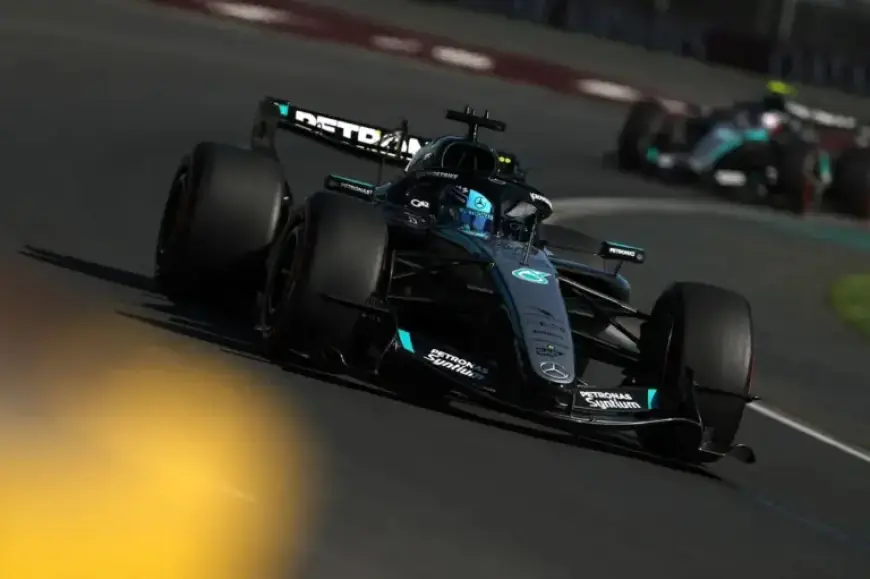
The build-up to the Formula 1 Australian Grand Prix showcased intense competition among the leading teams during the Friday practice sessions. Initial observations suggested a thrilling contest might unfold, especially as Ferrari and McLaren posted noteworthy times. However, it was Mercedes that ultimately highlighted its potential dominance, particularly during the long runs in the second session.
George Russell and Mercedes Dominate the Competition
In the second free practice session, George Russell emerged as the standout performer during long runs. He was consistently faster, recording lap times nearly half a second quicker than his Mercedes teammate Kimi Antonelli and outpacing Lewis Hamilton in the first Ferrari by 0.6 seconds. Mercedes’ performance surprised many, particularly as they appeared to run with heavier fuel loads compared to their rivals.
Practice Session Insights
- Ferrari initially set the fastest time in the first session.
- Oscar Piastri from McLaren clocked the fastest lap in the afternoon session.
- Mercedes showed superior pace in crucial long runs, emphasizing their W17’s strong performance.
The order of performance continued with Red Bull finishing third in the long runs, trailing Mercedes by 0.8 seconds per lap. Although Ferrari showed competitive speed, their long-run times fell shy of Mercedes, with Piastri’s quick lap not indicative of McLaren’s overall race pace.
Engine Power and Speed Management
Mercedes’ apparent long-run superiority raised questions about their engine power management. During qualifying simulations, Mercedes may have utilized less engine power compared to competitors. Their recorded top speeds, notably 279 km/h in the second sector, were lower than expected when compared with Piastri’s 289 km/h.
Comparative Performance of Leading Teams
| Team/Driver | Top Speed (km/h) | Long Run Pace Deficit (seconds per lap) |
|---|---|---|
| Mercedes (Russell) | 294 | N/A |
| Mercedes (Antonelli) | 290 | N/A |
| McLaren (Piastri) | 300 | 1.27 |
| Ferrari (Hamilton) | 291 | N/A |
| Red Bull (Verstappen) | 250 | N/A |
Moreover, Ferrari’s performance varied significantly across the speed traps. Charles Leclerc managed only 294 km/h in the speed trap before Turn 1, while Lewis Hamilton posted an even lower 291 km/h. Conversely, Lando Norris reached 309 km/h. Such discrepancies highlighted the ongoing challenges teams faced with battery management and engine mapping.
Midfield Insights
Rookie Arvid Lindblad from Racing Bulls impressed with strong single-lap performance, but his long run reflected a deficit of 2.62 seconds per lap to the leaders. Among other midfield competitors, Nico Hülkenberg’s long run performance for Audi demonstrated promise, averaging 1.95 seconds slower than Russell.
- Haas struggled significantly against the front runners, averaging 2.4 seconds slower.
- Team dynamics appear to shift, suggesting Audi’s rise in competitive pacing.
Strategic Implications
Despite varying performances, tyre wear analysis suggests a one-stop strategy may dominate the race weekend, with indications of low wear across all compounds. Pirelli’s chief engineer noted manageable levels of graining, reinforcing the strategy’s viability for teams.
As the teams prepare for the upcoming race, the insights from Friday’s sessions have set the stage for an engaging Australian Grand Prix. As we approach the competition, the question remains: can George Russell and Mercedes sustain their edge amidst the evolving dynamics of Formula 1?