

























Gold Rises Post-US Payrolls, but Faces First Weekly Decline in Five

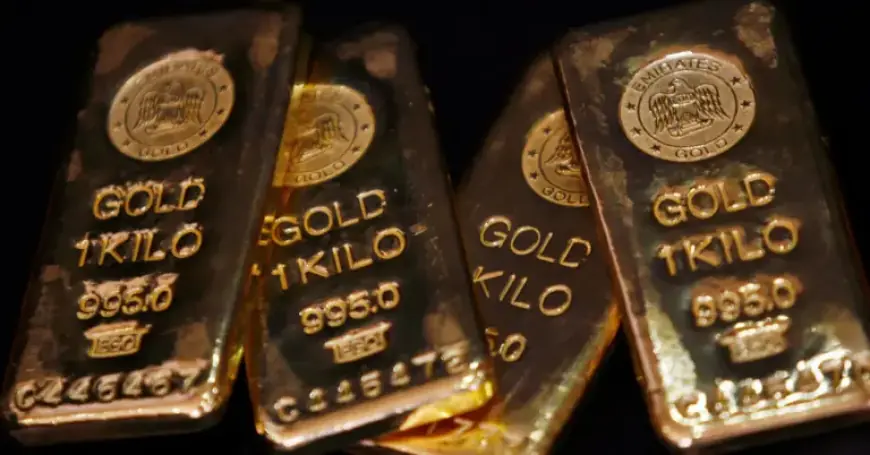
Gold prices experienced an increase on Friday, driven by weaker U.S. payroll data signaling potential Federal Reserve rate cuts. However, the precious metal was still set for its first weekly decline in five weeks, primarily due to a stronger U.S. dollar that limited gains.
Gold Market Overview
As of 10:50 a.m. ET, spot gold rose 1.3%, reaching $5,144.69 per ounce. Despite this uptick, gold showed a 2.7% decline for the week.
U.S. gold futures for April delivery also climbed, gaining 1.5% to trade at $5,155. This recent volatility reflects broader economic concerns.
Payroll Data and Economic Impact
The latest payroll report revealed a decrease of 92,000 jobs last month, contrasting with economists’ predictions of a 59,000 job gain. This increase in unemployment, now at 4.4%, raises concerns about stagflation. Independent metals trader Tai Wong noted these troubling figures could impact gold’s performance.
Market analysts suggest that heavy job losses and rising wages could further influence the Federal Reserve’s decision-making at their upcoming meeting on March 18.
Geopolitical Factors
The conflict in the Middle East, particularly the ongoing tension involving Israel and Iran, has driven demand for safe-haven assets like precious metals. This geopolitical instability has contributed to a significant rise in the U.S. dollar index, forecasted to achieve its most substantial weekly surge in over a year.
Market Trends in Precious Metals
Despite gold’s appealing characteristics as a safe haven, a stronger U.S. dollar has made it more expensive for international buyers. This situation has impacted sales significantly, as algorithmic trading systems automatically sell gold when the dollar strengthens.
- Spot silver rose by 2.5%, trading at $84.71 per ounce.
- Spot platinum remained steady at $2,122.44.
- Palladium experienced a marginal decline of 0.3%, reaching $1,625.25.
All precious metals are projected to experience weekly losses, highlighting the current market challenges.
Future Outlook
Gold is regarded as a long-term hedge against inflation but thrives in low-interest-rate environments since it does not yield any income. So far in 2023, gold has risen more than 18%. With rising geopolitical tensions and fluctuations in the U.S. economy, traders will be closely monitoring the upcoming Federal Reserve meeting for further direction in the market.