























Canada Prepares to Import First BYD EVs, Official Registrations Reveal

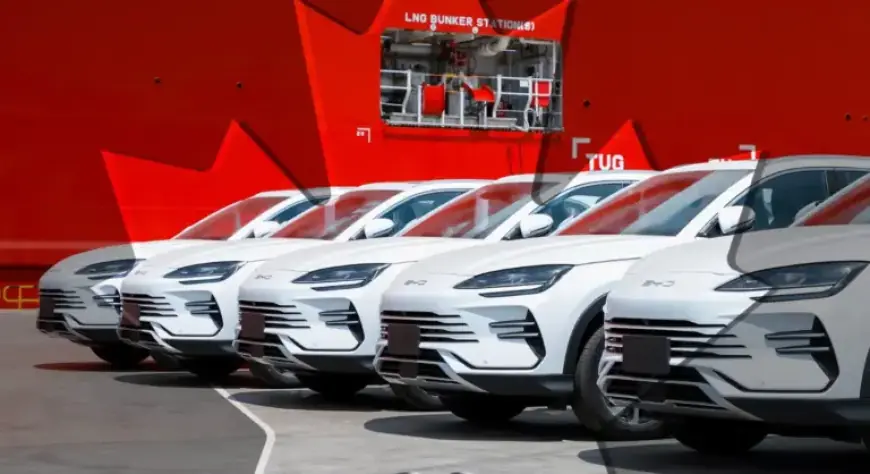
China’s BYD Co. has emerged as a pioneering force in the Canadian automotive market. The company has officially registered its passenger vehicle factories with Canadian transport authorities, paving the way for it to become the first Chinese automaker to export electric vehicles (EVs) to Canada under the new import quota system.
BYD’s Registration and Canadian Market Entry
As of Thursday morning, four BYD entities are listed in Transport Canada’s Appendix G registry. This registry serves as a preclearance list of recognized foreign vehicle importers. Among these registrations are new passenger car listings for BYD Auto Co Ltd’s manufacturing plants located in Shenzhen and Xi’an.
- Passenger models include:
- Seal
- Dolphin
- Atto 3
- Seagull (marketed as Dolphin Surf in Europe)
- Existing entries cover:
- BYD Auto Industry Company Limited (buses and trucks)
- BYD Coach & Bus LLC (located in Lancaster, California)
BYD has previously operated a 45,000-square-foot electric bus assembly plant in Newmarket, Ontario, since 2019. This facility has supplied vehicles to the Toronto Transit Commission and various Canadian transit operators.
New Import Quota System
The Canadian government has introduced a new import quota system, which commenced accepting permit applications last Saturday. This framework allows for the import of up to 49,000 China-made EVs over the next 12 months. The new tariff rate of 6.1% replaces the previously high rate of 106.1% effective from October 2024.
The first 24,500 EVs can arrive between March 1 and August 31, 2024, on a first-come, first-served basis. The second batch of 24,500 vehicles, including any unused permits from the first half, will be eligible from September 1 through February 28, 2027. Import permits are shipment-specific and valid for up to 60 days, with applications permitted 30 days prior to shipment.
Industry Reactions and Competitors
Despite BYD’s groundbreaking entry, no other major Chinese passenger car manufacturers, such as Nio, XPeng, Chery, or Geely, are registered under the Appendix G registry as of now.
Observations indicate that Tesla may also be adjusting its strategy. Reports suggest a removal of the Model 3 from Tesla’s Canadian website as the company might be preparing to import Chinese-made units under the new tariffs.
Chery, while not yet registered, is actively recruiting for roles related to its expansion into the Canadian market, targeting a goal of 3.2 million total sales by 2026, marking a significant increase from last year’s figures.
Market Context and Challenges
Statistics Canada reports a massive surge in electric vehicle imports from China, rising from under CAD 100 million in 2022 to CAD 2.2 billion in 2023, translating to approximately 44,400 vehicles. Chinese exports of new energy passenger vehicles to Canada experienced a staggering 751% year-over-year growth in 2023.
However, this new import strategy faces political opposition. Ontario Premier Doug Ford has referred to Chinese EVs as “spy vehicles,” igniting concerns within the industry about job security in Canada. Unifor, a major union, has expressed that the agreement could jeopardize Canadian automotive jobs.
Industry Minister Mélanie Joly has engaged in discussions with various automakers including BYD and Chery, emphasizing a balanced approach to international automotive trade.
As BYD gears up for its Canadian launch, the unfolding events will shape not only the EV market but also the geopolitical landscape surrounding trade and automotive manufacturing in North America.