
























Lily Allen Receipt Dress Turns Breakup Album Into Live, Personal Theater — Fans, Fashion and Tour Experience Shift

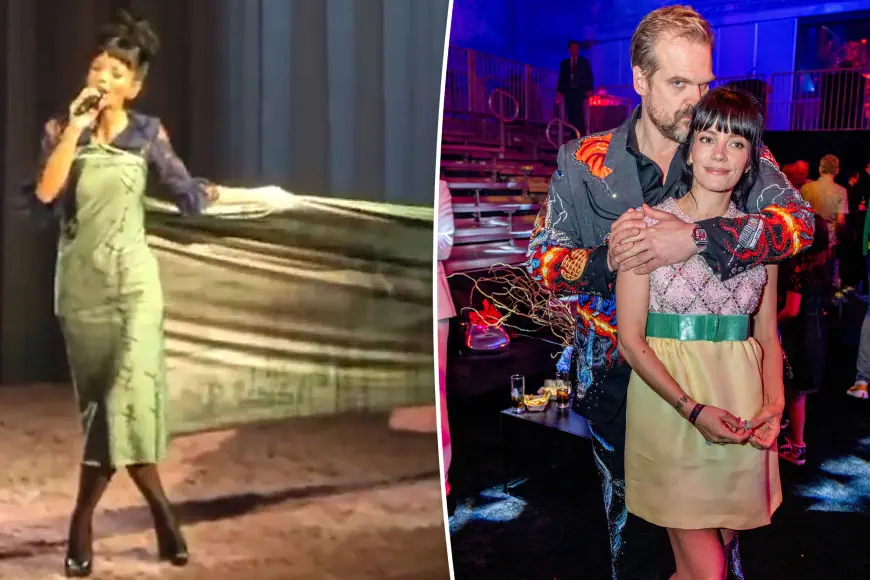
The moment the singer stepped out swathed in paper proofs of shopping and scribbled lines, the concert flipped from performance to evidence room. The lily allen receipt dress became a prop and statement that landed first with concertgoers and the tour creative team — reframing the West End Girl set as a serialized confession and turning wardrobe into narrative punctuation. That shift changes how fans will judge future shows and how pop breakups are staged live.
How the Lily Allen Receipt Dress Landed with Fans and Changed the Show's Tone
Here’s the part that matters: the costume made the album’s themes visibly legible in real time. Audience reaction was immediate — laughter, gasps and close reading — because the stage suddenly offered artifacts rather than only songs. For people in the room, the performance stopped being purely musical and started functioning like a curated exhibit of the record’s chapters, which will affect ticket-holders, stylists, and anyone who covers the tour.
What’s easy to miss is that treating costume as evidence shifts expectations for concert design; this is likely to influence other artists who want to dramatize personal material without leaning strictly on narrative interludes.
Stage details and sequence (select highlights)
The set presented all 14 tracks from the album across a roughly 45-minute run, divided into six looks that corresponded to different moments in the record’s arc. On one number the performer wrapped a long swath of fabric printed with handwritten lyrics and receipts from tequila bars and Bergdorf Goodman — an explicit nod to a song that centers on finding a receipt for a pricey handbag. That paper piece was layered over a ruffled sheer lace bodysuit and a sequence of previously revealed items: burgundy patent hot pants, a lace bra, fishnet tights and high heels.
- Notable staged vignettes: a pink-lit negligee and robe for a song about a discovered mystery woman; a black leather bullet-bra dress for a defiant number; a bed-onstage moment that echoed lyrics about finding a shoebox of letters, complete with a pharmacy bag as a prop.
- Creative team: styling, hair and makeup were explicitly crafted to support the narrative arc, with a bouffant hairstyle presented for the show’s aesthetic shift.
- Tour routing mentioned during the kickoff: the UK leg runs through March, with a North American leg beginning in April; the setlist included earlier television performances and past public callbacks as touchpoints for the live show.
The performance deliberately blurred autobiography and theatricality. The album itself grew out of the demise of a four-year marriage, and the stage treatment leaned into that personal material rather than softening it. If you’re wondering why this keeps coming up in coverage, it’s because the visual choices foreground the record’s accusations and ambiguities in a way that invites live scrutiny.
Groups immediately affected include concertgoers who consume the show as a story, fashion collaborators who must now design with narrative clarity, and the public figures referenced in the songs whose private moments are being reframed onstage. The real question now is how future stops will escalate or retract that revelation-driven design, and whether the theatrical approach will change setlists or staging choices as the tour travels.
Micro timeline: March 2 marked the Glasgow kickoff; before the tour, two album tracks were performed on late-night television and one stage costume referenced a past Halloween nod to a character tied to the record’s themes. The UK run continues into March, then moves to North America in April — schedule subject to change.
It’s easy to overlook, but the tour’s staging choices do more than dramatize songs: they create new pressure points for reviewers and fans to parse performance as a form of evidence in a public breakup.