

























Aws Outage Concerns Intensify After Iranian Drone Strikes on Amazon Data Centers

Iranian drone strikes on Amazon facilities and a separate explosion in the Gulf have sharpened fears of an aws outage that could ripple through the tech sector. The incidents have prompted clearer commitments from major tech companies and highlighted how investments in Middle East data centers now carry physical-security risks.
Aws Outage and Amazon data centers
Iranian drone strikes have targeted Amazon data centers, putting the region's cloud infrastructure squarely in the crosshairs of the conflict. One headline identifies a Bahrain data center operated by Amazon as a specific target because of its perceived support for U. S. military operations. That targeting, coupled with attacks on other facilities, raises the prospect of localized service interruptions and broader disruption to companies that depend on cloud compute in the region.
U. S. technology firms have already invested billions of dollars to expand data-center capacity across the Middle East to meet growing demand for artificial intelligence compute. Those large capital flows are now exposed to kinetic risks: damaged facilities, disrupted power, and constrained connectivity can each cause an aws outage that affects customers far beyond the immediate blast zone.
Fujairah explosion and White House pledge
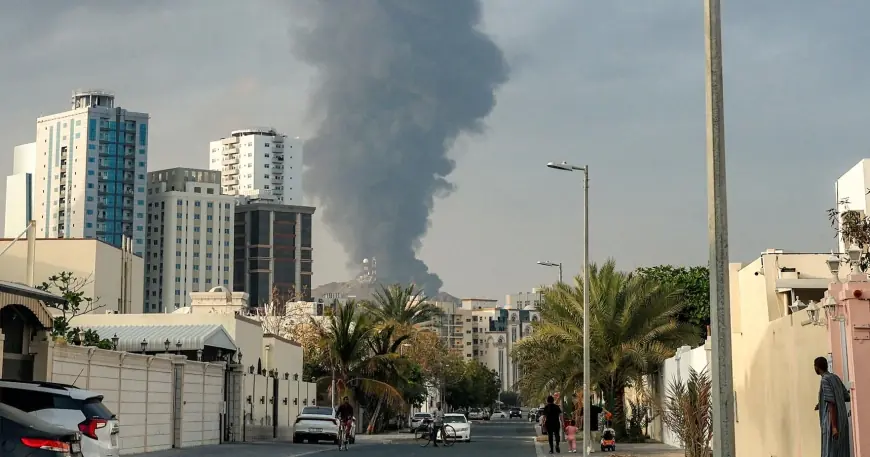
An explosion in the Fujairah industrial zone left a tall plume of smoke visible to onlookers and occurred on March 3, 2026. The image of the blast underlines the proximity of industrial and commercial infrastructure to theaters of violence in the region.
At the White House, executives from seven major tech companies signed a pledge with President Trump committing to supply their own power for artificial intelligence data centers. That formal pledge is a tangible corporate action likely driven by concerns that grid interruptions or physical attacks could trigger significant service outages. What makes this notable is that companies are moving beyond insurance and redundancy to assume direct responsibility for power continuity at AI-focused facilities.
Regional investment, exposure and operational response
The push into the Middle East has been motivated by the need for low-latency compute and large-scale machine learning workloads, but the same drivers now expose providers to regional instability. Observable consequences are already in motion: companies are re-evaluating site hardening, contingency power arrangements and how quickly they can reroute compute when an aws outage occurs.
Concrete timelines and scales in play are stark. The Fujairah blast happened on March 3, 2026; meanwhile, seven major tech firms have committed to internal power solutions in a White House ceremony; and the sector-wide investments into Middle Eastern data centers total billions of dollars. Together these details map a chain of cause and effect: escalating regional attacks have elevated outage risk, prompting high-level corporate pledges and likely operational shifts at data centers.
The broader implication is that cloud resilience is no longer solely a matter of software redundancy and geographic distribution. Physical security and energy independence are becoming central to how companies plan and advertise reliability. An aws outage that begins as a localized equipment loss can cascade into economic and operational costs for customers who had counted on the cloud as a resilient backbone.
For now, companies and governments face immediate choices about hardening existing sites, accelerating on-site power commitments and diversifying locations to reduce single points of failure. The recent strikes and the visible Fujairah explosion have turned those strategic questions into near-term operational imperatives.