























Captiva Island Sees Record-Breaking Mangrove Adoption Season

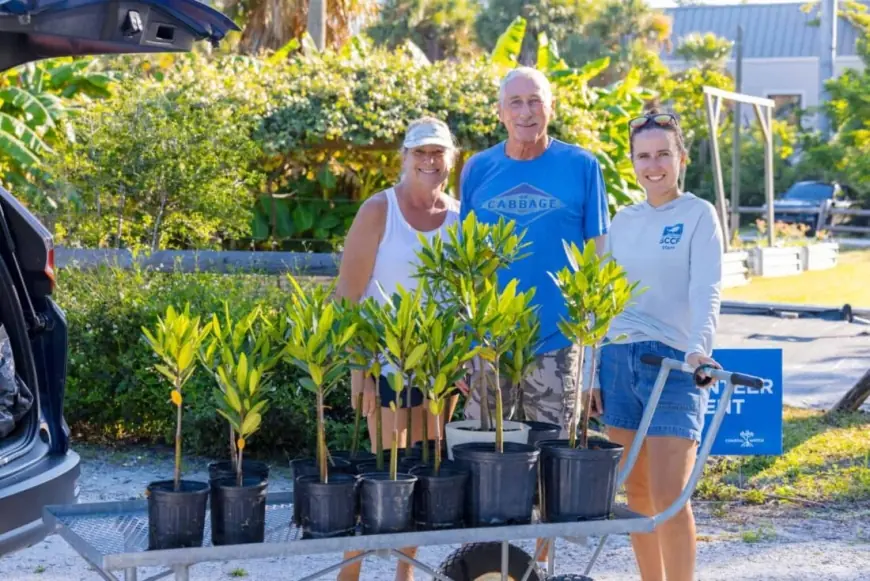
On captiva island the Sanibel-Captiva Conservation Foundation’s Coastal Watch has mobilized 708 "mangrove mamas and propagule papas" who have adopted more than 1, 800 mangroves for placement at homes, schools and businesses across Southwest Florida. The campaign arrives as many local mangroves recover from recent hurricanes, giving these young trees targeted support to reestablish and strengthen coastal defenses.
Captiva Island Mangrove Adoptions Fuel Community Restoration
The Adopt-A-Mangrove effort has translated community interest into measurable action: 708 individual adopters and groups have taken responsibility for over 1, 800 propagules and seedlings. These adoptions move plants from nursery care into real-world settings where they can provide nursery habitat for juvenile fish, nesting and roosting areas for wading birds and a source of energy for estuarine food webs. By placing mangroves at private and institutional sites, the initiative spreads ecological benefits beyond protected preserves and into developed shorelines.
Sanibel-Captiva Conservation Foundation’s Adopt-A-Mangrove Program Steps In
The Sanibel-Captiva Conservation Foundation (SCCF) Coastal Watch designed the Adopt-A-Mangrove Program to accelerate recovery after storm-related damage. Mangrove root systems stabilize shorelines, reduce erosion and help buffer coastal communities from storm surge and wave energy; those functions decline when stands are damaged. The direct cause-and-effect is clear: hurricane impacts reduced mangrove coverage and vigor, and the program’s targeted planting and adoption effort increases the number of trees able to establish and perform those protective roles.
Adopted mangroves are intended for homes, schools and businesses, spreading both ecological benefit and stewardship responsibility across private and public spheres. This distributed approach can multiply shoreline stabilization effects while engaging wide segments of the community in hands-on restoration work.
What makes this notable is the scale achieved in a single season—over 1, 800 plants adopted—and the diversity of adopters, which together create both immediate habitat contributions and a network of caretakers that can monitor survival and growth. The timing matters because many stands are still recovering from recent storms, so boosting recruitment now increases the likelihood that a new generation of mangroves will take hold and contribute to long-term coastal resilience.
Coastal Watch describes the adopters as "mangrove mamas and propagule papas, " a community-facing label that underscores the program’s emphasis on stewardship. By converting public concern about storm damage into concrete stewardship actions—adopting and caring for individual plants—the foundation aims to restore ecological function while building local capacity to protect shorelines.
Beyond immediate stabilization, the program emphasizes ecological services that mangroves provide: nursery habitat for young fisheries species, roosting and nesting sites for wading birds, and contributions to estuarine food webs. Each adopted plant represents an investment in those services; collectively, more than 1, 800 adoptions increase the area where such services can be delivered.
The campaign’s geographic focus remains Southwest Florida, where placement at residential, educational and commercial sites is intended to spread both environmental benefit and community engagement. As mangroves rebound, the combined effect of many small plantings could reduce erosion, dampen wave energy during storms and support wildlife—outcomes tied directly to the recent push to expand adoption and care.
For the Sanibel-Captiva Conservation Foundation and Coastal Watch, the adoption season marks a shift from passive recovery to active reinvestment in coastal systems, leveraging hundreds of community participants to reestablish a frontline natural defense.