

























Vancouver sky brightens as NASA confirms fireball seen in WA and B.C.

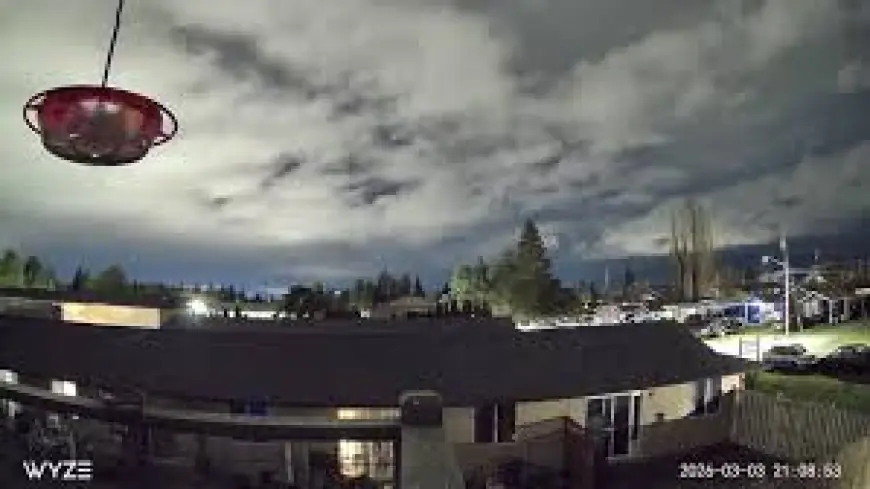
A brilliant light that cut across the night sky over Washington state and British Columbia drew widespread attention and prompted NASA to confirm the phenomenon as a fireball meteor. The event produced loud booms and spurred residents across vancouver to share video and eyewitness accounts.
NASA confirmation of the fireball
Federal space agency investigators identified the flash over the region as a fireball meteor. That official confirmation followed reports of an intense bright light visible across two jurisdictions—Washington (WA) and British Columbia (B. C. )—and the audible impacts described by residents. The agency’s determination closed the immediate question of what caused the illumination and explains the sequence: a meteoric entry produced the bright streak, which in turn generated sonic disturbances heard as booms.
The confirmation represents an official action in response to the phenomenon and provides a clear cause-and-effect chain: an object entering the atmosphere caused a bright light in the night sky and coincident acoustic effects that many interpreted as explosions or aircraft. What makes this notable is the alignment of three observable signals—visual, auditory and social media documentation—that allowed investigators to verify the event quickly.
Metro Vancouver witnesses share videos and describe loud booms
Residents in Metro Vancouver captured the event on video and posted their footage publicly, describing the sound as resembling a large aircraft or explosive blast. Those firsthand recordings, along with the reports of loud booms, helped draw attention from authorities and researchers. The immediate measurable impacts were the visible bright flash across the night sky and the audible booms experienced by people across the region.
People in vancouver and neighboring communities sought explanations as the bright light swept overhead. The combination of seeing the streak and hearing subsequent booms prompted many to record and share footage, creating a rapid archive of visual evidence that complemented the scientific confirmation.
Regional footprint: sightings across WA and B. C.
The phenomenon was observed across a geographic sweep that included both Washington state and British Columbia. Witnesses in multiple locales noted the same sequence—an intense flash followed by one or more loud booms—indicating a single atmospheric event with a wide visible and audible footprint. The cross-border scope helped focus attention on a regional phenomenon rather than isolated local incidents.
The verified chain of events—meteoroid entry, bright light in the night sky, and audible sonic effects—explains why public reaction was immediate and widespread. Agencies were able to corroborate the eyewitness reports with the identification of a fireball, bringing a rapid, authoritative explanation to a conspicuous nighttime occurrence.
The bright fireball and its effects highlight how easily a single natural event can generate broad public concern and prompt an official response, particularly when it is visible across multiple jurisdictions and recorded by numerous witnesses.