

























MacBook Air With M5 Arrives March 11, Marking Apple’s Biggest Mainstream Laptop Refresh

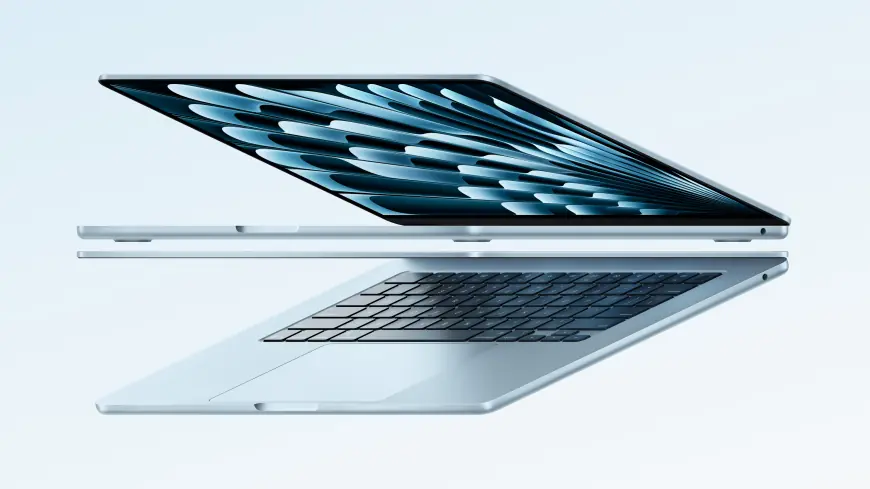
Apple is rolling out a new MacBook Air built around the M5 chip, with preorders opening Wednesday, March 4, 2026 and retail availability starting Wednesday, March 11, 2026. Announced Tuesday, March 3, 2026, the update keeps the familiar 13-inch and 15-inch form factors while leaning hard into two things Apple believes define the next era of the Mac: more on-device AI performance and a “no-excuses” baseline configuration that starts with 512GB of storage, doubling what many buyers have come to expect at entry level.
The immediate practical answer for anyone asking “new macbook—what changed?” is that this is not a redesign cycle. It’s a capability cycle. The chassis remains thin, light, and aluminum; the story is inside the machine—faster CPU and GPU performance, a stronger neural pipeline aimed at modern AI workloads, and a storage floor that reduces the need for costly upgrades just to make the laptop feel roomy.
In Eastern Time, the timeline is straightforward: Apple revealed the model on March 3, opens preorders on March 4, and begins shipping and selling it on March 11—a one-week runway that signals confidence in supply and an intent to catch demand early in the spring buying season.
Apple Newsroom Details Set The Tone
The Apple Newsroom framing makes clear what the company wants consumers to think they’re buying: not just a faster laptop, but a more capable everyday computer for AI-assisted work. The M5 is positioned as an across-the-board performance step up, with a CPU and GPU architecture designed to accelerate both traditional computing and machine-learning tasks that are increasingly embedded in creative apps, productivity workflows, and system features.
Apple is highlighting the M5’s approach to AI as a local-compute advantage—workloads running on device rather than being pushed to the cloud by default. That plays well in two directions at once. For consumers, it’s about speed and responsiveness without relying on connectivity. For businesses and schools, it’s a privacy and control argument: the more that can be processed locally, the less that must be transmitted, stored, or governed elsewhere.
The company is also using this MacBook Air cycle to reinforce an implicit promise: you don’t need to “buy pro” to get modern performance. MacBook Air remains the mass-market Mac, and Apple is effectively saying the baseline has moved—both in horsepower and in what “baseline storage” should be in 2026.
New MacBook Strategy: M5, Storage, And Wireless
The M5 MacBook Air ships in 13-inch and 15-inch sizes and comes in sky blue, midnight, starlight, and silver—a palette that continues Apple’s push to make the Air feel personal rather than purely utilitarian. But the more consequential choice is the default storage shift: 512GB standard, configurable higher, with an option to reach 4TB for the first time on this line. That matters because storage is where laptop value often gets distorted. A low sticker price can become expensive fast once a buyer realizes they need more space for photo libraries, games, video projects, or simply a multi-year machine that won’t feel cramped.
Apple is also emphasizing improved wireless connectivity, a small line item that tends to matter more in practice than in marketing. Laptops are increasingly judged by how frictionless they feel in the real world—how quickly they connect, how stable they stay in crowded environments, and how confidently they handle modern accessories and displays. Wireless upgrades rarely drive headlines on their own, but they are often the difference between a laptop that feels “new” for years and one that starts to feel dated the moment networks get busier.
Under the hood, Apple is calling out faster unified memory bandwidth—part of a broader message that M5 isn’t just a CPU bump. Bandwidth is a quiet limiter in many workflows: big photo imports, multi-app multitasking, and AI inference workloads that move data constantly. If the data pipeline is the bottleneck, raw compute doesn’t save you. Apple’s bet is that mainstream buyers now notice that difference because their everyday apps are becoming more computationally ambitious.
MacBook Air Performance And The AI Pitch
Apple is presenting MacBook Air with M5 as an “AI-ready” mainstream laptop—an important positioning shift. A few years ago, AI performance was a niche spec. Now it’s being treated as a first-order reason to upgrade, even for people who would never describe themselves as AI users. That’s the trick: many of the most common AI features are not marketed as “AI.” They’re marketed as smarter search, better photo edits, cleaner audio, faster writing help, more capable productivity tools, and system features that anticipate what you want next.
In that context, the M5’s improved neural acceleration is as much about perception as it is about benchmarks. If Apple can make the Air feel instant when it’s summarizing, generating, enhancing, or organizing—whatever the user calls it—then the Air remains the default recommendation for most buyers. And if the Air remains the default, Apple protects the center of its Mac business from being squeezed by cheaper competitors at the low end and by its own Pro machines at the high end.
There’s also a second-order effect: as on-device AI improves, software developers begin to assume that capability exists. That can change app design quickly. Features that once required server calls become local toggles; tools that once felt “premium” become expected. A mainstream MacBook Air becoming more AI-capable doesn’t just affect Apple’s sales—it nudges the entire Mac software ecosystem toward heavier local compute assumptions.
What Buyers Should Watch Next
The early buying decision will hinge on a few triggers.
First, whether the jump to 512GB standard changes the value equation enough that buyers who previously held off now upgrade. For many people, storage is the first pain point they hit—not CPU speed. Removing that friction can move demand.
Second, whether M5’s AI performance translates into noticeably smoother real-world experiences in the apps people actually use. If the improvements feel tangible—faster exports, snappier multitasking, more responsive AI features—then the Air’s upgrade case writes itself.
Third, whether supply holds as promised on March 11. When Apple schedules a one-week preorder window, it’s signaling readiness. If availability is strong, it reinforces the message that this is a mainstream product push, not a limited early wave.
Finally, watch how Apple positions the rest of the lineup around it. A stronger MacBook Air tends to force clearer separation above it: why buy Pro, and what do you get for the extra spend? Apple’s answer will likely be the same as ever—display options, sustained performance, ports, and pro workflows—but the Air getting “good enough for almost everyone” is precisely the point.
In short: the new MacBook Air with M5 is Apple’s statement that the everyday laptop now starts at a higher baseline—more storage, more local AI capability, and a sharper sense of what mainstream users expect from a computer that’s supposed to last.