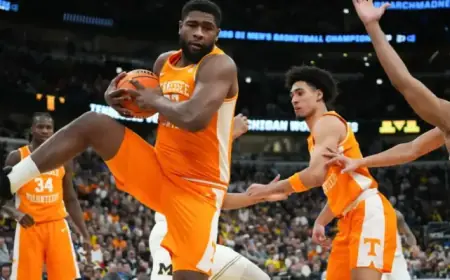

























When Does March Madness Start: Selection Sunday Sets The Bracket On March 15, 2026

When does March Madness start? The NCAA tournament’s opening moment arrives with Selection Sunday on Sunday, March 15, 2026, when the men’s and women’s brackets are revealed and the field is officially set. From there, the men’s First Four tips off Tuesday, March 17 (and continues Wednesday, March 18), while the women’s First Four begins Wednesday, March 18 (and continues Thursday, March 19)—the first on-court games that turn bracket talk into elimination drama.
That sequencing matters because “March Madness” isn’t a single date so much as a fuse being lit in stages: the bracket reveal that locks in matchups and travel, then the First Four that immediately produces winners and heartbreak, then the full-field rounds that dominate the sports calendar for the rest of March.
Selection Sunday And The First Four
Selection Sunday is the sport’s most compressed form of chaos. In a matter of minutes, bubble teams learn whether their résumés were enough, conference champions find their paths, and coaches begin game-planning with almost no runway. For fans, it’s the start of a two-week ritual: arguing seed lines, debating whether a mid-major got underseeded, and drawing bold lines through the bracket that will almost certainly be shattered by the weekend.
The tournament’s first games—the First Four—are where the “madness” starts to look real. Those play-in matchups have evolved from a footnote into a genuine stage, especially for teams that arrive with something to prove. The incentives are brutal and simple: win and you get to keep playing; lose and your season ends before most of the country has even filled out a bracket. For the bubble programs, it can feel like a penalty. For smaller conferences, it can feel like a once-in-a-generation chance to be seen.
And for the tournament itself, the First Four does an important job: it turns a selection show into live stakes immediately. By the time the rest of the field plays later that week, the bracket already has scars.
Men’s And Women’s March Madness Start Dates
In 2026, the men’s and women’s tournaments begin close together, but they’re not perfectly synchronized.
For the men’s tournament, Selection Sunday is March 15, 2026, and the First Four games are March 17–18. That’s the start of the men’s tournament in the way most fans mean it—actual games that count, with seasons ending on a bad shooting night or a foul-trouble spiral.
For the women’s tournament, Selection Sunday is also March 15, 2026, and the First Four begins March 18–19. The women’s bracket reveal has grown into a major national sports moment in its own right, with more fan scrutiny on seed quality, travel burdens, and whether elite teams are being positioned to meet too early.
The broader takeaway is that March Madness now functions like a full ecosystem rather than a single event. If you follow both tournaments, the calendar becomes a continuous wave: bracket drop, First Four, then wall-to-wall games that turn mid-March into a month-long sprint.
What “Start” Really Means In March Madness
Fans ask “when does March Madness start” for different reasons, and the answer depends on what you want to catch.
If you want the moment the tournament becomes official, it’s Selection Sunday—when brackets are revealed and the storylines crystallize. That’s when the committee’s choices create the year’s arguments: who was underseeded, which region looks stacked, and which bubble teams are going to feel wronged for months.
If you want the first meaningful basketball, it’s the First Four—because that’s when the pressure stops being hypothetical. Every possession is suddenly a referendum on a season’s worth of work.
If you want the full cultural takeover, it’s the first main wave of games later that week, when offices go quiet, phones light up, and the bracket becomes the country’s most shared language. That’s also when casual fans arrive—drawn by buzzer-beaters and the thrill of discovering a team they hadn’t watched all year can absolutely beat a name brand on a neutral floor.
Each “start” date comes with a different kind of electricity. Selection Sunday is suspense and outrage. The First Four is survival. The opening full rounds are the flood.
What Happens Next After The Bracket Reveal
Once the bracket is out, the tournament becomes a race against time. Teams travel almost immediately. Coaches and analytics staffs scramble to condense a season of film into a plan that can survive 40 minutes. Players shift from “we’re in” excitement to the reality that one bad half can erase everything.
Three forces shape the first week:
The seed-line narrative. Teams seeded lower than expected often play with a chip, while higher-seeded teams have to manage the psychology of “we’re supposed to win.” That dynamic can matter as much as tactics.
Style clashes. The tournament is less about who is best in a vacuum and more about who can solve a specific problem fast. A pressing defense can rattle a slow-paced favorite. An elite shooting team can erase a talent gap in one hot stretch.
Short preparation windows. Unlike a playoff series, there’s no time to adjust over multiple games. A coach who finds one matchup advantage—one action a defense can’t cover, one lineup that flips the game—can steal a result before the opponent even identifies the leak.
That’s why the start dates matter. Once the calendar hits Selection Sunday and the First Four, the tournament’s logic takes over: urgency, imperfect information, and the certainty that the bracket will break in ways nobody can predict.
In 2026, it begins on March 15 with the bracket reveal—and it becomes real on March 17 for the men and March 18 for the women, when the First Four turns anticipation into elimination.