























Kyler Murray Exit From Arizona Cardinals Signals A Full Reset As NFL News Shifts To QB Market

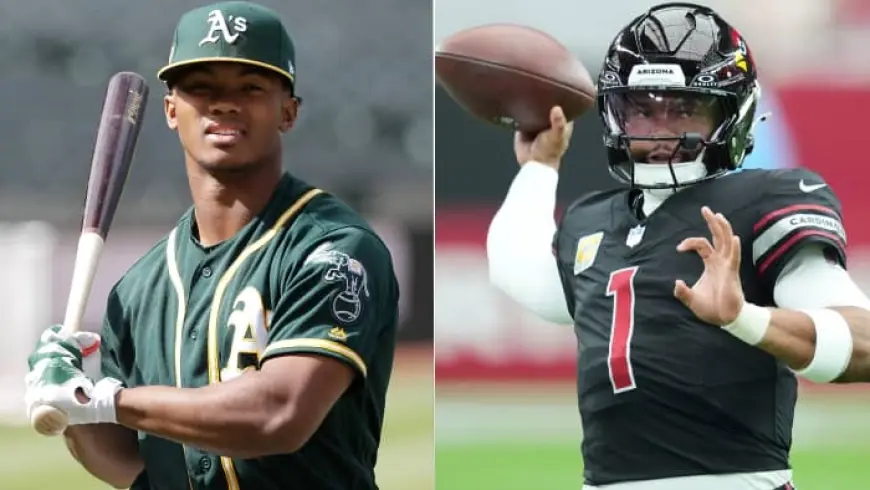
Kyler Murray’s time with the Arizona Cardinals is set to end at the start of the new NFL league year on March 11, after the team informed the former No. 1 overall pick it plans to release him. The move makes Murray the offseason’s most consequential quarterback to hit the open market and confirms Arizona is choosing a clean organizational break instead of another year of trying to force alignment between quarterback, roster, and long-term team plan.
The timing is as important as the decision itself. Releasing a starting-caliber quarterback isn’t just a football call; it’s a cap-and-control call. Arizona is acting before additional guarantees and calendar triggers can narrow its options, taking the financial hit it can’t avoid while preventing the contract from dictating the next phase of the rebuild. It also allows the Cardinals to influence the quarterback carousel rather than getting caught in it—an important distinction in an offseason where multiple teams will be shopping for either a starter or a credible bridge.
Arizona Cardinals Reset, Not A Tweak
In public, these divorces are usually explained with broad phrases—fit, direction, new chapter. Underneath, they’re almost always about trust and trajectory. Murray has delivered high-end flashes that few quarterbacks can replicate: sudden explosiveness, off-platform throws, and a running threat that forces defenses to play differently. But the Murray era never stabilized into predictable year-over-year progress, and when a franchise reaches the point where it can’t confidently say “this will be better next season,” the temptation to reset becomes overwhelming.
There’s also a roster-building logic. A team that commits to Murray has to build in a specific way—protection rules, receiver types, tempo decisions, and play-design priorities that lean into movement and improvisation. That can work brilliantly, but it requires organizational commitment and continuity. Once a front office no longer believes the upside justifies the cost—financially and philosophically—the partnership becomes a cycle of partial measures. Arizona’s decision signals it wants to stop living in that middle ground.
Kyler Murray And The New NFL News Quarterback Market
Murray will now be evaluated as both a player and a bet. As a player, the appeal is obvious: he can create explosive plays with his arm and legs, and his best stretches have looked like top-tier quarterbacking. As a bet, he carries questions that front offices obsess over in March—durability, long-term consistency, and whether a new coaching staff can harness his strengths without turning the offense into a weekly identity crisis.
The market response will hinge on fit and urgency. Teams with coaching staffs that already build around movement—designed rollouts, play-action, spacing concepts that punish aggressive fronts—can sell Murray as a plug-in ceiling-raiser. Teams that want a stationary distributor may still call, but those conversations often break down once both sides confront what “adapting the scheme” really means. Quarterback marriages fail less from lack of talent than from mismatched assumptions.
Another factor is leverage. The moment a quarterback becomes available, three groups start competing at once: teams that truly need a starter, teams that want competition and upside, and teams that want to keep rivals from improving. That dynamic can raise the price in ways that have little to do with a player’s last box score. Murray’s camp will also have leverage of its own—he can prioritize a situation with a clear path to starting, or he can chase a structure he trusts even if it’s a shorter-term deal.
Cardinals Options After Kyler Murray
For the Cardinals, the immediate question is the one that haunts every rebuilding franchise: what’s the plan at quarterback? Removing a franchise quarterback figure—however complicated the relationship became—changes everything. The roster no longer has a gravitational center, and every decision starts to feel provisional until the next long-term answer arrives.
Arizona has three realistic paths:
One is a draft-first reset: select a quarterback early and accept the volatility of a rookie learning curve. This can buy time and patience, but only if the organization communicates a coherent timeline and avoids constant scheme shifts.
A second path is the veteran bridge: bring in a capable starter to keep the team functional while the roster improves. The benefit is stability. The risk is that stability becomes inertia, leaving the franchise stuck in quarterback limbo.
The third path is the aggressive swing: move up, trade assets, and target the quarterback the front office believes can define the next era. That shortens the rebuild only if the evaluation is correct; if it isn’t, it deepens the hole.
What Comes Next For Murray
For Murray, the next two weeks are likely to be a negotiation over both football and narrative. He’ll want a team that can protect him, commit to a coherent offensive identity, and give him enough surrounding talent to avoid becoming a one-man rescue mission. Teams will want reassurance—about health, about leadership dynamics, about the ability to carry an offense when the run threat is contained.
Four scenarios now look plausible, each with a clear trigger:
If a quarterback-needy team misses on its top veteran target, Murray becomes the highest-upside alternative. If a team’s draft board collapses unexpectedly, Murray offers a path that doesn’t require forcing a rookie pick. If a coaching staff already runs a quarterback-movement system, he becomes a rare talent-to-scheme match that can change a season quickly. And if the market softens, Murray may choose a prove-it destination where the fit is strong and the opportunity is immediate.
Either way, the central NFL news ripple is this: when a former top pick with real starter-level ability reaches the market, it doesn’t just change one team’s future. It reshapes everyone else’s options—and forces the entire quarterback carousel to spin faster.