

























War With Iran Escalates After US Strikes, Israel Hits Tehran, Retaliation Spreads

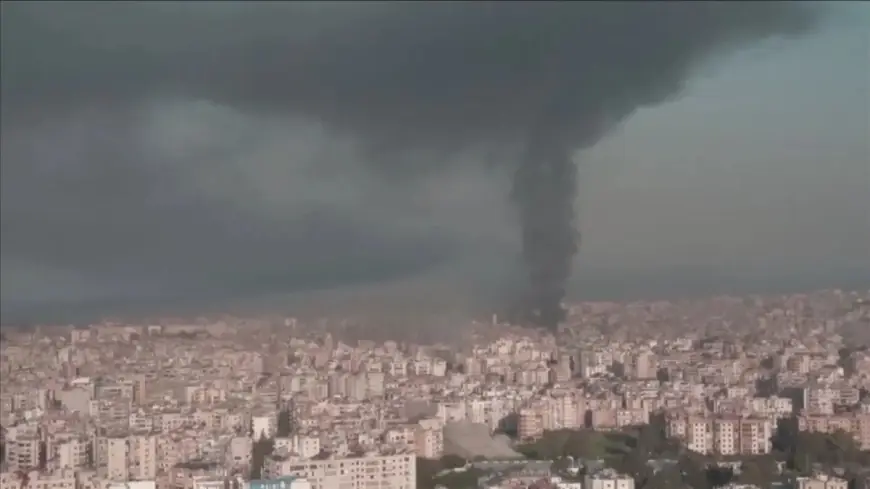
The war with iran has entered a sharper, more dangerous phase as the United States and Israel expand strikes across Iranian territory, including targets in and around Tehran, and Iran responds with missile-and-drone retaliation aimed at Israel and U.S.-linked interests across the region. What’s changed is not only the pace of attacks, but the widening set of places now treated as part of the battlefield: military bases, ports, shipping routes, and diplomatic facilities.
Behind the operational headlines sits a political wager. In Washington, President Donald Trump has framed the campaign as a decisive effort to degrade Iran’s military and nuclear-related capabilities without committing ground troops. In Israel, Prime Minister Benjamin Netanyahu has signaled the campaign will continue for an extended period, effectively asking Israelis and allies to absorb sustained escalation with uncertain end dates. That combination—open-ended pressure without a clearly stated finish line—can be stabilizing in the short term, but it also increases the odds of miscalculation as each side tries to prove resolve.
Why Did The US Attack Iran
The immediate rationale offered by U.S. officials has centered on the claim that Iranian capabilities—particularly missiles and nuclear-related infrastructure—had reached a level demanding preemptive action, and that delaying would raise the cost later. Israel’s messaging has echoed the same logic, arguing the window to blunt Iran’s program and disrupt command nodes was closing.
But the timing reflects incentives that rarely get stated so plainly. A decisive opening phase can reshape bargaining power—especially if it damages air defenses, disrupts leadership communications, and forces Iran into reactive mode. It can also narrow Tehran’s political options, because Iran’s leadership must choose between visible retaliation (to preserve deterrence) and calibrated restraint (to avoid inviting still larger strikes). That tension is why early responses often lean toward missiles and drones: they are visible enough to send a signal, but can be dialed up or down depending on the next turn.
A central—and politically combustible—question is leadership targeting. Claims about the fate of Iran’s top leadership, including Ayatollah Ali Khamenei, have swirled alongside conflicting accounts and information gaps. The strategic reality is that even uncertainty can be destabilizing: when chains of command are stressed, escalation control becomes harder, decision cycles shorten, and local commanders may act more aggressively to prove loyalty or capability.
Israel-Iran Missile Attack Pattern
The operational pattern now resembles a grinding exchange rather than a single shock-and-awe moment. Israel has continued waves of strikes intended to degrade Iran’s ability to launch and defend—air defenses, missile infrastructure, and command-and-control—while Iran has attempted to impose costs through missile barrages, drones, and pressure on regional chokepoints.
The most destabilizing trend is geographic spillover. As the conflict stretches beyond Israel and Iran, countries hosting U.S. forces face heightened risk of being pulled in—whether through direct attacks, attempted attacks, or the political fallout of simply being perceived as part of Washington’s regional posture. Once embassies and bases become part of the targeting conversation, even attempted strikes can produce diplomatic cascades: evacuations, airspace restrictions, and urgent security measures that amplify a sense of regional emergency.
Civilians are also being drawn into the blast radius. Reports of damage to medical facilities in Tehran, including references to the Gandhi Hospital area, sharpen scrutiny on targeting and proportionality. Even when militaries argue a strike hit a legitimate objective, impacts near hospitals in dense neighborhoods become political accelerants. They also raise the risk of escalation driven not by strategy but by outrage and domestic pressure.
Iran Allies And Retaliation Options
“Who are iran’s allies” is suddenly less a background question than a forecasting tool. Iran’s leverage has long relied on a networked approach—aligned groups, partner militias, and sympathetic governments that can create multiple pressure points at once. That matters because Tehran’s cleanest options (direct strikes on Israel) risk triggering heavier air power in return, while indirect options (harassing shipping, cyber operations, proxy attacks) can raise costs without offering a single clear target for immediate retaliation.
The next retaliation decision points are likely to revolve around three triggers: further leadership losses, strikes on symbolic sites in Tehran, and disruptions in the Gulf that begin to bite global energy and trade. If Iran’s leadership concludes regime survival is at stake, it may accept wider escalation. If it believes time is on its side—politically, economically, or diplomatically—it may aim for sustainable pressure: constant, distributed attacks and intimidation that keep opponents off-balance without inviting a single overwhelming response.
Is The United States At War
Legally, the U.S. has not issued a formal declaration of war, and that distinction matters inside American politics because it shapes congressional authority, duration, and oversight. Practically, sustained major strikes against a sovereign state—paired with retaliation against U.S. assets—meets most people’s plain-language definition of being at war, even if Washington avoids the word.
That ambiguity is part of the strategy and part of the risk. It gives leaders room to claim limited aims while conducting expansive operations. It also makes it harder to define what “winning” means. Is the objective to cripple Iran’s nuclear program, to degrade missile capacity, to force a new negotiation, or to push regime change through pressure? Those endpoints require different timelines, different tolerances for civilian harm, and different exit ramps. Mixed signals can invite misreading on all sides—especially in a conflict where each actor is trying to deter escalation while simultaneously proving it will not be deterred.
For now, the clearest reality is that the conflict is no longer confined to one front or one night of strikes. It is an unfolding contest of endurance, messaging, and risk tolerance—one where each additional day raises the stakes for the region, for global markets, and for the political leaders who now own whatever comes next.