
























Lou Holtz Cause of Death remains undisclosed as family confirms death at 89

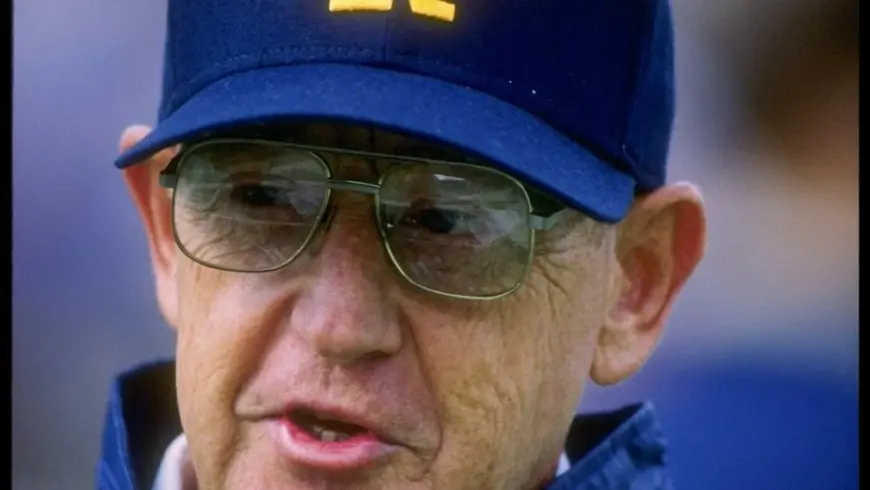
The lou holtz cause of death has not been publicly released, even as his family confirmed that the Hall of Fame coach died Wednesday, March 4, 2026, in Orlando, Florida, at age 89. In statements circulating from the family and institutions tied to his career, the through-line is consistent: Holtz died surrounded by relatives after a period in hospice care, but the family did not attach a medical explanation to the announcement.
That choice — to share the fact of his death while withholding the cause — is increasingly common for public figures whose final months unfolded privately. It can reflect everything from a desire to avoid speculation about a specific diagnosis to a simple request for boundaries during grief. In Holtz’s case, the absence of a disclosed cause has also been magnified by the unusually public arc of his final weeks, when he was known to be in hospice and his family had already asked outsiders to stop spreading premature rumors.
Hospice care and the late-January turn
By late January, Holtz’s condition had entered a stage where hospice care became part of the public conversation. Hospice does not point to one disease; it signals a focus on comfort and quality of life when a serious illness, multiple chronic conditions, or frailty linked to advanced age has progressed beyond curative treatment. That ambiguity is exactly why “hospice” can feel both clarifying and incomplete to fans: it explains the approach to care without identifying the medical trigger.
In Holtz’s case, family updates during that period were framed around privacy and dignity rather than diagnosis. Those messages served two purposes at once: correcting misinformation and drawing a line around the details that the family would not share. The result is that, even after his death, there is a clear boundary between what is confirmed (time, place, circumstance) and what remains personal (the specific cause).
Family statement and the privacy line
The family’s decision not to name a cause of death carries practical consequences in the current media environment. When a prominent figure dies and a cause is not provided, the information vacuum tends to get filled quickly — sometimes by well-meaning guesses, sometimes by irresponsible rumors. The Holtz family’s earlier experience with false death reports makes that risk more than theoretical.
This is also where language matters. “Undisclosed” is not “unknown” to the family; it simply means the family has not authorized that information for public release. Absent a statement naming a condition, anything else becomes inference — and inference hardens into “fact” fast online. For a family trying to manage a public farewell, withholding details can be a form of control: it keeps the focus on the life and legacy rather than the last medical chapter.
Notre Dame legacy, and why the cause debate persists
Holtz’s stature ensures that curiosity will persist. He remains closely identified with Notre Dame, where he coached the program to its last national championship season in 1988, and with a larger career that made him a household name in college football. His public persona — high-energy, optimistic, relentlessly message-driven — also shaped expectations. People who watched him coach or later speak about football often associate him with vitality, which can make a quiet end feel discordant and invite questions.
But the better lens is not mystery; it is trajectory. At 89, many people face layered health challenges that do not reduce neatly to a single headline diagnosis. Even when one condition sits at the center, end-of-life care often reflects multiple compounding factors: mobility limits, cardiac or respiratory strain, cognitive decline, vulnerability to infections, or the cumulative effects of prior treatments. None of that identifies a cause of death for Holtz — it simply explains why a family may see no benefit in turning a private medical reality into a public autopsy-by-commentary.
What happens next, practically, is straightforward. If the family chooses to share more detail later — through an obituary, a memorial program, or a personal message — that can settle the question. If they do not, it will likely remain officially undisclosed, with public remembrance anchored in confirmed facts and in the record he built on the field.
The forward scenarios are already taking shape. A public memorial tied to Notre Dame or to one of his other coaching stops could prompt additional family remarks. A private funeral followed by a separate public celebration of life could keep medical details private while still offering the broader football world a communal goodbye. And if the family’s priority is to prevent the internet from rewriting the final chapter, the most effective trigger would be a single, definitive line in a formal obituary — not a drip of partial details.
For now, the story is less about what is missing than what is clear: Lou Holtz died on March 4, 2026, after time in hospice care, and the family has chosen not to disclose the cause. In the absence of that detail, the responsible frame is simple — honor the boundary, and remember the impact.