

























North Korea Aims to Duplicate Youth Soccer Triumph

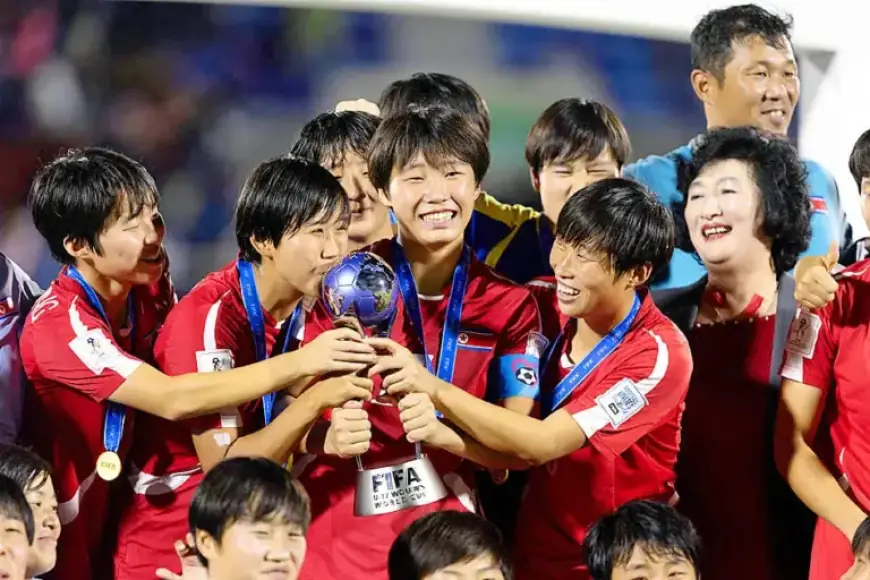
North Korea’s women’s soccer team is set to compete in the 2024 Women’s Asian Cup in Australia. This tournament marks their return to international play after a four-year hiatus due to the COVID-19 pandemic. With a history of immense success in youth soccer, they are considered favorites to claim the Asian title.
Recent Achievements
North Korea’s youth teams have recently excelled on the global stage. In 2024, the women’s team secured the FIFA Women’s U-17 World Cup in the Dominican Republic. They followed this achievement by defending their title in Morocco. Additionally, they won the Women’s U-20 World Cup in Colombia. In total, they have claimed three world titles within just over a year.
2024 Women’s Asian Cup
The upcoming Women’s Asian Cup features North Korea in a challenging group. They are set to face Uzbekistan, China, and Bangladesh in the first round. Their strong performance in youth soccer has led many to consider them a top contender.
Expert Insights
Japan’s coach, Nils Nielsen, praised North Korea’s distinctive playing style. He noted, “They are very physical, they can run and run and run and they have good quality players.” While their youth teams have been dominant, Nielsen indicates that translating this success to the senior team is a gradual process.
Historical Context
North Korea has a rich history in women’s soccer, having won the Asian title three times during the 2000s. However, a doping scandal in 2015 and the pandemic halted their competitive games from 2019 to 2023. Despite this, they returned to form by earning a silver medal at the 2023 Asian Games in Hangzhou, losing to Japan in the final.
Player Development
The Pyongyang International Football School, established in 2013, plays a crucial role in nurturing talent. This state-sponsored program systematically trains both male and female players from a young age. Lee Jung-woo of the University of Edinburgh emphasizes its importance for maintaining competitiveness.
Key Players
- Kim Kyong-yong: The standout forward was the top scorer at the Asian Games, netting 12 goals and scoring 9 in Asian Cup qualifying.
- Blend of Youth and Experience: The senior team is expected to feature a mix of established players and emerging talent from age-group teams.
Challenges and Opportunities
North Korean players are trained to adapt to foreign environments through “political training.” This preparation allows them to manage the pressures of competing abroad. Lee notes that the North Korean government views sports as a key avenue for engaging with the international community.
Significance of Victory
A successful campaign in Australia would yield multiple benefits for North Korea. Winning could serve as a tool for political propaganda domestically and enhance the country’s stature in sports diplomacy internationally. Results will be closely monitored in Pyongyang, where athletes are respected figures.
As North Korea makes its return to the Asian Cup for the first time since 2010, the anticipation surrounding their performance is palpable. With a remarkable record in youth soccer, they have positioned themselves as a formidable force on the continental stage.