

























Pete Hegseth: Pentagon officials decline to rule out ground troops as Middle East conflict expands

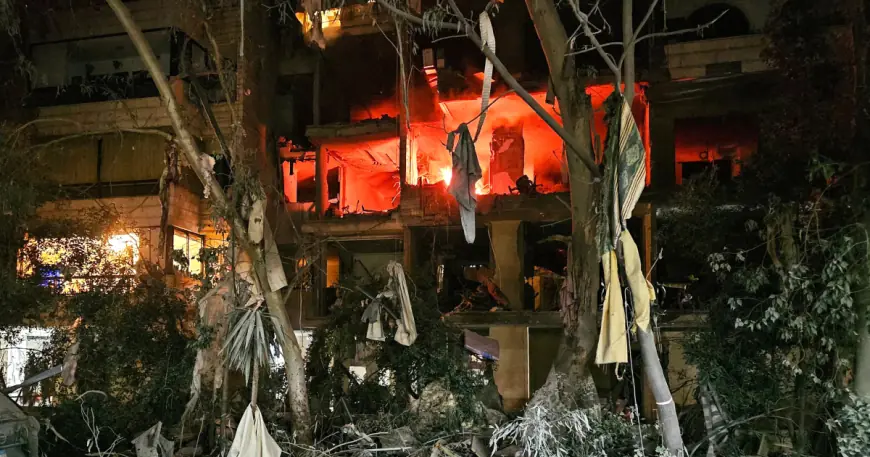
As the Middle East conflict widened, pete hegseth declined to rule out deploying U. S. ground forces while leaders signaled more casualties are likely and a string of regional air and diplomatic incidents unfolded. The developments include air defenses intercepting aircraft and missiles, allegations about strikes on a nuclear site, friendly-fire losses of fighter jets, and national security warnings at home.
Pete Hegseth on ground forces and hypotheticals
Defense Secretary Pete Hegseth did not rule out the possibility of sending boots on the ground during a morning news conference at the Pentagon, saying he would not engage in hypotheticals. His refusal to close the option mirrors comments by the president and underscores continuing uncertainty over the scope and duration of ongoing military operations.
President’s tough rhetoric: 'big wave' and operational timelines
The president of the United States said in a national interview that "the big wave" of strikes is yet to come, adding "We haven't even started hitting them hard" and "We're knocking the crap out of them. " He also said he did not rule out ground forces, stating "I don't have the yips with respect to boots on the ground, " and suggested boots might be "probably don't need them" or only be used "if they were necessary. " On the timetable for the campaign, he said, "I always thought it would be four weeks" and that operations were "a little ahead of schedule. "
Casualties, expectations and domestic security measures
Military leaders have warned more casualties are expected. The chairman of the Joint Chiefs of Staff, Gen. Dan Caine, told reporters at a Pentagon briefing that the military objectives will take time to achieve and that "we expect to take additional losses" while the department will work to minimize them. Four U. S. service members have been killed in the strikes so far. At home, law enforcement in a major U. S. city said it is continuing enhanced high-visibility patrols at sensitive locations because of the heightened threat environment and out of an abundance of caution tied to the situation in the Middle East and a mass shooting in Austin, Texas.
Regional air engagements: Qatar interceptions and Kuwait friendly fire
The Ministry of Defence of the State of Qatar announced that the Qatar Emiri Air Force shot down two SU-24 aircraft coming from Iran. The ministry said air defenses intercepted seven ballistic missiles and that five drones were intercepted by the Qatar Emiri Air Force and Qatar Emiri Navy. the threats were addressed immediately upon detection and that all missiles were shot down before reaching their targets, stressing that the Qatar Armed Forces possess full capabilities and resources to safeguard the state's sovereignty and lands and to respond firmly to any external threat. The ministry urged citizens, residents and visitors to remain calm, adhere to official instructions issued by security authorities, avoid rumors and rely solely on information released through official channels.
Separately, U. S. Central Command said three U. S. F-15 fighter jets flying in Iran-related operations were mistakenly shot down by Kuwait air defenses in an apparent friendly-fire incident; the cause was under investigation. All six aircrew ejected safely, were recovered and are in stable condition. Footage circulating online appears to show a military aircraft falling from the sky in Kuwait.
Nuclear site allegations, international oversight and Spain’s refusal to support operations
An Iranian diplomat at the U. N. nuclear watchdog alleged that U. S. -Israeli airstrikes targeted Iran's Natanz nuclear enrichment site. Israel and the United States have not acknowledged strikes at the site, which American forces bombed last June. The head of the international nuclear agency, Rafael Grossi, said his agency stands by its assessment that there is no indication Iran's nuclear facilities were damaged or hit and that so far the agency has seen nothing comparable to the attacks in June.
The Iranian ambassador to the IAEA, Reza Najafi, condemned what he called the "unlawful, criminal and brutal" attacks by the United States and Israel against Iran, saying that they "again attacked Iran's peaceful safeguarded nuclear facilities yesterday" and asserting that the justification that Iran wants to develop nuclear weapons is "simply a big lie. "
Meanwhile, Spain denied permission for the United States to use jointly operated military bases on its territory for strikes, with the Spanish prime minister explicitly condemning what he called "unilateral military action" and the foreign minister saying the bases at Rota and Morón are not being used and will not be used for anything that is not covered by existing agreements or the U. N. charter.
Outlook: operations expand while uncertainty remains
With senior U. S. officials unwilling to rule out expanded options, battlefield losses already recorded, regional air defenses active and diplomatic rifts emerging with allies, the conflict shows signs of escalation in several domains. Recent statements and incidents indicate the situation will evolve further; details may change as military and diplomatic developments continue.