























Nfl Free Agency (nfl free agency) window shapes Bills mock offseason and roster review

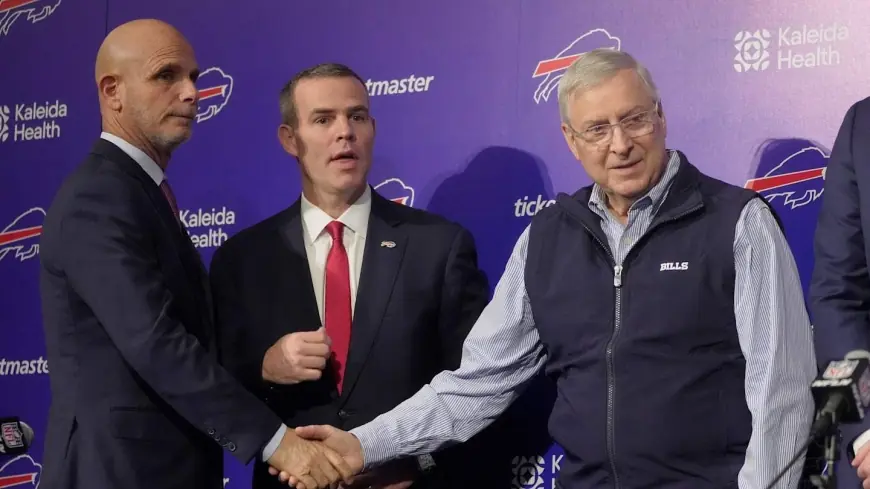
The Buffalo Bills are positioning for nfl free agency as a series of contract deadlines, restructures and roster evaluations converge. Recent mock-offseason moves in the team’s planning exercise show how early restructures and potential cuts could create the breathing room Buffalo needs ahead of the contact window and the start of the new league year.
Nfl Free Agency — nfl free agency timing
Key calendar points in the context provided: teams must designate a franchise or transition tag no later than March 3 at 4 p. m. ET; clubs may begin contacting unrestricted free agents at 12 p. m. on March 9; and contracts cannot be signed until the new league year opens at 4 p. m. ET on March 11. One passage also references March 12 as the kickoff of the new league year, creating an unclear date in the available material. The Bills enter this period with roughly 20 players set to reach unrestricted free agency and will need cap moves before re-signings can occur.
Cap moves and mock offseason maneuvers
The mock offseason exercise starts the Bills with $7. 22 million in cap space against a league salary cap set at $301. 2 million for the 2026 season. A reported simple restructure of right tackle Spencer Brown produced over $10 million in short-term room. The exercise also factors in contract voiding that affects top-51 accounting and notes a specific contract void date in March for another player.
The mock plan models restructures and selective pay reductions: one tight end is shown with $12 million in new money owing and was projected to take a $3. 5 million reduction with incentives to make up the difference; another player with $8. 76 million in new money was modeled with a $2. 5 million decline and contract adjustments to spread guarantees and alter roster status in a later year. Cutting or moving on from a veteran receiver was estimated to net about $5. 17 million in savings. After a combination of the modeled moves and a roster adjustment that added a player into the top-51 accounting, the mock exercise lists cap room rising to $30. 66 million.
Evaluating Bills quarterbacks, tight ends, receivers
Using 2025 performance metrics, the Bills’ passing game is characterized as solid but not elite. The team compiled 3, 668 passing yards (11th), tied for ninth with 25 passing touchdowns, and averaged 216. 6 passing yards per game. Advanced metrics in the evaluation include an 11th-place passing DVOA at 25. 3%, EPA per dropback of 0. 09 (seventh), and a completion rate of 69. 5%.
Observations on personnel highlights one clear game-winner at quarterback, with season totals matching the team passing numbers above and individual marks showing both passing and rushing impact. In the postseason, Buffalo’s pass catchers combined for 636 passing yards across two games, with the quarterback adding 556 passing yards and four touchdowns in those contests. The receiving corps registered an 87. 7 receiving-efficiency grade but ranked low in explosiveness, at 29th in yards per catch (11. 6).
- Key takeaways: the Bills enter the signing period with constrained but flexible cap room if modeled restructures and cuts are executed.
- Timing matters: tag and contact deadlines in early March and the new league-year signings window will dictate when deals can be finalized.
- Roster evaluation centers on sustaining an elite quarterback while upgrading pass-catcher explosiveness and managing several impending free agents.
Forward look: with the mock moves shown, Buffalo could convert single-digit cap room into multi‑tens of millions in short order, enabling more active participation once the contact and signing windows open. Which combinations of restructures, pay reductions and personnel decisions the team implements will determine how aggressively it pursues external targets versus retaining or reworking its existing group of pending free agents.