

























Gold Price Today: India Sees Broad Gains as Geopolitical Tension and City Rates Lift Bullion

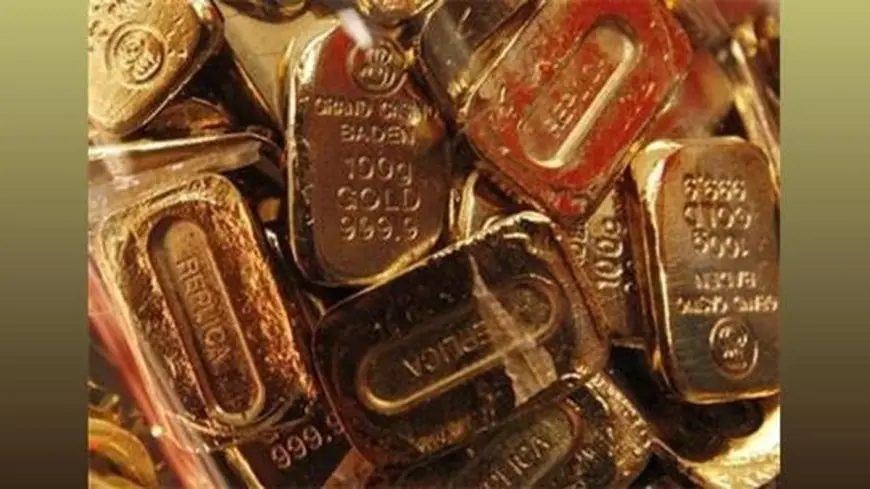
Gold price today strengthened across multiple Indian benchmarks as international safe-haven flows and city-level demand pushed spot and futures quotations higher. The move matters because it combines global geopolitical drivers with domestic market fragmentation, leaving consumers, traders and investors facing varied local rates.
FXStreet methodology and India gram and tola rates
One market snapshot shows gold in India rising on Monday to ₹15, 775. 80 per gram, up from ₹15, 517. 94 on Friday, while the tola price moved to ₹184, 004. 70 from ₹180, 998. 20 on Friday. Those figures are compiled by FXStreet, which adapts international prices (USD/INR) into local currency and measurement units and updates prices daily based on market rates taken at the time of publication; local retail rates can diverge slightly. An automation tool was used in creating that compilation.
Gold Price Today and MCX benchmarks
On the exchange front, MCX gold futures held near ₹161, 720 per 10 grams on February 28, reflecting a futures market that has conserved much of February’s late-month momentum. In some national summaries, the price of 10 grams has already crossed ₹1, 62, 000, while international market updates showed gold nearing $5, 300 per ounce—figures that sit alongside the FXStreet gram and tola numbers and underline measurement and venue differences across quotations.
Hyderabad bullion market and weekend shifts
Local Hyderabad trading captured fresh intraday volatility. On Sunday morning, domestic markets logged a ₹4, 000 rise for 10 grams of gold and a ₹25, 000 uptick for silver per kilogram. As of 6 a. m. in the Hyderabad bullion market, 10 grams of 22‑carat gold stood at ₹1, 58, 660 and 24‑carat at ₹1, 73, 090 per 10 grams; silver traded at ₹3, 25, 100 per kilogram. Traders in Hyderabad warned that prices may rise further by afternoon.
India city rates, silver swings and Bengaluru closing numbers
City-level data through late February showed mixed but stabilizing patterns. In major cities such as Delhi, Mumbai and Bengaluru, silver settled around ₹2, 85, 000 per kilogram, with Delhi publishing silver at ₹285 per gram and ₹2, 850 for 10 grams for multiple sessions. Bengaluru’s February 28 closing rates listed 22K gold at ₹15, 925 per gram, 24K at ₹17, 375 per gram and silver at ₹3, 00, 700 per kilogram. Across Delhi, Mumbai, Chennai, Kolkata, Hyderabad, Kerala, Pune and Ahmedabad, silver was uniformly priced at ₹2, 85, 000 per kilogram at the close, signaling a rare city‑wide consistency.
Silver’s month of moves was dramatic: it peaked at ₹3, 50, 000 per kilogram on February 1, plunged to a multi‑month low of ₹2, 55, 000 by February 18, then rebounded to ₹3, 00, 000 by February 23—an overall monthly drop of about 18. 57% from the February peak.
Iran–Israel conflict, safe‑haven flows and currency effects
Escalating tensions involving Iran, Israel and the United States have unsettled global financial markets and prompted investors to withdraw from equities and shift funds into gold and silver as safe havens. Analysts warn the surge may continue, with projections that a deeper conflict could push 10‑gram gold toward ₹1. 70 lakh and silver past ₹3. 20 lakh per kilogram. The timing matters because if the conflict lifts crude oil prices, the Indian rupee could weaken; a weaker rupee raises the rupee cost of imported gold and thereby amplifies domestic price rises.
Central banks, World Gold Council data and broader market links
Central banks are noted as the biggest holders of gold, and they have been active buyers: central banks added 1, 136 tonnes of gold worth around $70 billion to their reserves in 2022, the highest annual purchase on record, with emerging economies such as China, India and Turkey increasing reserves. Gold’s market behavior remains closely tied to the US dollar and US Treasuries—an inverse correlation that means a depreciating dollar or falling yields tends to lift gold—while geopolitical instability or recession fears can accelerate demand for the metal. As a yield‑less asset, gold also tends to respond to interest‑rate moves and to the dollar‑priced XAU/USD dynamics.
What makes this notable is that the rally combines structural reserve accumulation by central banks with near‑term safe‑haven buying and uneven city markets, producing simultaneous pressure on retail affordability and institutional allocations.
Market services and warnings accompany the price data: references, analysis and trading strategies are provided by Trading Central. A risk notice stresses that trading may result in the loss of an investor’s entire capital and that over‑the‑counter derivatives may not be suitable for everyone. The platform compiling some of the data provides execution‑only services and does not issue investment recommendations.
Overall, India’s bullion landscape shows rising headline levels across gram, tola and 10‑gram measures, pronounced city‑level dispersion for silver and gold, and a clear chain of cause and effect from geopolitical escalation to safe‑haven demand to higher domestic import costs.