

























Texans Likely to Part Ways with Joe Mixon as Failed-Physical Cut Could Save $8.5 Million

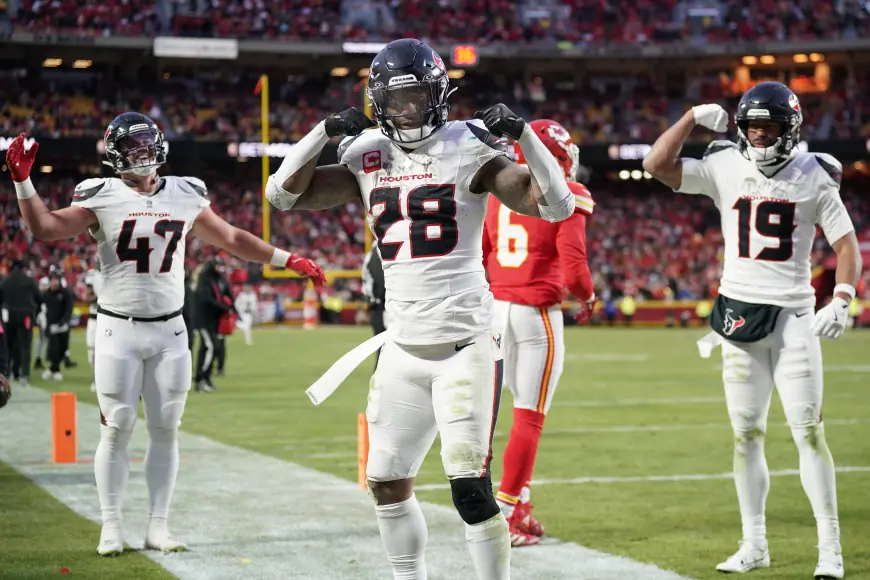
Joe Mixon stands on the brink of being released by the Texans after a season-long absence tied to an unresolved injury, and the team could save roughly $8. 5 million if it designates the move a failed-physical cut. The lack of clear disclosure about the nature and timeline of the injury has intensified scrutiny of the franchise’s communications and roster management.
Joe Mixon injury timeline and public uncertainty
Public accounts indicate Mixon has been sidelined for almost a calendar year with an injury that has not been clearly defined. Team officials have suggested differing possibilities: there is speculation that the problem may be a foot injury, that it might have occurred during a workout, and that it could be football-related — or not. In a public remark that underscored the ambiguity, Texans executive Nick Caserio said he thinks Mixon had offseason surgery, a phrasing that left open whether the team has definitive medical confirmation.
The prolonged lack of clarity — stretching nearly a year — has meant Mixon did not function as a bell-cow back this season, producing measurable impact on the Texans’ offensive planning and usage. That absence is widely framed as a material factor in the team’s on-field results over the past season and has driven closer attention to how the organization manages injury information and roster moves.
Texans financial decision and failed-physical designation
Sources within the coverage indicate the Texans are likely to cut Mixon, and that designation matters: marking the release as a failed-physical cut would allow the franchise to save about $8. 5 million. The financial calculus is presented as a principal driver of the move, with the potential savings tied directly to the medical designation assigned at the time of release.
The likely cut is framed as the culmination of a months-long trajectory rather than a sudden development. The possibility of a failed-physical designation has immediate consequences for the team’s salary-cap accounting and roster planning, and it changes the optics of the departure by tying the roster decision explicitly to Mixon’s medical status.
Disclosure practices, competence questions and broader implications
Commentary around the situation has focused less on the single roster move and more on the messaging choices that preceded it. Observers note that the team’s public statements — including the cautious phrasing from Caserio — have left open basic facts about the injury’s nature and timeline. That ambiguity prompts two lines of inference: either the organization lacked clear medical information, or it chose to obscure details to protect the player or the franchise.
Those who defend the organization point to on-field accomplishments to question the incompetence hypothesis: winning 35 games over a three-season span, counting the playoffs, is cited as evidence the franchise can manage complex personnel and medical matters. Others counter that the opacity itself is a managerial failure, undermining public trust and complicating roster evaluation for both fans and league observers.
What makes this notable is the combination of a significant potential salary-cap impact, an extended period of uncertainty about a key player’s availability, and a public statement from a named team executive that relied on tentative language. The timing matters because the designation and associated savings will directly affect offseason roster decisions and the team’s financial flexibility.
The immediate effect is straightforward: a cut with a failed-physical designation would remove Mixon from the roster and preserve roughly $8. 5 million for the Texans. The secondary effects are less tidy — lingering questions about disclosure, inconsistent public messaging, and how organizations balance protecting players with informing stakeholders about medical realities. Those debates will follow the team through the roster changes that lie ahead.