
























Iran War Update: Hezbollah Opens Lebanon Front as U.S.-Iran Fighting Spreads Across Region

The short answer to “did Iran attack the U.S.?” is yes—Iran has launched strikes against U.S. forces and U.S.-linked targets in the region since the U.S.-Israel strike campaign began on Saturday, Feb. 28, 2026 (ET), and the U.S. has confirmed combat deaths in the conflict.
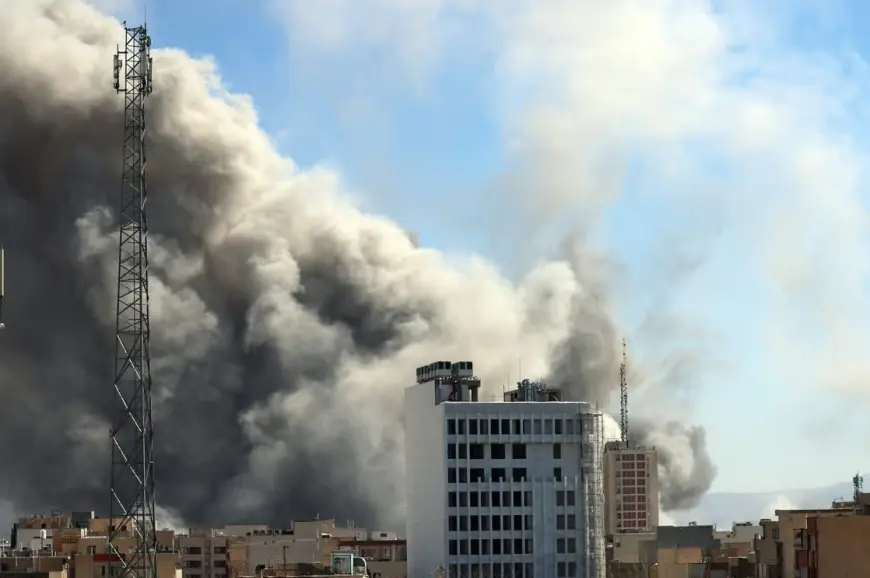
What changed in the past 24 hours is that the war’s center of gravity is no longer just Iran and Israel: Lebanon is now a live front after Hezbollah fired rockets and drones into northern Israel, prompting Israel to launch a broad “offensive campaign” against Hezbollah infrastructure and leadership targets— including heavy strikes in and around Beirut.
Did Iran attack the U.S., and what was the target?
Iran’s retaliation has included missiles and drones aimed at U.S. military positions and at countries hosting U.S. forces, widening the war into an air-and-missile contest stretching from Iran to the Gulf and the eastern Mediterranean.
A second-order effect is that even U.S. partners are now operating under extreme strain and compressed timelines—conditions that can produce lethal mistakes. One of the most sobering developments reported Monday: Kuwait mistakenly shot down multiple U.S. aircraft in an apparent friendly-fire incident as defenses engaged incoming threats.
This is the central risk of the current phase: the war is being fought in the sky, at speed, with imperfect information. When air-defense networks are on hair-trigger alert, the difference between an enemy drone and a friendly jet can come down to seconds and signal clarity.
Hezbollah and Lebanon: the Beirut escalation
Hezbollah’s decision to launch drones and rockets from southern Lebanon was framed by the group as retaliation tied to the killing of Iran’s supreme leader—an escalation that effectively binds Lebanon’s fate to Tehran’s at the worst possible time for Beirut’s fragile state institutions.
Israel’s response has been immediate and forceful: strikes hit Hezbollah strongholds, including Beirut’s southern suburbs and other areas, with Lebanese authorities reporting dozens killed and many more injured.
The political significance inside Lebanon may be just as large as the military one. Lebanon’s government has now publicly banned Hezbollah military actions and demanded the group hand over weapons—language that marks a dramatic attempt to reassert state authority.
That demand is a warning flare, not a solved problem. Hezbollah’s arsenal is not a policy lever Beirut can simply “turn off,” and any attempt to enforce the ban risks internal confrontation. But the government’s move signals something crucial: Lebanon’s leadership is trying to convince the world—and its own population—that Hezbollah does not speak for the state, even as Hezbollah uses Lebanese territory as a launchpad.
IDF posture: “offensive campaign” language signals duration
Israel’s top military messaging has shifted from retaliation to something more open-ended. The IDF chief described an “offensive campaign” against Hezbollah and warned combat could be prolonged.
This matters because “offensive campaign” is not the language of a single punishing strike; it suggests a rolling set of objectives: degrading launch capacity, targeting command networks, and pressuring Hezbollah to stop firing by raising the cost of continued engagement.
It also increases the likelihood that civilian infrastructure gets caught in the blast radius—especially in dense urban zones—raising humanitarian and diplomatic pressure on all sides as casualties mount.
Beirut and Lebanon news: security warnings and real-world impact
For civilians in Lebanon, the lived reality is disruption and displacement. Official security warnings describe airstrikes across the south, the Beqaa, and parts of Beirut, alongside calls to avoid travel and limit movement.
This becomes self-reinforcing: strikes drive people to move, movement clogs roads and services, and crowded routes become risk multipliers. It’s also how economies buckle. Beirut can endure shock, but repeated shocks reshape daily life—school schedules, fuel access, hospital capacity, and the basic predictability that keeps a city functional.
Where this is heading next
Four near-term scenarios are now most plausible, and each has a clear trigger:
-
Contained Lebanon front: Hezbollah limits strikes after absorbing damage, and Israel narrows operations. Trigger: a pause in cross-border launches for 24–48 hours.
-
Widening Gulf theater: Iranian missiles and drones continue probing regional bases and infrastructure, pulling more states into active defense and raising the chance of further friendly-fire or interception accidents. Trigger: additional mass salvos or confirmed hits on energy sites.
-
Sustained Israeli campaign in Lebanon: Israel treats Hezbollah as a co-equal warfront rather than a side theater, with repeated Beirut-area strikes. Trigger: a successful Hezbollah strike causing significant Israeli casualties or infrastructure damage.
-
Political rupture inside Lebanon: Beirut’s attempt to ban Hezbollah actions becomes a domestic showdown. Trigger: enforcement moves, splits inside government/security forces, or Hezbollah defiance escalating on Lebanese soil.
If you tell me what you mean by “we” (U.S. specifically, or your country), I’ll translate this into the most practical implications—travel risk, likely next targets, and what to watch for over the next 24 hours.