
























Jim Carrey New Face Buzz Spreads Again as Fans Parse a Rare, Changed-On-Camera Look

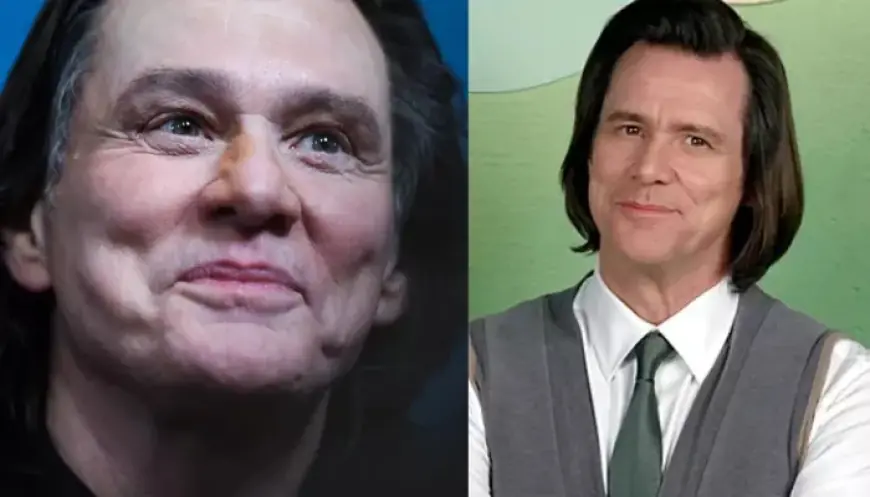
Jim Carrey has become the latest A-list target of the internet’s “new face” obsession, with clips and still photos circulating widely and prompting a familiar cycle: side-by-side comparisons, confident cosmetic-surgery guesses, and a growing pile of conspiratorial explanations that say more about modern image culture than about Carrey himself. The short answer to what’s happening is this: Carrey looked different in a recent public-facing appearance, and the online machine treated “different” as a mystery that must be solved—fast, loudly, and often without evidence.
What’s actually confirmed is limited: photos and video show changes in styling, facial expression, and overall presentation compared with older, frequently re-shared images. What’s not confirmed is the part the internet wants most—whether any procedures were done, whether makeup or prosthetics were involved, or whether lighting and camera choices exaggerated normal changes. In the absence of a direct statement from Carrey, the only responsible conclusion is uncertainty.
Jim Carrey New Face: Why One Appearance Turns Into a Verdict
The “Jim Carrey new face” conversation tends to explode for a specific reason: Carrey’s face is culturally “fixed” in people’s minds. For decades, his expressions were part of the performance—elastic, hyper-readable, almost cartoon-precise. When someone whose persona is built partly on facial movement appears with a different look—whether from age, weight, fatigue, styling, or cosmetic choices—it reads to viewers as a disruption of the brand.
Add the modern media environment and the effect multiplies. High-resolution cameras, harsh stage lighting, telephoto lenses, heavy compression, and unflattering freeze-frames can make anyone appear “unrecognizable.” A single screenshot captured mid-syllable can flatten features, reshape shadows, and amplify puffiness or hollowness. Then that screenshot becomes the “before/after” anchor for the entire narrative.
The most important point: viral images aren’t neutral evidence. They’re often the worst possible samples—momentary, selectively framed, and algorithmically chosen because they look unusual.
Cosmetic Surgery Rumors vs Reality
Most of the online chatter clusters around predictable themes: fillers, Botox, skin tightening, face-lift speculation, or dental changes. Some of those are plausible in the abstract—Hollywood has no shortage of cosmetic intervention—but plausibility isn’t proof. People change for mundane reasons all the time: weight fluctuation, sleep deprivation, stress, different facial hair, different hairstyle, or simply aging in a way that doesn’t match the last mental snapshot fans carry around.
There’s also a less-discussed but very real factor: how a person performs for a camera. Carrey has long used exaggerated expression as part of his on-screen identity. If he’s more subdued—less mugging, less “bit”—his face can read as different even if nothing physical changed. When an audience is trained to expect a specific level of animation, normal stillness can look like a transformation.
If you’re trying to evaluate what you’re seeing, here’s the honest framework:
-
One clip is not a trend.
-
One still is almost always misleading.
-
Makeup + lighting can mimic “work done.”
-
Aging changes volume distribution in the face in ways that can look dramatic year to year.
The Hoax Angle: Prosthetics, Deepfakes, and “It’s Not Him”
The weirdest branch of the discourse is the claim that the person shown is “not really Jim Carrey,” a trope that reappears whenever celebrities look different. This kind of theory used to be fringe; today it spreads faster because the tools are real. Hyper-realistic prosthetics exist. Impersonation is a content genre. Deepfake tech has trained people to distrust what they see.
But there’s a catch: the existence of convincing fakes doesn’t make any specific fake likely. Most of the time, the simplest answer—camera variables plus human change—is still the right one.
What’s new is that the “explain it” reflex now has a menu of dramatic options. The internet prefers the most entertaining explanation, not the most probable.
Why Jim Carrey’s Privacy Makes the Story Bigger
A major accelerant is Carrey’s relationship with visibility. When someone appears constantly—talk shows, premieres, daily paparazzi—public perception updates gradually. When someone appears rarely, the delta between “last time you saw them” and “now” feels shocking. That shock invites storytelling, and storytelling invites certainty.
Carrey also occupies a particular celebrity tier: famous enough that millions feel they “know” him, but private enough that many details are unknown. That combination turns normal ambiguity into a breeding ground for rumor.
What Happens Next
This story usually resolves in one of four ways:
-
More appearances smooth the narrative. If Carrey shows up again soon, the “new face” discourse often collapses because consistency replaces surprise.
-
Silence hardens into fan-lore. If he stays out of view, speculation gets recycled as “fact” by repetition.
-
A direct comment ends it quickly. If Carrey addresses it—even lightly—the temperature drops, because people stop guessing.
-
The internet moves on to the next face. Which is the most common outcome.
For now, the “Jim Carrey new face” trend is less a confirmed story about Carrey than a real-time demonstration of how celebrity images are consumed: a single angle becomes a thesis, uncertainty becomes accusation, and the internet tries to solve a human face like it’s a puzzle with a single correct answer.